Will Bengaluru's Metro Network Expand to 175 km by December 2027?
Click to start listening
Synopsis
Bengaluru's Metro network is set for a significant expansion, with plans to reach 175 km by December 2027. This initiative aims to reduce traffic congestion and enhance public transport, providing a smoother commuting experience for residents and visitors alike.
Key Takeaways
- Bengaluru aims to enhance its Metro network to 175 km by December 2027.
- The current operational length is 96 km.
- The Yellow Line has recently added 24 km to the network.
- Plans include extensions to Tavarekere, Hoskote, Bidadi, and Nelamangala.
- Phase III is estimated to cost Rs 25,311 crore, funded by JICA.
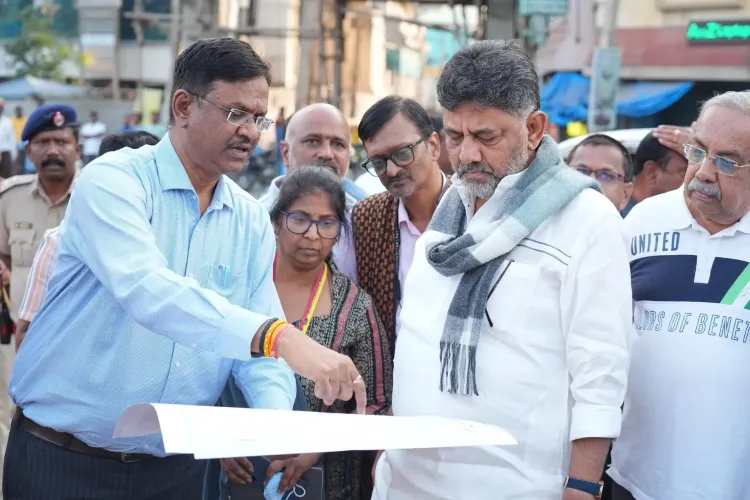
Bengaluru, Dec 22 (NationPress) Karnataka's Deputy Chief Minister D.K. Shivakumar announced on Monday that the state government is set to enhance the Metro network in Bengaluru to mitigate traffic woes, aiming for a total of 175 km of operational Metro routes by December 2027.
While addressing a press conference post a review of Metro projects with officials at the Bengaluru Metro Rail Corporation Limited (BMRCL) office, Shivakumar, who also serves as the Bengaluru Urban Development Minister, indicated that currently 96 km of Metro routes are already in operation.
Since the current government took office, the Yellow Line (connecting R. V. Road and Bommasandra) has been inaugurated, adding 24 km to the existing network, he mentioned.
“Currently, around one lakh commuters utilize this route, and traffic police have reported a 30 percent reduction in congestion along this corridor,” he stated.
Shivakumar further revealed that 41 km of Metro routes are expected to be operational by 2026, with an additional 38 km including the airport line, ready by December 2027.
“This will bring the total operational Metro routes in Bengaluru to 175 km,” he added.
Moreover, plans are in place for extensions towards Tavarekere on Magadi Road and towards Hoskote, Bidadi, and Nelamangala on the outskirts of the city. Work is ongoing on some segments, while DPRs are being developed for the remaining areas,” he explained.
He also mentioned that tenders for approximately 100 km of Metro works under Phase III will be issued next month, which includes elevated corridors featuring double-decker structures.
“We are accelerating the work to alleviate traffic congestion and enhance commuting convenience for the public. Officials have been directed to secure additional land near Metro stations to support commercial activities and provide parking,” he noted.
In terms of finances, he outlined that the Phase III project, estimated at Rs 25,311 crore, will be financed through a Rs 15,600 crore loan from the Japan International Cooperation Agency (JICA).
“Separate tenders amounting to Rs 9,700 crore for the elevated corridor will also be released in January,” he confirmed.
When asked if the entire Phase III alignment would be elevated, Shivakumar confirmed that all routes in this phase will be constructed as elevated double-decker corridors.
“We are working towards finalizing land for a Metro station near Tavarekere. Given that this route is frequently used by travelers from Hassan, a double-decker corridor is planned here as well,” he said.
Point of View
The expansion of Bengaluru's Metro network is a substantial development that highlights the government's commitment to enhancing urban infrastructure and addressing traffic issues. This initiative is critical in fostering sustainable urban mobility and improving the quality of life for residents.
NationPress
22/12/2025
Frequently Asked Questions
What is the current length of operational Metro routes in Bengaluru?
Currently, there are 96 km of operational Metro routes in Bengaluru.
When is the Metro network expected to reach 175 km?
The Metro network is expected to reach 175 km by December 2027.
What are the plans for future Metro extensions?
Plans include extensions towards Tavarekere, Hoskote, Bidadi, and Nelamangala.
How will the Phase III project be funded?
The Phase III project will be funded through a loan from the Japan International Cooperation Agency (JICA).
What is the estimated cost of the Phase III project?
The estimated cost of the Phase III project is Rs 25,311 crore.