Piyush Goyal Invites India to Bharat Parv 2026 at Kevadia
Synopsis
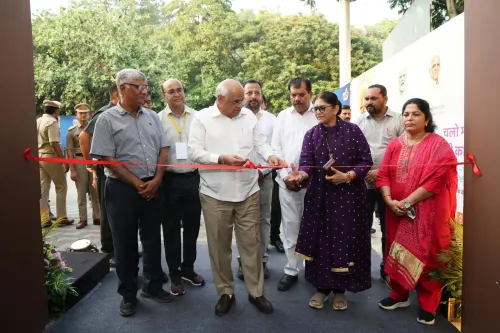
PM Modi has inaugurated Bharat Parv 2026 at Kevadia, Gujarat — a 16-day cultural festival running 30 October to 15 November under the Ek Bharat Shreshth Bharat initiative, showcasing India's regional crafts, heritage, and diversity.
Key Takeaways
Bharat Parv 2026 was inaugurated by PM Narendra Modi at Kevadia, Gujarat .
The festival runs from 30 October to 15 November 2026 — a 16-day window.
The event is anchored in the Ek Bharat Shreshth Bharat scheme, launched in 2015 to promote inter-state cultural exchange.
Kevadia is home to the Statue of Unity , lending symbolic resonance to the unity-themed festival.
Key beneficiaries include artisans, state tourism departments , and domestic tourists across India.
Union Minister Piyush Goyal amplified the invite on social media, urging public participation.
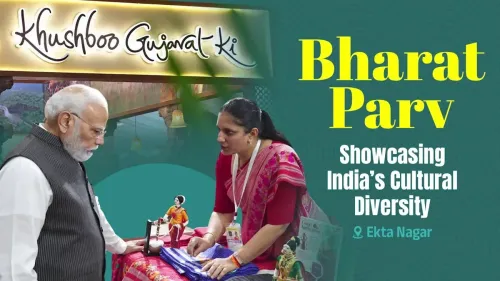
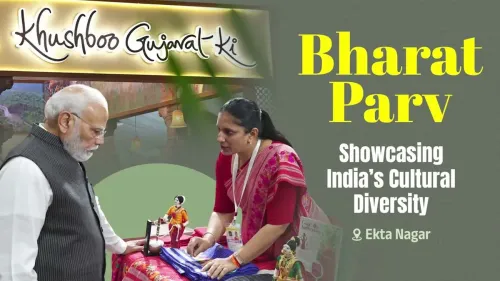
Union Commerce and Industry Minister Piyush Goyal turned the spotlight on Kevadia, Gujarat, on 31 October 2026, urging citizens to experience Bharat Parv 2026 — a sweeping cultural festival inaugurated by Prime Minister Narendra Modi and running from 30 October to 15 November.
Kevadia as the Stage: Why the Statue of Unity's Backyard Makes Sense
Kevadia is no ordinary venue. The town in Gujarat's Narmada district is home to the Statue of Unity — the world's tallest statue, dedicated to Sardar Vallabhbhai Patel — making it a natural backdrop for a festival explicitly themed around national integration. Hosting Bharat Parv here layers symbolic weight onto an already landmark site, connecting the physical monument to unity with a living, breathing celebration of India's cultural plurality.
What Bharat Parv Actually Is
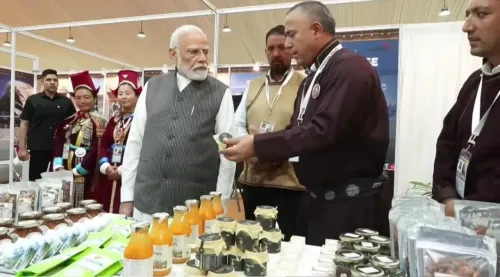
Bharat Parv is an annual government-organised cultural festival that brings together state pavilions, artisanal crafts, folk performances, and culinary traditions from across India under one roof. It is designed to be a microcosm of the country — a place where a visitor from Tamil Nadu can walk through a Ladakhi exhibit and a weaver from Odisha can find a national audience. The event has previously been held at prominent national venues to maximise its integrationist message.
The 'Ek Bharat Shreshth Bharat' Thread Running Through It All
The festival draws its ideological spine from Ek Bharat Shreshth Bharat, a government initiative launched in 2015 to institutionalise cultural exchange between paired states. The scheme encourages states to share language, cuisine, music, and tourism experiences — softening regional boundaries through shared discovery. Bharat Parv functions as that programme's most visible annual showcase, translating a policy directive into something tangible: stalls, performances, and conversations between strangers from opposite ends of the subcontinent.
For artisans, state tourism departments, and domestic travellers, the 16-day window through 15 November represents both commerce and culture — a market for handloom weavers and potters alongside a passport-free tour of India's diversity. The government will be watching visitor footfall and state pavilion participation closely as a measure of the programme's reach in its 2026 Kevadia edition.
A festival built on the premise that knowing each other is the first step to being one — and this year, it has the shadow of the Statue of Unity to make the point in stone.
Point of View
Folding a cultural programme into a site the ruling party has invested heavily in promoting. The Ek Bharat Shreshth Bharat framework, now over a decade old, has evolved from a scheme into a branding vehicle, and annual events like this are how it stays visible to citizens outside policy documents. For the government, footfall numbers from this edition will be an important data point ahead of upcoming state election cycles where cultural nationalism remains a mobilising theme. The choice to have a senior cabinet minister amplify the event underscores that this is as much a governance-communication exercise as a tourism initiative.
NationPress
31 Oct 2026
Frequently Asked Questions
What is Bharat Parv 2026 and where is it being held?
Bharat Parv 2026 is an annual government cultural festival showcasing India's heritage, crafts, and regional diversity. The 2026 edition is being held at Kevadia in Gujarat, home to the Statue of Unity, from 30 October to 15 November.
Who inaugurated Bharat Parv 2026?
Prime Minister Narendra Modi inaugurated Bharat Parv 2026 at Kevadia, Gujarat.
What is Ek Bharat Shreshth Bharat?
Ek Bharat Shreshth Bharat is a government initiative launched in 2015 to promote cultural and tourism exchanges between paired states, fostering national integration through shared language, cuisine, music, and traditions.
How long does Bharat Parv 2026 run?
Bharat Parv 2026 runs for 16 days, from 30 October to 15 November 2026, at Kevadia, Gujarat.
Why is Bharat Parv held at Kevadia?
Kevadia is home to the Statue of Unity, the world's tallest statue dedicated to Sardar Vallabhbhai Patel, making it a symbolically resonant venue for a festival centred on national unity and cultural integration.