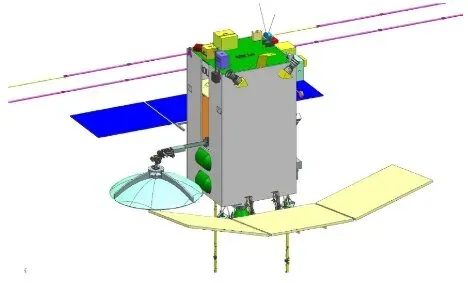
Is the Bharatiya Antariksh Station’s Module-01 Set to Launch by 2028?
Synopsis
The Indian government has revealed that progress on the Bharatiya Antariksh Station's first module is on schedule, with an anticipated launch by 2028. This ambitious project aims to enhance India’s capabilities in space exploration and research, ultimately facilitating future missions to the Moon and beyond. Stay tuned for more updates on this significant development!
Key Takeaways
Bharatiya Antariksh Station aims for a 2028 launch of its first module.
Full operational capability with five modules expected by 2035 .
Enhanced budget for the Gaganyaan Programme at Rs 20,193 crore .
Focus on international standards for subsystem interoperability.
Critical step towards India's lunar missions by 2047 .
New Delhi, Dec 3 (NationPress) The development of the homegrown space station Bharatiya Antariksh Station’s inaugural module is advancing steadily, with a launch anticipated by 2028, as reported to the Parliament by the government on Wednesday.
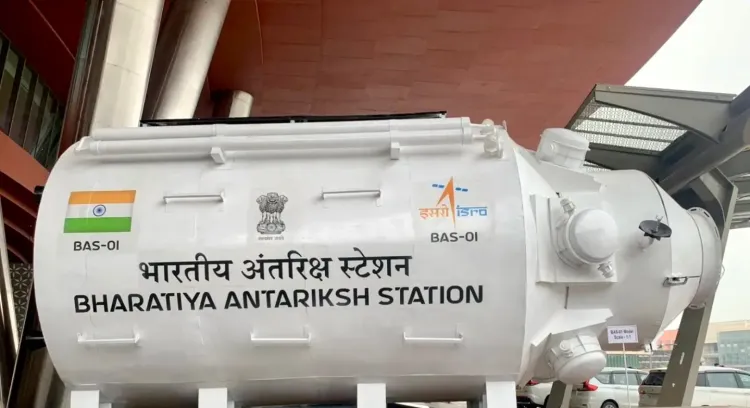
In a detailed written response, Union Minister of State for Space, Jitendra Singh, highlighted that the establishment and launch of the first module, known as the Base module (BAS-01), is scheduled for 2028. Furthermore, the fully operational space station comprising five modules is projected to be completed by 2035.
“Approval for the development and launch of Bharatiya Antariksh Station’s first module (BAS-01) was granted by the Union Cabinet in September 2024, aiming for a 2028 launch,” Singh stated.
“Progress is on track for the comprehensive system engineering of the BAS-01 module, along with the advancement of various subsystems’ technology,” he added.
The minister also pointed out that funding for the development and launch of BAS-1 is incorporated within the revised framework of the Gaganyaan Programme, which has received additional funding, bringing the total to Rs 20,193 crore.
“ISRO is ensuring that the design of the BAS-01 subsystems adheres to necessary international standards, facilitating interoperability with systems from other global agencies,” Singh noted, further mentioning that “the exploration of utilizing specialized testing facilities is currently underway.”
This progress is being achieved through existing collaborative agreements with various space organizations.
“The Bharatiya Antariksh Station (BAS) represents the next essential phase in India's ongoing Human Space Programme,” Singh remarked.
He emphasized that the creation of this indigenous space station will pave the way for enhanced space exploration opportunities, enabling the utilization of unique microgravity environments in Low Earth Orbit (LEO) for advanced scientific research and technological development.
Additionally, it will “support future Indian human exploration missions, including the planned landing on the Moon as part of India’s Space Vision 2047,” he added.
Point of View
I believe the advancements in the Bharatiya Antariksh Station project signify a monumental leap for India's space endeavors. This initiative not only showcases our technological prowess but also reinforces our commitment to exploring the cosmos. It's a critical step towards fulfilling our aspirations in space exploration and scientific research.
NationPress
29 Sept 2026
Frequently Asked Questions
What is the Bharatiya Antariksh Station?
The Bharatiya Antariksh Station is India's upcoming indigenous space station aimed at enhancing space exploration and research capabilities.
When is the first module of the Bharatiya Antariksh Station expected to launch?
The first module, known as BAS-01, is expected to launch by 2028.
What is the total budget for the Gaganyaan Programme?
The revised budget for the Gaganyaan Programme, which includes funding for the BAS-1, is Rs 20,193 crore.
How will the Bharatiya Antariksh Station benefit India?
It will facilitate advanced scientific research in microgravity environments and support future human exploration missions, including lunar landings.
What international standards is ISRO incorporating into BAS-01?
ISRO is embedding necessary international standards in the design of BAS-01 subsystems to ensure interoperability with global systems.