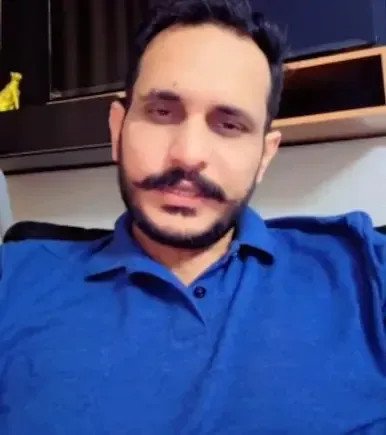
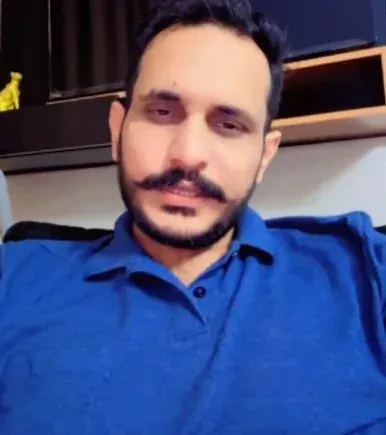
Shehzad Bhatti ISI module busted: 200+ arrested across 14 states
Synopsis
An ISI-linked operative who was once a social media influencer built a multi-state spy network that planted solar-powered CCTV cameras at Indian railway stations and streamed live feeds to Pakistan — all while simultaneously running recruitment, arms smuggling, and targeted killing plots. With 200+ arrests across 14 states, its dismantling is being called one of India's biggest counter-espionage operations in recent memory.
Key Takeaways
Home Minister Amit Shah confirmed the Shehzad Bhatti ISI-linked module has been fully dismantled as of 18 August 2025 .
More than 200 operatives arrested and 80 FIRs registered across 14 states .
The module deployed solar-powered CCTV cameras at vital installations, streaming live feeds to handlers in Pakistan .
Bhatti, a former social media influencer, reportedly used psychological profiling to recruit Indian youth with minimal financial inducement.
Authorities are pursuing UAPA designation and an Interpol Red Corner Notice against Bhatti.
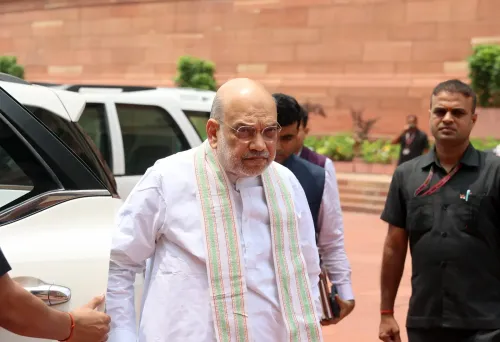
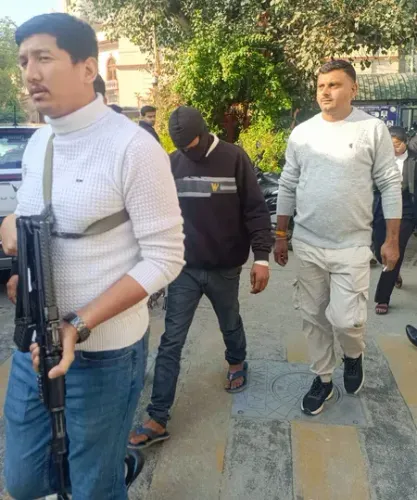
Home Minister Amit Shah on Monday, 18 August 2025 declared that security agencies had fully dismantled the Shehzad Bhatti network — one of the most expansive ISI-linked espionage modules uncovered on Indian soil in recent years. More than 200 operatives were arrested through coordinated sweeps spanning 14 states, with 80 First Information Reports registered across the country.
Scale and Complexity of the Operation
Officials involved in the investigation describe the Bhatti module as among the most structurally intricate they have encountered. Unlike conventional spy networks that focus on a single task, this module simultaneously ran surveillance operations, targeted killing plots, arms smuggling, and narcotics trafficking — a deliberate multi-pronged design, according to investigators, intended to confuse and overwhelm the agencies tracking it.
Notably, the module moved with unusual speed. Recruitments were completed and tasks assigned in rapid succession, leaving a narrow window for detection. An Intelligence Bureau official described it as one of the fastest-scaling covert networks they had monitored.
How Bhatti Recruited Indian Youth
Before his alleged induction into the Inter-Services Intelligence (ISI), Shehzad Bhatti was a social media influencer — a background that reportedly gave him a significant edge in recruitment. According to officials, Bhatti and his aides would initiate extended conversations with young targets on social media platforms, systematically profiling their insecurities, financial pressures, and psychological vulnerabilities before drawing them in.
'He was looking deep into the minds of possible recruits and this is how he managed to play with their emotions before roping them in,' an official said. Crucially, money was not always the primary lure — emotional manipulation and a sense of belonging were equally powerful tools, investigators noted.
The Solar-Powered CCTV Surveillance Network
Among the most alarming discoveries was a network of solar-powered closed-circuit television cameras installed at vital and high-footfall installations, including railway stations. These cameras were reportedly transmitting live video feeds directly to handlers in Pakistan — a technique officials described as likely a first of its kind in an ISI-linked operation targeting India.
By the time the module was dismantled, a significant volume of live footage had already been transmitted, according to officials. The revelation triggered several high-level security reviews chaired by the Ministry of Home Affairs, and substantial changes to the security infrastructure at affected installations had to be carried out.
Government Response and Coordination
Home Minister Shah reportedly made dismantling the Bhatti network an explicit operational priority, directing agencies to act swiftly and ensuring seamless coordination among police forces across all 14 states. Officials credited this centralised oversight by the Home Ministry as the decisive factor in cracking what they described as one of India's largest such modules in recent memory.
What Comes Next: UAPA, Interpol Red Notice
Investigators are now pursuing a two-track legal strategy. A proposal to designate Shehzad Bhatti under the Unlawful Activities (Prevention) Act (UAPA) has been sent to the Ministry of Home Affairs following consultations between state and central agencies. Officials say there is sufficient evidence to support the designation.
In parallel, agencies plan to approach Interpol for a Red Corner Notice against Bhatti, along with a look-out notice. Officials said the evidence linking the module to both Bhatti and the ISI is robust enough to expect Interpol cooperation. The next phase of the operation will focus on preventing Bhatti from rebuilding or expanding his network from abroad.
Point of View
Crowded installations — was penetrated not by sophisticated state actors but by a social-media-savvy recruiter working with off-the-shelf solar cameras. The live-feed breach is the more alarming detail; it suggests the ISI is iterating rapidly on low-cost, high-deniability surveillance tactics. The UAPA designation and Interpol notice are the right moves, but they are reactive. The harder question — how a network of this scale across 14 states went undetected long enough to transmit significant footage — deserves a public accounting that goes beyond the announcement of arrests.
NationPress
3 Oct 2026
Frequently Asked Questions
Who is Shehzad Bhatti and what is the ISI module named after him?
Shehzad Bhatti is an alleged ISI operative who, according to officials, ran a large-scale covert network inside India spanning surveillance, arms smuggling, narcotics trafficking, and targeted killing plots. He was reportedly a social media influencer before being recruited by Pakistan's Inter-Services Intelligence to build and operate the module.
How many people were arrested in the Bhatti module crackdown?
More than 200 operatives were arrested through coordinated operations across 14 Indian states, with 80 FIRs registered. Home Minister Amit Shah announced the module's complete dismantling on 18 August 2025.
What was the solar-powered CCTV network used for?
Bhatti's network installed solar-powered closed-circuit television cameras at vital and high-footfall installations, including railway stations, and used them to stream live video feeds to handlers in Pakistan. Officials described this as likely a first-of-its-kind surveillance technique in an ISI-linked operation targeting India.
What legal action is being taken against Shehzad Bhatti?
Authorities have sent a proposal to the Ministry of Home Affairs to designate Bhatti under the Unlawful Activities (Prevention) Act (UAPA). In parallel, agencies plan to seek an Interpol Red Corner Notice and a look-out notice against him to prevent him from rebuilding the network from abroad.
How did Bhatti recruit Indian youth into the network?
According to Intelligence Bureau officials, Bhatti leveraged his background as a social media influencer to identify and psychologically profile potential recruits online. He and his aides would engage targets in extended conversations, mapping their insecurities and financial vulnerabilities, before drawing them into the network — often with minimal monetary incentive.