Chhattisgarh CM Sai's Govt Backs Bihan Didi Rakhi Craft
Synopsis
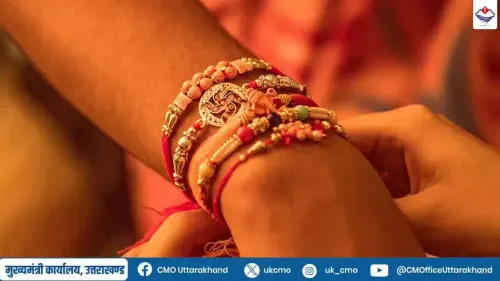
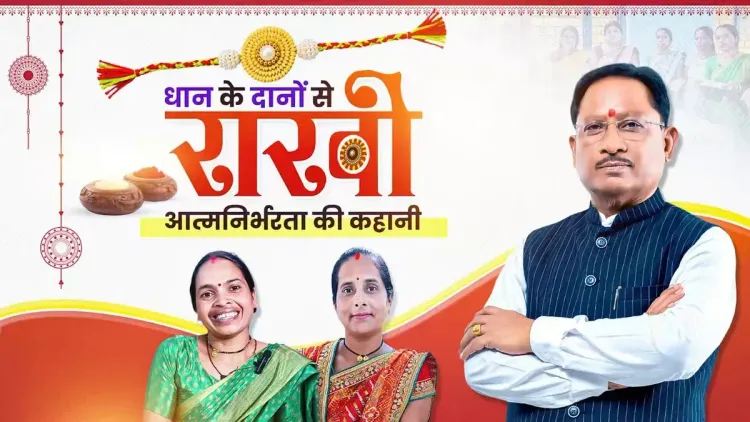
Chhattisgarh's Bihan self-help group women are crafting rakhis from paddy seeds ahead of Raksha Bandhan, earning supplementary income while embodying the Vocal for Local spirit — an initiative backed by CM Vishnu Deo Sai's government and the state's rural livelihood mission.
Key Takeaways
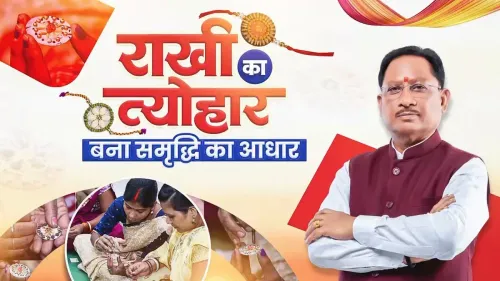
The Chief Minister's Office of Chhattisgarh highlighted on 20 August 2026 that Bihan SHG women are making rakhis from paddy seeds .
Bihan is Chhattisgarh's rural livelihoods programme under the State Rural Livelihood Mission , organising women into skill-based self-help groups.
The initiative aligns with the national Vocal for Local campaign under Atmanirbhar Bharat , first launched in May 2020 .
CM Vishnu Deo Sai , in office since December 2023 , has positioned women's SHG welfare as a key pillar of state policy.
The CMO post tagged Women and Child Development, Chhattisgarh and Bihan SRLM , indicating coordinated institutional support.
Paddy-seed rakhis offer rural women supplementary income ahead of the Raksha Bandhan festival season with minimal capital investment.
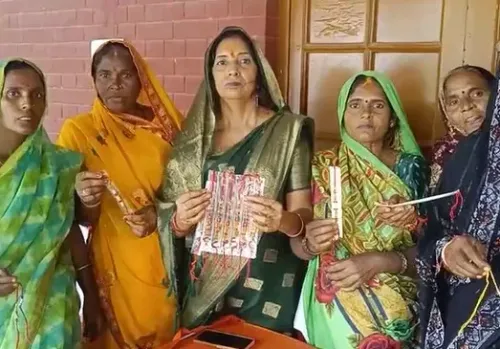
From paddy fields to festival threads — rural women in Chhattisgarh are crafting Raksha Bandhan rakhis from paddy seeds, turning an agricultural staple into a symbol of both skill and self-reliance. The Chief Minister's Office of Chhattisgarh shared the initiative on Thursday, 20 August 2026, spotlighting how the state's Bihan self-help group network is channelling women's craft into supplementary income ahead of the festival season.
The post, written in Hindi, celebrated the effort as proof that Vishnu Bhhaiya ki sarkar ('the government of their Vishnu Bhaiya') is actively encouraging the skills of Bihan didiyas — the women members of self-help groups under the Chhattisgarh State Rural Livelihood Mission. 'These rakhis made from paddy seeds are not just a proof of craftsmanship,' the post read, 'but are also realising the spirit of Vocal for Local.'
Paddy seeds to festival rakhis: what the Bihan network is doing
Bihan, the state's flagship rural livelihoods programme, organises rural women into self-help groups and equips them with income-generating skills. The paddy-seed rakhi initiative is a textbook example of value addition — converting a freely available agricultural material into a marketable, culturally resonant product. It requires minimal capital, uses local resources, and taps into guaranteed seasonal demand around Raksha Bandhan.
The approach mirrors a broader national pattern: Indian states have increasingly woven SHG programmes into the Atmanirbhar Bharat narrative by encouraging festival crafts from agricultural byproducts. Chief Minister Vishnu Deo Sai, who took office in December 2023, has aligned the state's women-welfare messaging closely with this central theme, and the Bihan programme sits at the centre of that alignment.
Vocal for Local as state policy, not just a slogan
The Vocal for Local campaign, launched under the Atmanirbhar Bharat package in May 2020, called on Indians to prefer domestically made goods. For Chhattisgarh's rural women, the paddy-seed rakhi is that idea made tangible — a product that is local in material, local in labour, and local in cultural meaning. Every rakhi sold is, in effect, a small act of economic sovereignty.
The CMO's post tagged @WCDCgGov (Women and Child Development, Chhattisgarh) and @bihan_cg_srlm, signalling coordinated government backing rather than a standalone craft fair. That institutional linkage matters: it suggests these products could eventually find their way into state procurement channels or organised festival markets — giving Bihan didiyas a route beyond informal sales.
As the festival calendar opens and demand for rakhis peaks, Chhattisgarh's paddy-seed craft is a quiet reminder that the most durable economic empowerment often begins with what a community already has in its hands.
Point of View
High-visibility way for the Sai government to demonstrate that its women-welfare agenda is producing tangible, culturally legible outcomes — not just policy documents. By anchoring a craft activity to both the Atmanirbhar Bharat narrative and the Raksha Bandhan calendar, the state scores on the central government's ideological scorecard while generating real supplementary income for rural women. The involvement of the Women and Child Development department alongside Bihan SRLM points to deliberate cross-departmental coordination, which is often the difference between a one-off craft fair and a scalable livelihood model. The next test is whether these products find sustained market access beyond the festival window.
NationPress
5 Oct 2026
Frequently Asked Questions
What is the Bihan scheme in Chhattisgarh?
Bihan is the Chhattisgarh government's rural livelihoods programme under the State Rural Livelihood Mission, which organises rural women into self-help groups and supports them with skill training and income-generating activities.
What are paddy seed rakhis and who is making them?
Paddy seed rakhis are Raksha Bandhan threads crafted from rice paddy seeds by women members of Bihan self-help groups in Chhattisgarh, turning an agricultural byproduct into a marketable festival product.
What is Vocal for Local and how does it connect to this initiative?
Vocal for Local is a national campaign under Atmanirbhar Bharat urging Indians to buy domestically made goods. The paddy-seed rakhi initiative embodies this by using local materials and local labour to create a product with strong cultural demand.
Who is Vishnu Deo Sai and what is his role in this?
Vishnu Deo Sai is the Chief Minister of Chhattisgarh since December 2023. His government, through the Bihan programme, is actively promoting skill-based livelihood activities for rural women, including the paddy-seed rakhi craft.
How does making rakhis help Bihan women earn extra income?
Raksha Bandhan creates reliable seasonal demand for rakhis. By producing them from low-cost paddy seeds, Bihan SHG women can sell festival products with minimal input cost, generating supplementary earnings outside their primary agricultural work.