CM Bihar Office Backs Belwa-Meenapur Link Channel Project

Synopsis
Bihar's Chief Minister's Office announced on 19 July 2026 that the Belwa-Meenapur Link Channel Project will transform flood and irrigation management in northern Bihar, deliver direct benefits to farmers, and drive sustainable regional development.
Key Takeaways
The Chief Minister's Office of Bihar officially announced the Belwa–Meenapur Link Channel Project on 19 July 2026 .
The project targets two chronic problems in northern Bihar: annual flooding and inadequate irrigation during dry seasons.
Primary beneficiaries are farmers in the project's command area, who will gain flood protection and improved irrigation access.
The initiative aligns with Bihar's long-standing strategy of integrated water-resource management under Chief Minister Nitish Kumar .
Key details including project cost, implementing agency, and completion timeline are yet to be officially disclosed.
Progress on tendering and budgetary allocations in upcoming Bihar state budget sessions will indicate the project's momentum.
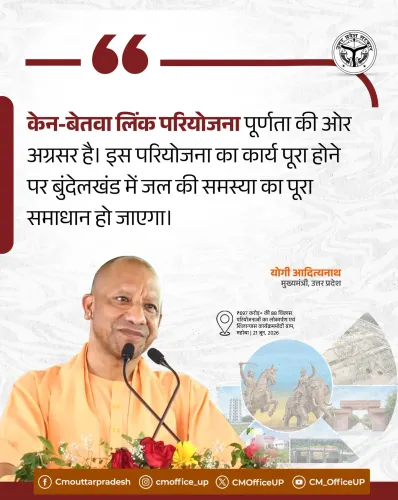
The Chief Minister's Office of Bihar on Sunday, 19 July 2026, announced that the Belwa–Meenapur Link Channel Project will give new direction to flood and irrigation management in the region, benefit farmers, and accelerate sustainable and holistic development of the area.
The post, shared from the official @officecmbihar account, stated in Hindi: 'बेलवा–मीनापुर लिंक चैनल परियोजना से बाढ़ एवं सिंचाई प्रबंधन को नई दिशा मिलेगी, किसानों को लाभ होगा और क्षेत्र के सतत एवं समग्र विकास को गति प्राप्त होगी।' — meaning, 'The Belwa–Meenapur Link Channel Project will give new direction to flood and irrigation management, farmers will benefit, and the sustainable and holistic development of the region will gain momentum.'
Context
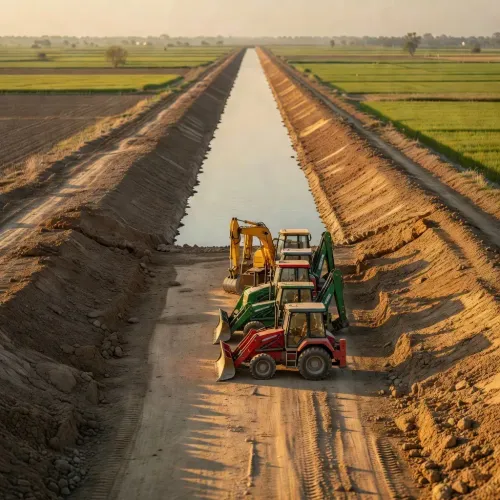
The Belwa–Meenapur Link Channel Project is positioned as a dual-purpose infrastructure initiative targeting two of Bihar's most persistent challenges: annual flooding and inadequate dry-season irrigation. The announcement underscores the state government's continued focus on water-resource infrastructure as a lever for rural economic development.
Meenapur is a block in Muzaffarpur district in northern Bihar, a zone historically vulnerable to inundation from rivers that originate in Nepal and swell during the monsoon. Link-channel works in such areas are designed to divert excess floodwater while storing it for agricultural use in lean seasons.
Policy Backdrop
The Government of Bihar, under Chief Minister Nitish Kumar, has pursued a sustained programme of embankment reinforcement and link-canal construction since the mid-2000s. These projects form part of an integrated water-resource management strategy aimed at breaking the cycle of monsoon devastation followed by summer drought that afflicts northern Bihar's farming communities.
Bihar's northern districts sit on the flood plains of rivers such as the Gandak, Bagmati, Kamla-Balan and Burhi Gandak, all of which carry heavy sediment loads from the Himalayan foothills. State investment in channel and embankment infrastructure has been a recurring budgetary priority, with multiple projects sanctioned and implemented over successive administrations.
Stakeholders and Impact
The primary beneficiaries identified in the announcement are farmers in the project's command area, who stand to gain both protection from flood damage to standing crops and improved access to irrigation water during the rabi (winter) and zaid (summer) cropping seasons. Flood-prone villages along the link-channel alignment are also expected to see reduced inundation risk.
For the broader rural economy, reliable irrigation access can support crop diversification, reduce dependence on rain-fed agriculture, and improve agricultural income — outcomes that align with the state government's stated goal of sustainable and holistic regional development. Communities that have historically borne the brunt of annual flooding stand to gain from improved drainage infrastructure.
What's Next
Observers will watch for formal project notifications detailing the alignment, estimated cost, implementing agency, and timeline for the Belwa–Meenapur Link Channel Project. Tendering processes and any related allocations in upcoming Bihar state budget sessions will be key indicators of the project's pace and scale.
The announcement signals the state government's intent to keep water-management infrastructure at the centre of its rural development agenda. Whether the project delivers its twin promises of flood mitigation and irrigation augmentation will depend on execution timelines and monsoon-season coordination with river-management authorities.
Point of View
' the CM's Office is deploying language that resonates strongly in an agrarian constituency where monsoon flooding is an annual trauma. The announcement, however, is light on specifics — no cost figure, no timeline, no implementing agency — which means its political salience currently outpaces its administrative footprint. The real test will come when project documents enter the public domain and implementation begins against Bihar's notoriously complex river-management landscape.
NationPress
18 Oct 2026
Frequently Asked Questions
What is the Belwa-Meenapur Link Channel Project in Bihar?
The Belwa–Meenapur Link Channel Project is a water-infrastructure initiative announced by the Bihar government on 19 July 2026, designed to improve flood management and irrigation in northern Bihar, particularly benefiting farmers in the region.
How will the Belwa-Meenapur Link Channel Project help farmers?
The project aims to protect farmland from annual monsoon flooding and provide improved irrigation water access during dry cropping seasons, potentially enabling crop diversification and higher agricultural income for farmers in the command area.
Which area does the Belwa-Meenapur Link Channel Project cover?
The project covers the Belwa and Meenapur areas, with Meenapur being a block in Muzaffarpur district in northern Bihar — a region historically prone to inundation from rivers originating in Nepal.
What is Bihar's track record on flood and irrigation infrastructure?
Under Chief Minister Nitish Kumar, Bihar has pursued embankment reinforcement and link-canal construction since the mid-2000s as part of an integrated water-resource management strategy to address recurring floods and irrigation deficits in northern districts.
When was the Belwa-Meenapur Link Channel Project announced?
The Chief Minister's Office of Bihar announced the project on Sunday, 19 July 2026, via an official post on X (formerly Twitter).