CM Nitish Kumar: 20.46 Lakh Students Benefit Under Pre-Matric Scheme
Synopsis
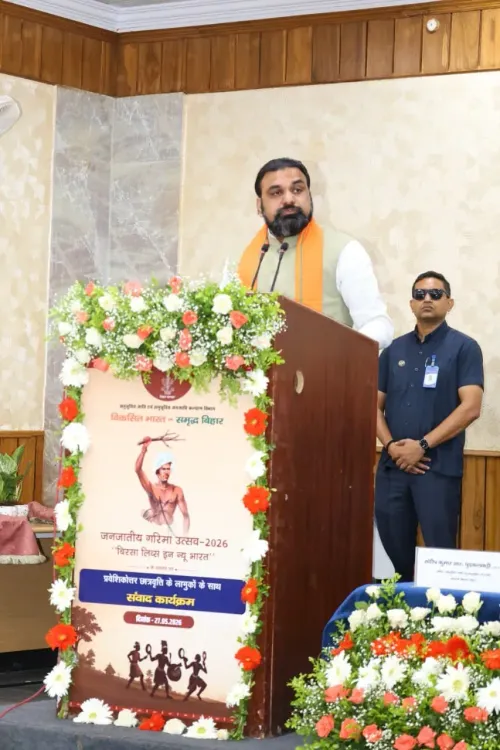
The Chief Minister's Office of Bihar announced that over 20.46 lakh students, including 1.41 lakh from Scheduled Tribe communities, received benefits under the Pre-Matric Scholarship Scheme in 2026. CM Nitish Kumar also announced marathon competitions in tribal areas as part of broader outreach.
Key Takeaways
20 lakh 46 thousand students received benefits under Bihar's Pre-Matric Scholarship Scheme in the current year.
1 lakh 41 thousand of the beneficiaries belong to Scheduled Tribe communities.
Chief Minister Nitish Kumar announced that marathon competitions will be organised in tribal areas.
The announcement was made by the official Chief Minister's Office of Bihar on 27 May 2026 .
The Pre-Matric Scholarship covers students up to Class 10 from SC/ST and other marginalised groups.
Bihar's tribal population is concentrated in districts including West Champaran and Kaimur .
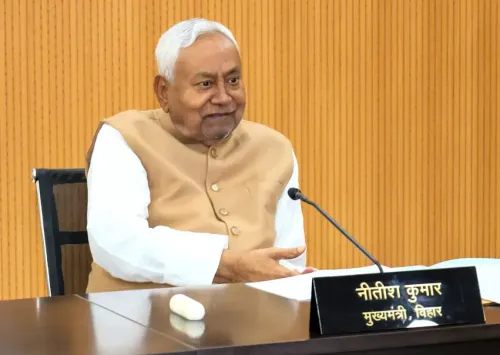
The Chief Minister's Office of Bihar announced on Wednesday, 27 May 2026 that over 20 lakh 46 thousand students have received benefits under the Pre-Matric Scholarship Scheme this year, including 1 lakh 41 thousand students from Scheduled Tribe communities. The announcement also confirmed that marathon competitions will be organised in tribal areas, a move the Chief Minister's Office attributed directly to Chief Minister Nitish Kumar.
Context
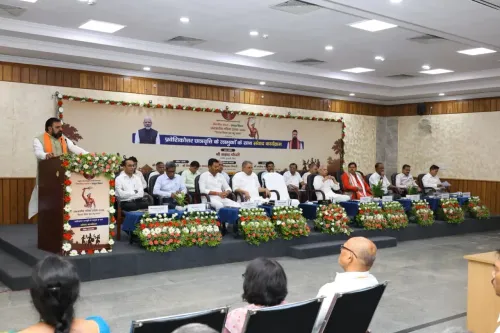
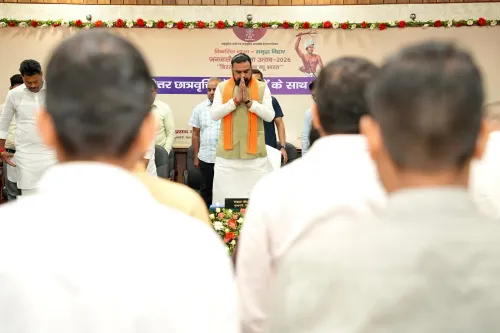
The post, shared by the official Chief Minister's Office of Bihar account, states: 'प्री-मैट्रिक छात्रवृत्ति योजना के अंतर्गत इस वर्ष 20 लाख 46 हजार छात्र-छात्राओं को लाभ प्रदान किया गया है' ('Under the Pre-Matric Scholarship Scheme, 20 lakh 46 thousand students have been provided benefits this year'). Of these, 1 lakh 41 thousand are from Scheduled Tribe backgrounds. The statement was part of a broader address by Chief Minister Nitish Kumar touching on welfare measures for marginalised communities.
The post further quotes the Chief Minister: 'जनजातीय क्षेत्रों में मैराथन प्रतियोगिताओं का आयोजन किया जाएगा' ('Marathon competitions will be organised in tribal areas'). This pairing of a financial welfare announcement with a community sports initiative reflects a deliberate outreach strategy targeting tribal habitations across the state.
Policy Backdrop
Bihar has implemented the central Pre-Matric Scholarship Scheme for Scheduled Caste and Scheduled Tribe students since at least the early 2010s. The scheme provides financial assistance to students studying up to Class 10, with the state periodically adding its own top-ups and digitising disbursement processes through successive budget cycles.
Scheduled Tribe populations in Bihar are concentrated in districts such as West Champaran and Kaimur. State governments have consistently used a combination of monetary incentives and cultural or sporting programmes to improve school retention rates among tribal communities — a pattern also visible in other eastern states with significant Adivasi demographics.
Stakeholders and Impact
The primary beneficiaries are pre-matric schoolchildren from economically and socially marginalised backgrounds, with a specific sub-cohort of 1.41 lakh tribal students receiving targeted support this year. For these students, the scholarship can be a decisive factor in preventing dropout before the completion of secondary education.
The announcement of marathon competitions in tribal areas signals an intent to complement academic support with community engagement. Such events have historically served as platforms for awareness drives on education and health in remote habitations, potentially drawing in families who might otherwise remain outside the reach of government outreach.
What's Next
Details on the schedule, locations, and budget for the proposed tribal marathons have not yet been made public. Observers will watch for official notifications from the state's Welfare Department and the Education Department on implementation timelines.
Official data on beneficiary numbers for the next academic year's scholarship cycle will also be a key indicator of whether the state is expanding coverage further. Bihar's approach — linking scholarship scale-up with on-ground community events — could serve as a reference model for other states seeking to improve tribal education outcomes.
Point of View
Rather than a one-off mobilisation, will be the real test of this announcement's policy depth.
NationPress
19 Sept 2026
Frequently Asked Questions
What is the Pre-Matric Scholarship Scheme in Bihar?
The Pre-Matric Scholarship Scheme is a government programme that provides financial assistance to students from Scheduled Caste, Scheduled Tribe, and other marginalised groups who are studying up to Class 10, aimed at reducing dropout rates.
How many students benefited from the Pre-Matric Scholarship in Bihar in 2026?
According to the Chief Minister's Office of Bihar, over 20 lakh 46 thousand students received benefits under the scheme in 2026, of whom 1 lakh 41 thousand are from Scheduled Tribe communities.
What did CM Nitish Kumar announce for tribal areas in Bihar?
Chief Minister Nitish Kumar announced that marathon competitions will be organised in tribal areas of Bihar as part of outreach efforts for tribal communities.
Which districts in Bihar have significant Scheduled Tribe populations?
Scheduled Tribe populations in Bihar are notably concentrated in districts such as West Champaran and Kaimur, among others.
Why does Bihar pair scholarships with sports events in tribal areas?
Bihar governments have consistently combined monetary scholarship schemes with community events like sports competitions to improve school retention rates and raise awareness among tribal populations in remote habitations.