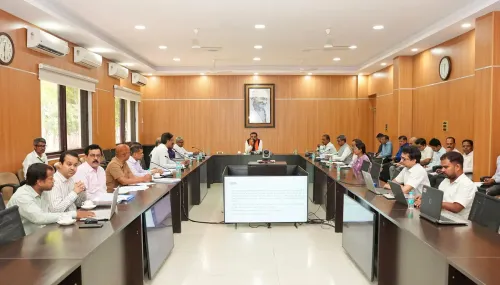
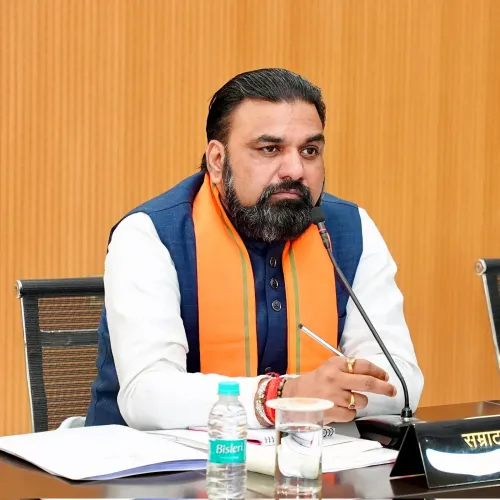
Bihar CM Samrat Choudhary Marks World Groundwater Day
Synopsis
Bihar Chief Minister Samrat Choudhary used World Groundwater Day on June 10, 2026, to call for stronger water conservation commitments, highlighting groundwater as essential to life, agriculture, and the environment for present and future generations.
Key Takeaways
Bihar Chief Minister Samrat Choudhary posted a conservation message on World Groundwater Day, June 10, 2026 .
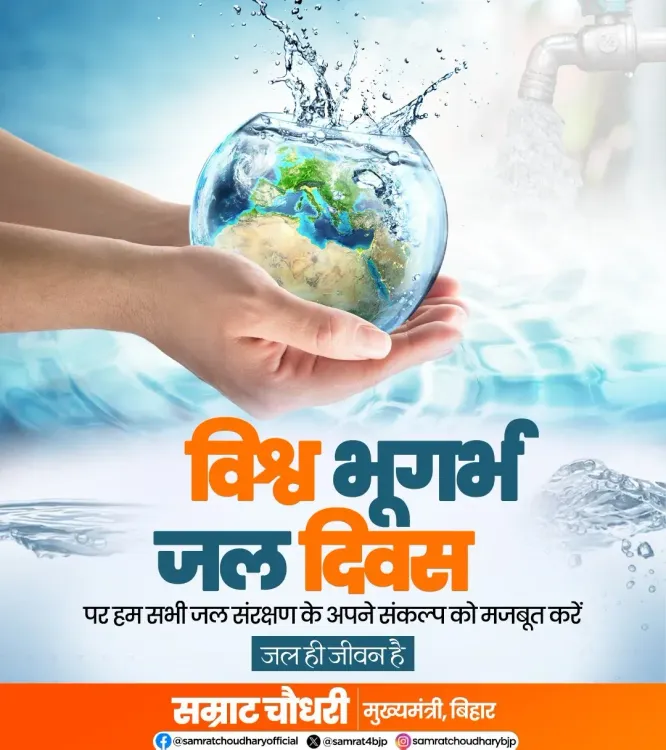
He described groundwater as the foundation of life, agriculture, and the environment , urging citizens to resolve to save every drop.
Bihar is a participating state under the Atal Bhujal Yojana (2019) , the central scheme for community-led groundwater management.
The Jal Jeevan Mission (2019) also prioritises groundwater source sustainability in rural Bihar .
Parts of Bihar 's Gangetic plains face arsenic contamination concerns, adding a public health dimension to groundwater governance.
Farmers and rural households dependent on groundwater for irrigation and drinking water are the primary stakeholders in any conservation initiative.
Bihar Chief Minister Samrat Choudhary on Wednesday, June 10, 2026, marked World Groundwater Day by calling on citizens to renew their commitment to water conservation, underlining groundwater as the foundation of life, agriculture, and the environment.
Context
In his post, CM Choudhary wrote: 'जल ही जीवन है, आइए हर बूंद बचाने का संकल्प लें' ['Water is life; let us resolve to save every drop']. He framed groundwater conservation not merely as a present-day necessity but as an obligation to future generations, emphasising its role in sustaining livelihoods, food production, and ecological balance.
World Groundwater Day is observed annually to raise awareness about the critical importance of groundwater resources for drinking water supply, irrigation, and ecosystem health globally. The day has gained particular resonance in India, where groundwater accounts for a substantial share of irrigation and rural drinking water.
Policy Backdrop
Bihar is among the states identified under the central government's Atal Bhujal Yojana, launched in 2019, which promotes community-led, sustainable groundwater management through panchayat-level planning and recharge interventions in water-stressed blocks. The scheme aims to improve groundwater governance at the grassroots level by integrating data-driven planning with local participation.
The Jal Jeevan Mission, also launched in 2019, complements these efforts by targeting functional household tap connections across rural India, with a strong emphasis on source sustainability — including groundwater recharge and protection. Bihar, a state with significant groundwater dependence for both agriculture and drinking water, has been a key focus area under both programmes.
Parts of Bihar in the Gangetic plains also face documented concerns around arsenic contamination in groundwater, adding a public health dimension to conservation and regulation efforts that go beyond mere quantity management.
Stakeholders and Impact
Bihar's farming community and rural households are the most directly affected stakeholders in any groundwater policy conversation. Agriculture in the state is heavily dependent on groundwater extraction, particularly for paddy cultivation, making the sustainability of aquifers a direct food-security concern for millions of farmers.
For rural households — especially those not yet covered by piped water supply — groundwater through handpumps and shallow wells remains the primary source of drinking water. Depletion or contamination of these sources carries immediate consequences for health and daily living.
What's Next
Observers will watch Bihar's forthcoming state budget allocations and any new administrative guidelines around artificial recharge structures and groundwater regulation as indicators of how the state translates conservation messaging into on-ground policy action. Alignment with SDG 6 targets on clean water and sanitation will likely remain a stated priority in state-level planning documents.
As groundwater stress intensifies across India's agriculture-heavy states, the consistency between political messaging on days like World Groundwater Day and budgetary commitments to recharge infrastructure will be the true measure of intent.
Point of View
Where groundwater depletion and arsenic contamination are documented challenges, the gap between awareness communication and enforceable policy action remains the critical variable. Whether this signals a forthcoming state-level push on groundwater regulation or remains a ceremonial marker will become clearer in the next budget cycle.
NationPress
24 Oct 2026
Frequently Asked Questions
What is World Groundwater Day and why does it matter for India?
World Groundwater Day is an annual observance to raise awareness about the importance of groundwater for drinking, irrigation, and ecosystems. It is particularly significant for India, where groundwater is the primary source of irrigation and rural drinking water, and depletion is a growing concern across multiple states including Bihar.
What did Bihar CM Samrat Choudhary say on World Groundwater Day 2026?
CM Samrat Choudhary called on citizens to strengthen their commitment to water conservation, stating that groundwater is the foundation of life, agriculture, and the environment, and that its protection is essential for both present and future generations.
What is the Atal Bhujal Yojana and does it cover Bihar?
Atal Bhujal Yojana is a central government scheme launched in 2019 to promote community-led, sustainable groundwater management through panchayat-level planning in water-stressed areas. Bihar is among the states covered under the scheme.
What are Bihar's main groundwater challenges?
Bihar faces significant groundwater depletion due to heavy agricultural extraction, particularly for paddy cultivation. Parts of the state in the Gangetic plains also have documented arsenic contamination in groundwater, posing public health risks for rural communities dependent on handpumps and shallow wells.
How does Jal Jeevan Mission relate to groundwater conservation in Bihar?
Jal Jeevan Mission, launched in 2019, aims to provide functional household tap connections across rural India with a focus on source sustainability, including groundwater recharge and protection. Bihar has been a key focus state for the mission given its large rural population's dependence on groundwater.