Bihar CM joins Jagannath Rath Yatra, sweeps path in cleanliness message
Synopsis
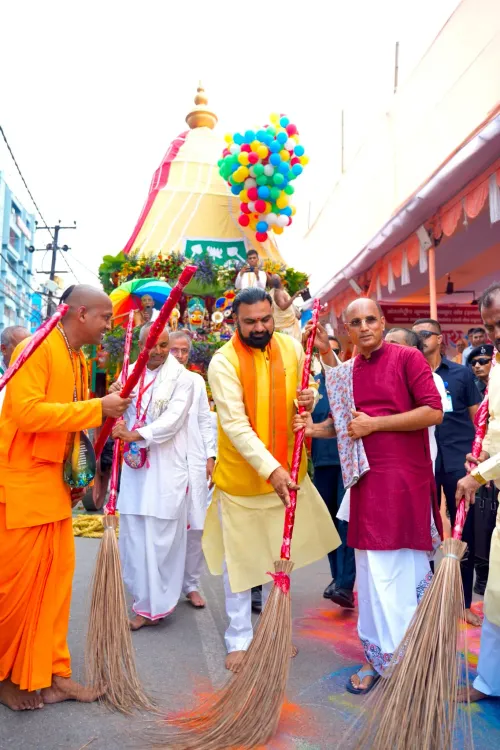
Bihar Chief Minister Nitish Kumar participated in the Jagannath Rath Yatra on 16 July 2026, performing the deity's aarti, sweeping the procession route as a message of cleanliness and service, and pulling the chariot rope to formally commence the festival.
Key Takeaways
CM Nitish Kumar participated personally in the Jagannath Rath Yatra on 16 July 2026 .
He performed the aarti of Lord Jagannath as part of the festival rituals.
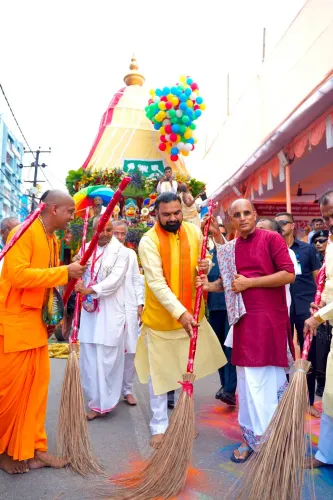
He swept the Rath Yatra procession route with a broom, conveying a message of service, dedication, and cleanliness.
He pulled the chariot rope to formally inaugurate the holy Rath Yatra.
The gesture aligns with both ancient Vaishnavite tradition and the national Swachh Bharat Mission launched in 2014 .
The participation reflects broader cross-state cultural engagement between Bihar and the Jagannath tradition rooted in Odisha .
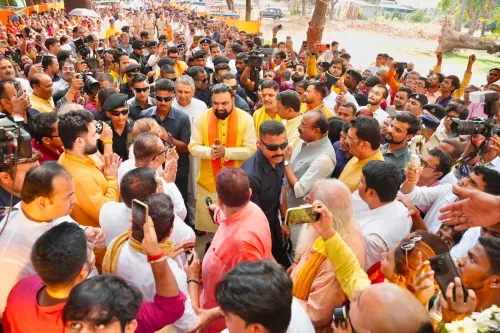
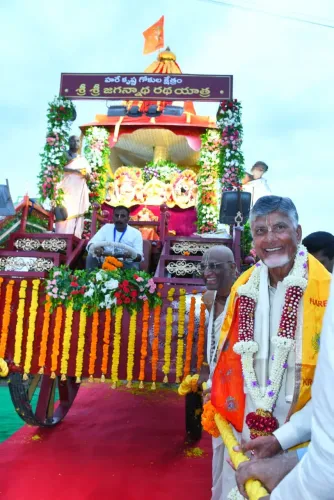
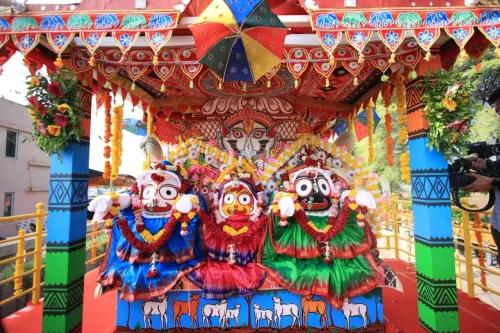
The Chief Minister's Office of Bihar announced on Thursday, 16 July 2026 that Chief Minister Nitish Kumar personally participated in the sacred Jagannath Rath Yatra, performing the aarti of Lord Jagannath, sweeping the chariot procession route with a broom, and pulling the chariot rope to formally commence the festival.
The official post from @officecmbihar stated that the Chief Minister 'performed the aarti of Lord Shri Jagannath, conveyed the message of service, dedication, and cleanliness by personally sweeping the Rath Yatra route, and inaugurated the holy Rath Yatra of Lord Shri Jagannath by pulling the rope of the chariot.'
Context
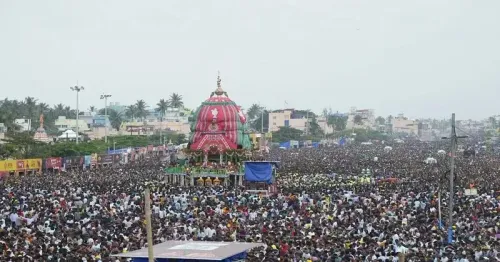
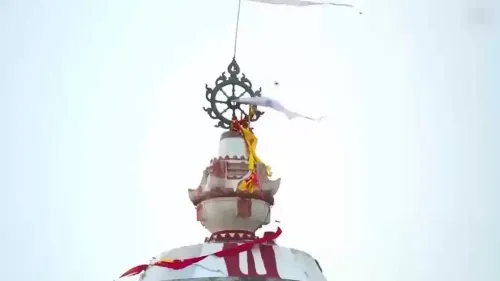
The Jagannath Rath Yatra is one of India's most revered Hindu festivals, traditionally centred on the Jagannath Temple in Puri, Odisha. The festival draws millions of devotees annually and holds deep cultural significance across eastern and northern India. Bihar, with its large Hindu population and historical ties to Vaishnavite traditions, regularly sees local observances of the Rath Yatra across the state. CM Nitish Kumar's participation included three distinct acts: the ritual aarti, the symbolic sweeping of the procession route, and the pulling of the chariot rope — each carrying its own devotional and civic meaning.Policy Backdrop
The act of sweeping the Rath Yatra route is a centuries-old tradition of humility in Vaishnavite practice, in which even kings and nobles sweep the path before the chariot as an act of surrender before the deity. CM Kumar's gesture simultaneously echoes this ancient custom and aligns with the Swachh Bharat Mission, the national cleanliness campaign launched in 2014 that encourages public figures to visibly participate in sanitation drives. Indian state leaders across parties have increasingly used participation in religious festivals to combine devotional outreach with social messaging on hygiene and community service. The broom, in this context, carries both spiritual and civic symbolism — a pattern consistent with how major national campaigns have been integrated into cultural moments.Stakeholders and Impact
The primary audience for this gesture is Bihar's large community of Hindu devotees, for whom the Chief Minister's personal participation in the aarti and chariot-pulling carries strong cultural resonance. By physically sweeping the route, Nitish Kumar also signalled to the broader public — and to local administrative machinery — the importance of cleanliness as a civic value, not merely a bureaucratic directive. Cross-state religious engagement of this kind also reinforces cultural ties between Bihar and Odisha, two states that share deep historical and devotional connections around the Jagannath tradition. For Bihar residents unable to travel to Puri, such state-level observances serve as an important point of participation.What's Next
The Bihar government's visible engagement with the Rath Yatra may be followed by announcements on cultural tourism initiatives or expanded cleanliness drives linked to the festival calendar. Observers will watch whether the administration formalises any state-level Rath Yatra infrastructure or ties the event to broader sanitation and heritage programmes in the coming weeks.Point of View
Broom-sweeping, and chariot-rope pulling — is a carefully layered public act that blends devotional authenticity with civic messaging. The broom gesture in particular is politically deft: it draws on a millennia-old tradition of royal humility before Lord Jagannath while simultaneously echoing the Swachh Bharat Abhiyan's emphasis on visible leadership in cleanliness. For a Chief Minister with a long tenure, such moments of personal participation in mass religious events serve to reinforce grassroots connect ahead of any electoral cycle. The cross-state dimension of engaging with an Odisha-rooted tradition also subtly signals Bihar's cultural confidence and outreach beyond its own borders.
NationPress
15 Oct 2026
Frequently Asked Questions
Why did Bihar CM Nitish Kumar sweep the Rath Yatra route?
CM Nitish Kumar swept the Rath Yatra procession route as a symbolic act of service, dedication, and cleanliness — echoing both the ancient Vaishnavite tradition of humility before Lord Jagannath and the spirit of the national Swachh Bharat Mission.
What is the Jagannath Rath Yatra and where is it held?
The Jagannath Rath Yatra is a major Hindu chariot festival dedicated to Lord Jagannath. It is traditionally held in Puri, Odisha, but is observed across India, including in Bihar.
Did Nitish Kumar pull the chariot rope at the Rath Yatra?
Yes, according to the official Chief Minister's Office of Bihar, CM Nitish Kumar pulled the rope of the chariot to formally inaugurate the Jagannath Rath Yatra.
What message did Bihar CM give at the Rath Yatra 2026?
CM Nitish Kumar conveyed a message of service, dedication, and cleanliness by personally sweeping the Rath Yatra route with a broom before the procession began.
When did Bihar CM participate in the Jagannath Rath Yatra 2026?
The Chief Minister's Office of Bihar posted about CM Nitish Kumar's participation on 16 July 2026.