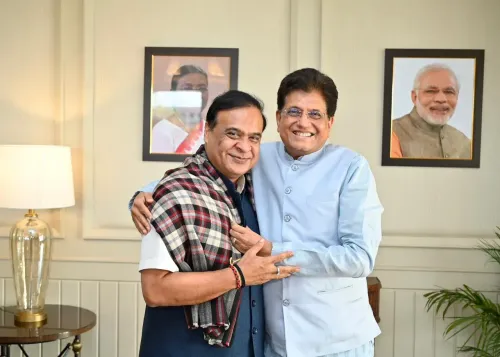
CM Himanta meets C.M. Ramesh, discusses Assam connectivity
Synopsis
Assam Chief Minister Himanta Biswa Sarma met BJP leader C.M. Ramesh on 16 July 2026, discussing Assam's connectivity and the development potential of North East India, signalling continued political focus on the region's infrastructure agenda.
Key Takeaways
CM Himanta Biswa Sarma met BJP leader C.M.
Ramesh on 16 July 2026 and discussed Assam's connectivity and North East India's potential .
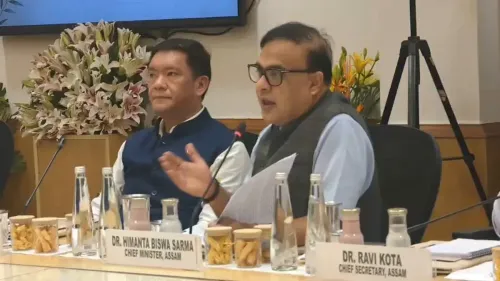
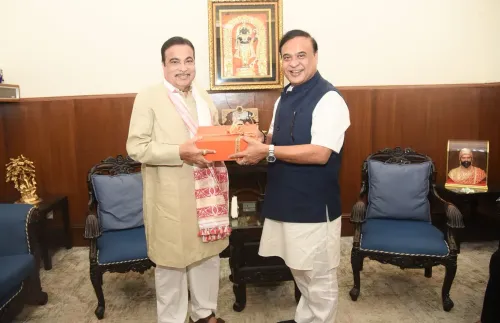
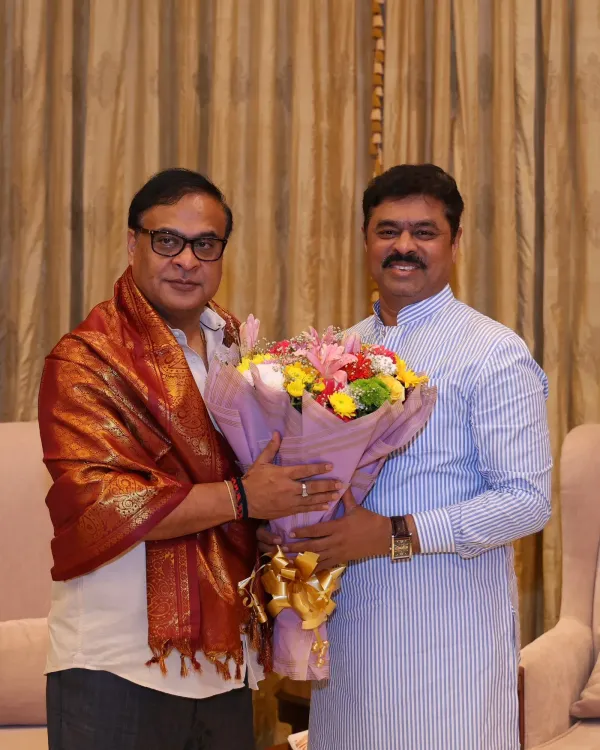
The meeting was accompanied by four images shared on X, indicating a formal engagement.
Sarma serves as convenor of the North-East Democratic Alliance (NEDA) , amplifying the regional significance of such bilateral discussions.
The Act East Policy (2014) and PM Gati Shakti Master Plan (2021) form the policy backbone for Northeast connectivity upgrades.
Assam is the central node in the Northeast's road, rail and air connectivity network, making its CM a key interlocutor for national-level infrastructure decisions.
Future Union Budget allocations and NEDA meetings will be watched for concrete project announcements flowing from such discussions.
Assam Chief Minister Himanta Biswa Sarma on Thursday, 16 July 2026, acknowledged a meeting with BJP leader C.M. Ramesh, describing their conversation as focused on Assam's connectivity and the broader development potential of North East India.
Context
Taking to X, CM Sarma wrote: 'Thank you, Shri C.M. Ramesh ji, for your kind words. It was a pleasure meeting you and discussing Assam's connectivity and the North East's immense potential.' The post was accompanied by four images from the meeting, signalling a substantive bilateral engagement between the two BJP leaders.
C.M. Ramesh is a BJP politician who has previously engaged with Northeast leaders on regional development matters. The acknowledgement of 'kind words' suggests Ramesh publicly praised the Chief Minister's efforts before or after the meeting.
Policy Backdrop
Connectivity has emerged as the defining infrastructure theme for North East India over the past decade. The Act East Policy, unveiled in 2014, set the strategic frame for improving physical and economic links between the eight northeastern states and ASEAN nations, treating the region as a gateway rather than a periphery.
The PM Gati Shakti National Master Plan, launched in 2021, further institutionalised multi-modal coordination — integrating roads, railways, waterways and air corridors — with the Northeast identified as a priority zone. Assam, as the region's largest state by population and the seat of its principal rail and road arteries, sits at the centre of these plans.
CM Sarma also serves as convenor of the North-East Democratic Alliance (NEDA), giving him a coordinating role that extends beyond Assam's borders. His meetings with central-level BJP leaders frequently carry implications for inter-state project clearances, funding allocations, and legislative support for regional initiatives.
Stakeholders and Impact
The eight Northeast states stand to benefit most directly from improved connectivity, which economists link to reduced logistics costs, greater market access, and accelerated private investment. Assam in particular is positioned to gain from upgraded rail corridors and highway projects that could cut transit times to the rest of India.
Infrastructure developers, both public-sector undertakings and private contractors, are key stakeholders watching such high-level discussions for signals on project pipelines and timelines. Communities in remote districts of the Northeast, long underserved by transport links, represent the ground-level constituency for these policy conversations.
Geopolitically, improved internal connectivity in the Northeast is viewed as part of a broader national strategy to deepen integration of the region and strengthen India's position relative to neighbouring countries.
What's Next
Observers will watch the next Union Budget and forthcoming NEDA coordination meetings for fresh allocations targeting Assam rail and highway corridors. Parliamentary committee proceedings on Northeast connectivity scheme implementation timelines will offer additional signals on how discussions such as this one translate into on-ground progress.
With CM Sarma consistently positioning the Northeast as a region of 'immense potential', the political groundwork being laid through such engagements is likely to feed into both electoral messaging and concrete project announcements in the months ahead.
Point of View
Sarma operates at a level where personal diplomacy with parliamentarians can influence project prioritisation in the Union Budget cycle. The framing of the Northeast as a region of 'immense potential' — a phrase Sarma deploys consistently — reflects a deliberate political repositioning of the region from a security concern to an economic opportunity. Whether this particular engagement yields concrete project announcements will depend on how the conversation feeds into upcoming budget and legislative calendars.
NationPress
17 Jul 2026
Frequently Asked Questions
Why did Assam CM Himanta Biswa Sarma meet C.M. Ramesh?
CM Himanta Biswa Sarma met C.M. Ramesh to discuss Assam's connectivity and the development potential of North East India , according to Sarma's post on X dated 16 July 2026 .
What is the Act East Policy and how does it relate to Assam?
The Act East Policy , unveiled in 2014 , aims to improve physical and economic connectivity between North East India and ASEAN nations. Assam , as the region's largest state, is central to its implementation through road, rail and air projects.
What is NEDA and what role does Himanta Biswa Sarma play in it?
The North-East Democratic Alliance (NEDA) is a political alliance of BJP and allied parties in the Northeast. CM Himanta Biswa Sarma serves as its convenor, giving him a coordinating role across all eight northeastern states.
What is the PM Gati Shakti plan and does it cover the Northeast?
The PM Gati Shakti National Master Plan , launched in 2021 , coordinates multi-modal infrastructure — roads, railways, waterways and air corridors — with North East India identified as a priority region.
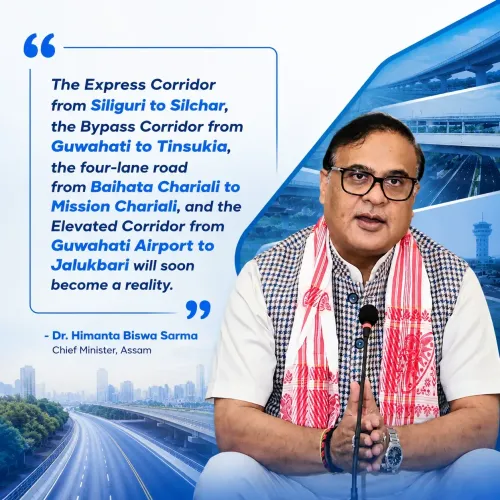
What connectivity projects are planned for Assam?
Assam is targeted for upgrades to rail corridors and highway networks under both the Act East Policy and PM Gati Shakti frameworks. Specific project announcements are expected to emerge from forthcoming Union Budget allocations and NEDA coordination meetings.