Bihar CM launches Heli-Tourism & Air Tourism Scheme 2026
Synopsis
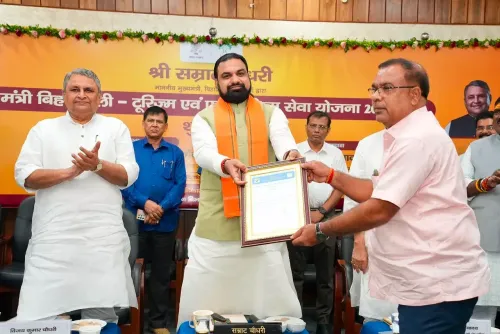
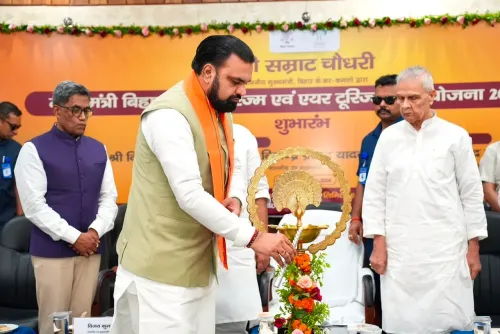
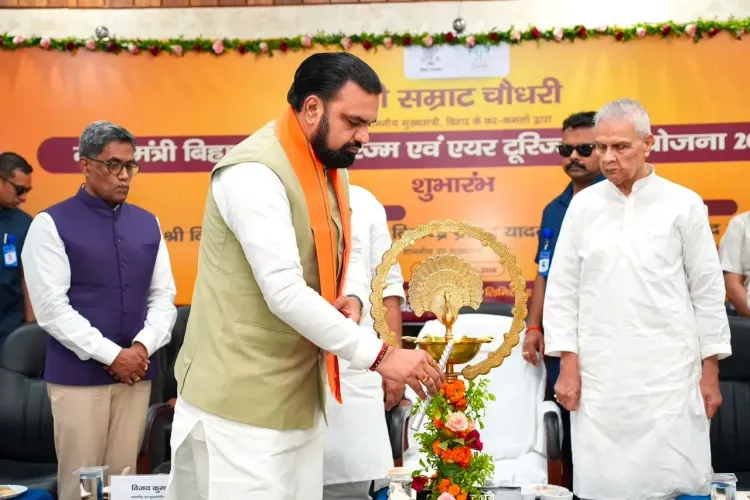
Bihar Chief Minister Samrat Choudhary on 13 July 2026 launched the Mukhyamantri Bihar Heli-Tourism and Air Tourism Service Scheme-2026 at the CM Secretariat in Patna, pledging to place Bihar on a new footing on India's tourism map through aerial connectivity to its heritage and pilgrimage sites.
Key Takeaways
Chief Minister Samrat Choudhary launched the Mukhyamantri Bihar Heli-Tourism and Air Tourism Service Scheme-2026 on 13 July 2026 .
The launch took place at 'Samvad' , the Chief Minister's Secretariat in Patna .
The scheme introduces helicopter and fixed-wing air services to connect Bihar's tourist destinations.
Key sites expected to benefit include Bodh Gaya , Nalanda , Rajgir , and Vaishali on Bihar's Buddhist heritage circuit.
The initiative follows a national trend of state-level heli-tourism schemes and is expected to complement the central UDAN regional air connectivity programme.
Route details, operator selection, and an operational timeline are yet to be announced.
The Chief Minister's Office of Bihar announced on Monday, 13 July 2026 that Chief Minister Samrat Choudhary formally launched the Mukhyamantri Bihar Heli-Tourism and Air Tourism Service Scheme-2026 at 'Samvad', the Chief Minister's Secretariat in Patna. The scheme aims to connect Bihar's heritage and pilgrimage destinations through helicopter and fixed-wing air services, opening a new chapter for the state's tourism sector.
Context
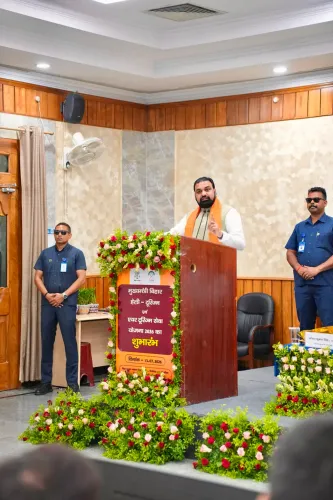
Addressing the launch event, CM Choudhary stated — in his own words — that 'yah yojana Bihar ke paryatan kshetra ko nayi udaan degi' ('this scheme will give a new flight to Bihar's tourism sector') and will place the state on a new footing on the tourism map of India. The announcement was made at 'Samvad', the designated public-engagement hall within the Chief Minister's Secretariat, signalling the government's intent to give the initiative high-profile visibility from day one.
Policy Backdrop
Bihar is home to some of India's most significant Buddhist and heritage circuits, including Bodh Gaya, Nalanda, Rajgir, and Vaishali — destinations that draw both domestic pilgrims and international visitors but have historically suffered from limited last-mile connectivity. Road infrastructure, while improving, has not kept pace with the state's tourism ambitions, making aerial access an attractive policy lever.
Across India, several states have pioneered heli-tourism to bridge connectivity gaps at pilgrimage and heritage sites. Bihar's 2026 scheme follows that broader national pattern, and is expected to complement the central government's UDAN (Ude Desh ka Aam Naagrik) regional air connectivity programme, which has progressively extended to smaller and underserved airports. The alignment of state-level aviation-tourism initiatives with UDAN's framework has been a recurring feature of such launches in recent years.
Stakeholders and Impact
The primary beneficiaries of the scheme are expected to be domestic pilgrims and heritage tourists travelling to Bihar's Buddhist circuit, as well as the local hospitality and tourism services sector that supports them. Helicopter and air services reduce travel time significantly on routes where road journeys can stretch to several hours, making same-day or short-stay visits more viable for time-constrained travellers.
Private aviation and heli-tourism operators are also key stakeholders, as the scheme will require the selection and empanelment of service providers to operate designated routes. The Bihar Tourism Development Corporation and relevant civil aviation authorities are anticipated to play a coordinating role in the scheme's rollout, though the specific operational framework is yet to be made public.
What's Next
Attention will now turn to the phased rollout of heli-routes and air services, the process for selecting private operators, and whether the scheme will be integrated with existing Bihar tourism circuits or extended UDAN connectivity. The government's ability to move from launch to operational services — including ticketing, safety certification, and ground infrastructure at helipads — will determine how quickly tourists on the ground feel the scheme's impact. A formal route map and operator selection timeline are expected to follow in the coming weeks.
Point of View
Which has historically underperformed relative to its cultural significance. By anchoring the announcement at 'Samvad' — a venue associated with public-facing governance — CM Choudhary is signalling a deliberate effort to frame the scheme as citizen-centric rather than purely infrastructural. The move fits a broader pattern of NDA-governed states leveraging aviation-linked tourism to demonstrate developmental momentum ahead of electoral cycles. The scheme's real test, however, will be execution: previous state heli-tourism initiatives across India have often stalled at the operator-selection and helipad-infrastructure stages, and Bihar will need to move quickly from launch optics to operational reality.
NationPress
13 Jul 2026
Frequently Asked Questions
What is the Mukhyamantri Bihar Heli-Tourism and Air Tourism Service Scheme-2026?
It is a Bihar government scheme launched on 13 July 2026 to introduce helicopter and fixed-wing air services connecting the state's major tourist, heritage, and pilgrimage destinations, aiming to improve last-mile aerial connectivity for visitors.
Who launched the Bihar Heli-Tourism Scheme?
Bihar Chief Minister Samrat Choudhary launched the scheme at 'Samvad', the Chief Minister's Secretariat in Patna, on 13 July 2026.
Which tourist sites in Bihar will benefit from the heli-tourism scheme?
The scheme is expected to benefit key sites on Bihar's Buddhist and heritage circuit, including Bodh Gaya, Nalanda, Rajgir, and Vaishali, which attract both domestic pilgrims and international visitors.
Is the Bihar Heli-Tourism Scheme connected to the central UDAN programme?
The Bihar scheme is expected to complement the central government's UDAN regional air connectivity programme, which has progressively extended to smaller airports; however, a formal integration framework has not yet been announced.
When will the Bihar Heli-Tourism Scheme become operational?
The scheme was formally launched on 13 July 2026, but specific routes, operator selection, and an operational timeline have not yet been made public and are expected to be announced in the coming weeks.