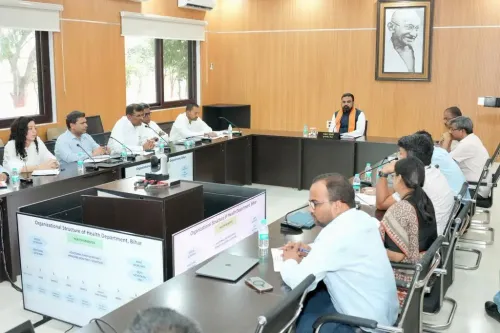
CM Samrat Choudhary Launches ICU Beds, Dialysis Units Across Bihar
Synopsis
Bihar Chief Minister Samrat Choudhary on 22 July 2026 inaugurated a new building at Guru Gobind Singh Hospital in Patna City and launched 105 ICU beds, 70 IMCU beds, 24x7 emergency services, free dialysis at 25 sub-divisional hospitals, and a PPP-based pathology network of 11 hub and 221 spoke labs across Bihar's government hospitals.
Key Takeaways
105 new ICU beds and 70 IMCU beds commissioned across Bihar's district hospitals.
Free dialysis services launched at 25 sub-divisional hospitals statewide.
24x7 emergency services activated at multiple district hospitals.
First phase of a PPP-model free pathology network launched, connecting 11 hub labs and 221 spoke labs in government facilities.
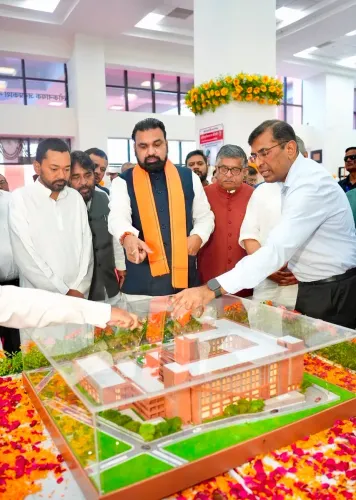
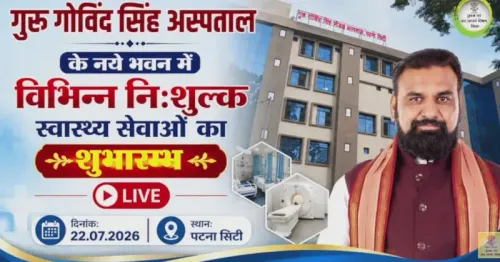
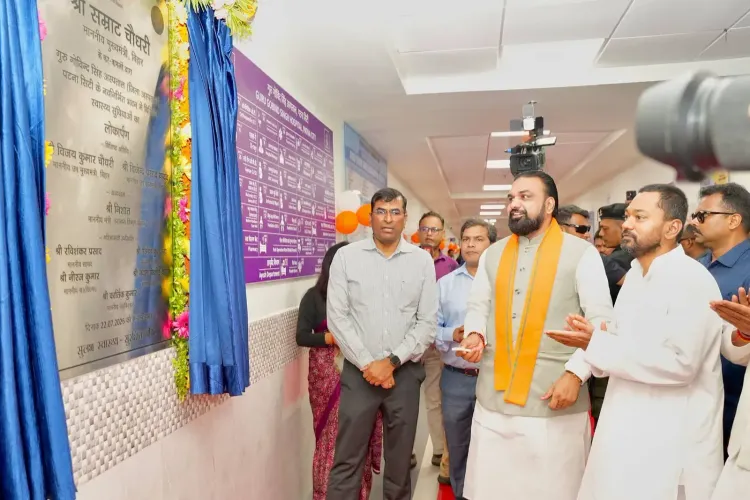
New building inaugurated at Guru Gobind Singh Hospital, Patna City , along with a district drug storage facility.
Government's stated goal: eliminate unnecessary patient referrals by delivering quality care within government hospitals.
Bihar Chief Minister Samrat Choudhary on Wednesday, 22 July 2026, inaugurated a newly constructed building at Guru Gobind Singh Hospital in Patna City, unveiling a range of modern health facilities and a district drug storage facility. The launch extended statewide, covering new critical care infrastructure and free diagnostic services across Bihar's government hospitals.
What Was Launched
Choudhary announced the commissioning of 105 new ICU beds and 70 IMCU (Intermediate Care Unit) beds across various district hospitals in Bihar. Alongside these, 24x7 emergency services were activated, and free dialysis services were launched at 25 sub-divisional hospitals across the state.
The Chief Minister also inaugurated the first phase of a free pathology service network under the Public-Private Partnership (PPP) model. This network connects 11 hub laboratories with 221 spoke laboratories in government health institutions, enabling decentralised diagnostic access without cost to patients.
Context
Choudhary stated the government's resolve in his post: 'हमारा संकल्प है कि प्रत्येक नागरिक को सरकारी अस्पतालों में ही आधुनिक, गुणवत्तापूर्ण एवं सुलभ स्वास्थ्य सेवाएं उपलब्ध हों' ('Our resolve is that every citizen should receive modern, quality, and accessible health services within government hospitals itself'). He added that the aim is to eliminate unnecessary referrals for better treatment.
Guru Gobind Singh Hospital in Patna City is one of Bihar's significant public health facilities. The inauguration of its new building marks an infrastructural upgrade intended to reduce pressure on Patna's tertiary referral centres.
Policy Backdrop
The expansion aligns with the framework of the National Health Mission (2005), which prioritised strengthening district hospitals with critical care capacity and emergency services. The Ayushman Bharat scheme (2018) further pushed for free diagnostics and reduced out-of-pocket expenditure at public facilities.
The hub-and-spoke pathology model under PPP is not unique to Bihar — several Indian states have adopted similar architectures to scale free diagnostics without requiring heavy capital investment in every facility. The emphasis on 24x7 emergency services and reducing unnecessary referrals also mirrors the objectives of the National Health Policy 2017.
Stakeholders and Impact
The primary beneficiaries are patients across Bihar's districts who currently rely on government hospitals for affordable care. The addition of ICU and IMCU beds is intended to improve survival outcomes for critically ill patients who would otherwise be transferred to Patna's overburdened tertiary hospitals.
Free dialysis at 25 sub-divisional hospitals directly addresses a high-cost, recurring treatment need for patients with chronic kidney disease — a population that often faces catastrophic out-of-pocket expenditure. The 221 spoke labs connected to hub facilities are designed to bring routine pathology within reach of patients at block and sub-division level.
What's Next
The key metrics to watch will be the operational rollout of the 11 hub and 221 spoke laboratories and whether service quality and uptime are maintained consistently. State budget allocations for the maintenance of new ICU units and dialysis machines in subsequent fiscal years will determine the long-term sustainability of this expansion.
If the PPP pathology network performs as envisioned in its first phase, the government may extend it to additional facilities, potentially making Bihar a reference model for district-level diagnostic access in large Indian states.
Point of View
Dialysis units, and a hub-and-spoke pathology network signals a deliberate shift in Bihar's health strategy — from building flagship hospitals to strengthening the district and sub-divisional tier. For the BJP-led state government, visible healthcare delivery at the grassroots level carries both policy and political weight ahead of any future electoral cycle. The PPP pathology model is particularly significant: it allows the state to scale diagnostics rapidly without proportionate capital expenditure, a pragmatic choice for a fiscally constrained state. Whether implementation quality matches announcement ambition will be the real test — Bihar's past health infrastructure drives have often faced gaps between commissioning and consistent operation.
NationPress
21 Oct 2026
Frequently Asked Questions
What did Bihar CM Samrat Choudhary launch on 22 July 2026?
Bihar Chief Minister Samrat Choudhary launched 105 new ICU beds, 70 IMCU beds, 24x7 emergency services at district hospitals, free dialysis at 25 sub-divisional hospitals, and a PPP-based free pathology network of 11 hub and 221 spoke labs. He also inaugurated a new building at Guru Gobind Singh Hospital in Patna City.
What is the hub-and-spoke pathology model launched in Bihar?
Under a Public-Private Partnership model, Bihar has connected 11 hub laboratories with 221 spoke laboratories in government health institutions. This network provides free pathology services to patients, allowing tests to be processed at hub labs while samples are collected at spoke labs closer to patients.
Where is Guru Gobind Singh Hospital located?
Guru Gobind Singh Hospital is located in Patna City, Bihar. Its newly constructed building was inaugurated by Chief Minister Samrat Choudhary on 22 July 2026 along with a district drug storage facility.
Which hospitals in Bihar now offer free dialysis?
Free dialysis services have been launched at 25 sub-divisional hospitals across Bihar as part of the health infrastructure expansion announced by Chief Minister Samrat Choudhary on 22 July 2026.
How does Bihar's health expansion connect to national health schemes?
The expansion aligns with the National Health Mission (2005) and Ayushman Bharat (2018), both of which prioritised strengthening district hospitals, expanding free diagnostics, and reducing out-of-pocket health expenditure for citizens. The 24x7 emergency services and anti-referral goals also reflect the National Health Policy 2017.