CM Samrat Choudhary Reviews Bihar Health Dept, Orders PPP Medical Colleges
Synopsis
Bihar Chief Minister Samrat Choudhary held a health department review on 26 May 2026, ordering PPP-based greenfield and brownfield medical colleges, directing all district and sub-divisional hospitals to curb unnecessary referrals by 15 August, and assigning monitoring duties to District Magistrates.
Key Takeaways
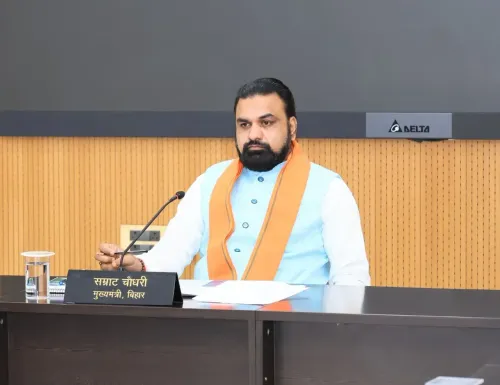
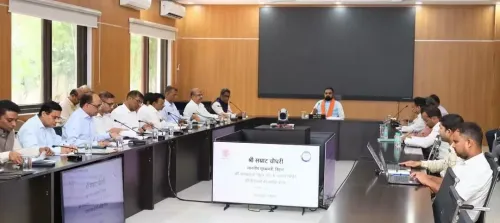
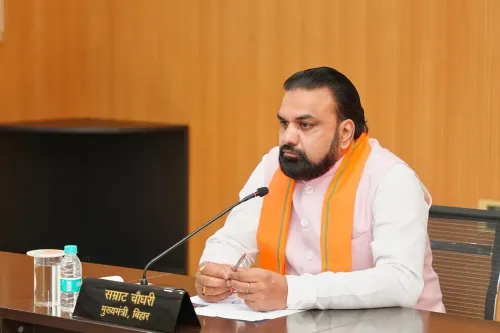
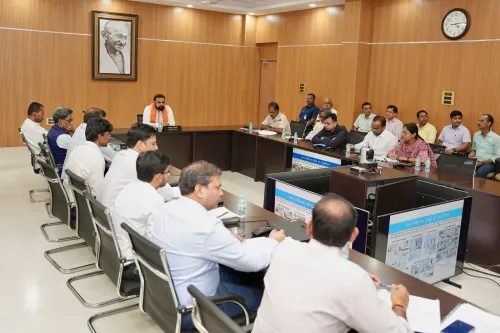
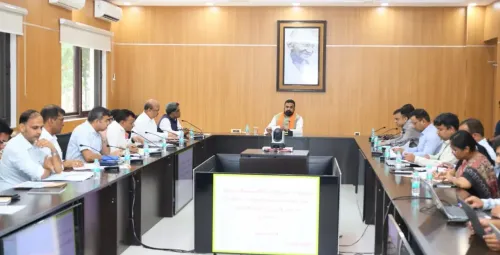
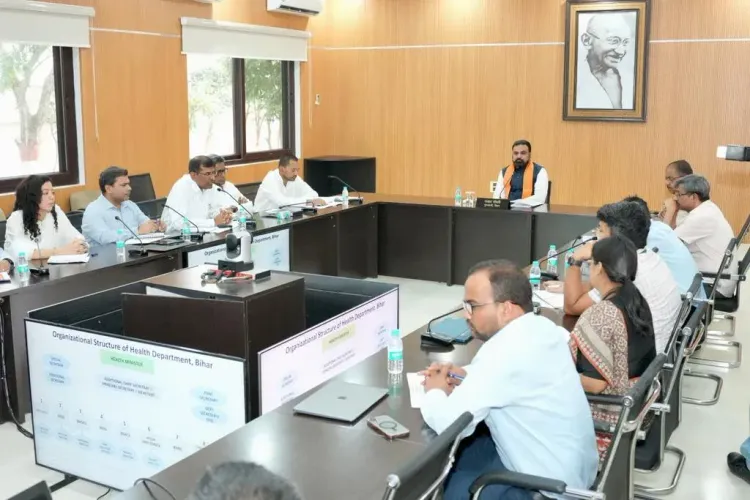
Bihar CM Samrat Choudhary chaired a health review meeting at the 'Sankalp' auditorium in Lok Sevak Avas on 26 May 2026 .
New medical colleges will be developed under the PPP model , covering both greenfield and brownfield projects.
All district and sub-divisional hospitals must implement a system to stop unnecessary patient referrals by 15 August .
District Magistrates have been assigned responsibility for monitoring healthcare delivery compliance.
The government stressed accessible, transparent and modern health services and better medical education within Bihar.
The initiative aligns with national schemes including Ayushman Bharat and the central medical college expansion programme launched in 2013-14 .
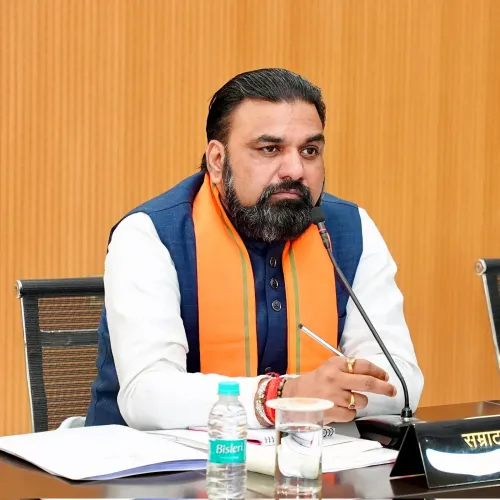
Bihar Chief Minister Samrat Choudhary chaired a review meeting with the state Health Department at the 'Sankalp' auditorium in Lok Sevak Avas on Tuesday, 26 May 2026, announcing a series of decisions aimed at overhauling healthcare delivery across the state.
Posting on X, the Chief Minister outlined that new medical colleges would be developed under the Public-Private Partnership (PPP) model — covering both greenfield institutions built on fresh sites and brownfield upgrades of existing facilities. He stressed the need to ensure 'better treatment at the local level' (स्थानीय स्तर पर बेहतर इलाज) for patients, and called for the development of quality medical education and treatment within Bihar itself.
Context
The meeting at the 'Sankalp' hall produced a pointed directive: all district and sub-divisional hospitals must put in place a system to curb unnecessary patient referrals by 15 August. The responsibility for monitoring compliance has been assigned to District Magistrates (DMs) across the state. The move signals a push to make district-level facilities capable enough that patients do not need to travel to larger cities for treatment that can be provided locally. The Chief Minister also emphasised making health services in Bihar 'accessible, transparent and modern' (सुलभ, पारदर्शी एवं आधुनिक), framing the meeting's outcomes under the broader hashtags #विकसित_भारत (Developed India) and #समृद्ध_बिहार (Prosperous Bihar).Policy Backdrop
Bihar's push for PPP-based medical colleges fits within a national policy arc that dates to 2013-14, when the central government launched a scheme to establish new medical colleges attached to district hospitals to address regional imbalances in healthcare access. The Ayushman Bharat Pradhan Mantri Jan Arogya Yojana, launched in 2018, further encouraged states to strengthen district-level facilities by expanding health coverage for low-income households. The dual greenfield-brownfield approach allows the state to simultaneously build new capacity and upgrade existing infrastructure — a model several Indian states have used to accelerate healthcare expansion without relying solely on public funds.Stakeholders and Impact
For patients in Bihar — particularly those in rural and semi-urban areas — the referral restriction system could reduce the financial and logistical burden of travelling to cities such as Patna or out-of-state destinations like Delhi or Vellore for treatment. Private healthcare providers stand to benefit from PPP opportunities, while medical students in Bihar may gain access to more institutions within the state. District Magistrates, typically focused on law and order and development administration, are being given an expanded role as frontline monitors of health service delivery — a governance approach that underlines the administration's intent to ensure accountability at the ground level.What's Next
The 15 August deadline for rolling out the anti-referral system across all district and sub-divisional hospitals will be the first concrete test of implementation. Observers will watch whether District Magistrates are equipped with the tools and data systems needed to track referral patterns effectively. Specific sites and partners for the PPP medical colleges are expected to be announced in subsequent health department or state budget communications. If the initiative delivers, it could position Bihar as a model for other states seeking to decentralise tertiary-level care through public-private collaboration.Point of View
Using the PPP route to attract private capital while retaining state oversight. Assigning District Magistrates as health monitors is a notable governance move — it embeds accountability in the existing administrative hierarchy rather than creating a parallel structure. The 15 August deadline for referral curbs gives the initiative a visible, time-bound test that will be difficult to quietly abandon. Taken together, these decisions reflect a broader pattern among BJP-governed states of framing public service delivery improvements within the 'Viksit Bharat' national narrative ahead of electoral cycles.
NationPress
12 Oct 2026
Frequently Asked Questions
What decisions did Bihar CM Samrat Choudhary take in the health review meeting?
Bihar CM Samrat Choudhary announced that PPP-model greenfield and brownfield medical colleges will be developed, unnecessary patient referrals will be curbed by 15 August, and District Magistrates will monitor healthcare delivery at the district level.
What is the PPP model for medical colleges in Bihar?
The Public-Private Partnership (PPP) model involves collaboration between the Bihar state government and private healthcare providers to build new medical colleges (greenfield) or upgrade existing facilities (brownfield), reducing the financial burden on the state while expanding capacity.
What is the 15 August deadline for Bihar hospitals?
Bihar's Chief Minister has directed that all district and sub-divisional hospitals put in place a system to prevent unnecessary patient referrals by 15 August, with District Magistrates responsible for monitoring compliance.
Why is Bihar focusing on stopping unnecessary hospital referrals?
Unnecessary referrals push patients — often from rural areas — to travel long distances to cities or other states for treatment that could be provided locally, increasing costs and hardship. The government wants district hospitals to be capable enough to handle more cases in-house.
How does Bihar's health initiative connect to national schemes?
Bihar's push aligns with the central government's scheme from 2013-14 to add medical colleges to district hospitals and with Ayushman Bharat Pradhan Mantri Jan Arogya Yojana launched in 2018, both aimed at decentralising quality healthcare across India.