Bihar CM Office Launches Subsidised Heli-Tourism from Patna
Synopsis
Bihar's Chief Minister's Office has launched a subsidised heli-tourism service linking Patna to Rajgir, Valmiki Nagar and Kaimur, with the state absorbing up to ₹15,422 per ticket to make aerial travel affordable for ordinary citizens and boost tourism at three heritage and eco-tourism destinations.
Key Takeaways
The Chief Minister's Office of Bihar announced a subsidised heli-tourism service on 13 July 2026 .
Routes connect Patna to Rajgir , Valmiki Nagar , and Kaimur .
The state government is providing a subsidy of up to ₹15,422 per ticket to reduce fares for ordinary citizens.
The scheme targets middle-income domestic tourists who previously could not afford helicopter travel.
The initiative follows a broader national trend of state-subsidised heli-services to heritage and eco-tourism sites.
Passenger uptake and future budget allocations will determine whether the route network expands.
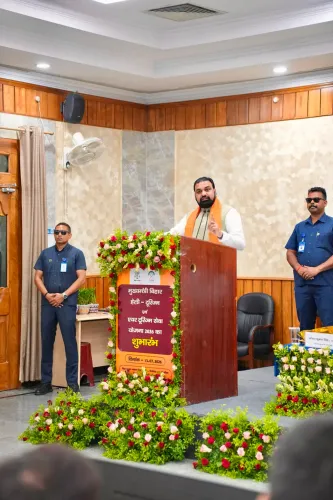
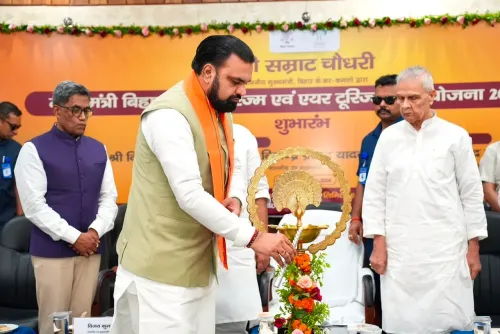
The Chief Minister's Office of Bihar announced on Monday, 13 July 2026 that the state government has launched a subsidised heli-tourism service connecting Patna to three key destinations — Rajgir, Valmiki Nagar, and Kaimur — making aerial tourism accessible to ordinary citizens at affordable fares.
The official post stated: 'इस योजना के तहत पटना से राजगीर, वाल्मीकिनगर एवं कैमूर के लिए सब्सिडी युक्त हेली-टूरिज्म सेवा शुरू की गई है' ('Under this scheme, a subsidised heli-tourism service has been started from Patna to Rajgir, Valmiki Nagar and Kaimur'). The state government is providing a subsidy of up to ₹15,422 per ticket, enabling citizens who could not previously afford helicopter travel to now access these destinations by air.
Context
Bihar's three chosen destinations represent distinct pillars of the state's tourism identity. Rajgir, a historic site in Nalanda district, draws visitors for its Buddhist heritage, hot springs, and ancient ruins. Valmiki Nagar in West Champaran is home to the Valmiki Tiger Reserve, Bihar's only tiger reserve, which anchors eco-tourism in the state's north-western corner. Kaimur district, in the south-west, is known for its hills, waterfalls, and the Kaimur Wildlife Sanctuary.
All three destinations share a common challenge: road access from Patna is time-consuming, limiting their appeal to travellers with limited time. The helicopter service directly addresses this connectivity gap.
Policy Backdrop
The Bihar Tourism Development Corporation has run promotional schemes for Buddhist and eco-tourism circuits since the mid-2010s, building a foundation for demand-side interventions. The current heli-tourism initiative extends that lineage by tackling the supply side — physical connectivity — rather than just marketing.
Bihar's move is part of a broader national pattern in which several Indian states have deployed state-subsidised helicopter services to link scenic and heritage sites to middle-income travellers who sit beyond the reach of scheduled airline networks. The subsidy model — where the government absorbs a significant share of per-ticket cost — is designed to shift heli-tourism from a luxury segment to a mass-market offering.
Stakeholders and Impact
The primary beneficiaries are domestic tourists, particularly middle-income families and pilgrims from Patna and surrounding districts, for whom helicopter travel was previously prohibitively expensive. Local tourism operators — hotels, guides, and hospitality businesses — at all three destinations stand to gain from increased footfall driven by faster, more convenient access.
The subsidy of up to ₹15,422 per ticket represents a significant public investment per traveller. If passenger uptake is strong, it could justify expansion of the route network; if uptake is modest, the state may revisit the subsidy cap in subsequent budget cycles.
What's Next
The key metric to watch will be actual passenger uptake in the weeks and months following the launch. Strong ridership numbers would build the case for additional heli-routes from Patna to other underserved destinations in Bihar. The state's tourism department and the Bihar Tourism Development Corporation are likely to track occupancy rates closely as they assess whether the subsidy structure needs adjustment in the next state budget. A successful rollout could also serve as a replicable model for other eastern Indian states looking to boost heritage and eco-tourism connectivity.
Point of View
Valmiki Nagar's wildlife draw, and Kaimur's nature tourism in a single scheme, the government is diversifying its tourism portfolio rather than doubling down on a single asset. The ₹15,422-per-ticket subsidy is a bold fiscal commitment, and its sustainability will hinge on whether demand materialises at scale or remains niche. If the ridership numbers hold, this could become a template for connectivity-led tourism policy across eastern India.
NationPress
13 Jul 2026
Frequently Asked Questions
What is Bihar's new heli-tourism scheme?
Bihar's state government has launched a subsidised helicopter tourism service connecting Patna to Rajgir, Valmiki Nagar and Kaimur, with a subsidy of up to ₹15,422 per ticket to make the service affordable for ordinary citizens.
Which destinations are covered under Bihar's helicopter tourism service?
The heli-tourism service covers three routes from Patna: to Rajgir (known for Buddhist heritage and hot springs), Valmiki Nagar (home to the Valmiki Tiger Reserve), and Kaimur (known for hills, waterfalls and wildlife).
How much subsidy does the Bihar government give per helicopter ticket?
The Bihar state government provides a subsidy of up to ₹15,422 per ticket under this heli-tourism scheme.
Who can use Bihar's subsidised helicopter service?
The service is open to ordinary citizens and domestic tourists who wish to travel from Patna to the three covered destinations at subsidised, affordable fares.
Why is Bihar launching a helicopter tourism service?
The scheme aims to improve connectivity to heritage and eco-tourism destinations that are difficult to reach by road, while also making aerial travel accessible to middle-income travellers rather than only high-income passengers.