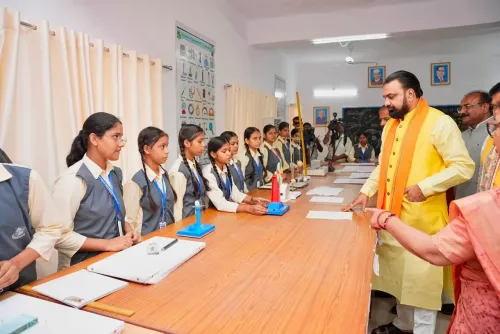
Bihar CM Orders Mandatory Computer Education in All Govt Schools
Synopsis
Bihar CM Nitish Kumar has directed officials to draft a plan for making computer education compulsory in all government schools from next year, marking the state's latest push to modernise public education and equip students with foundational digital skills.
Key Takeaways
Chief Minister Nitish Kumar has directed Bihar education officials to prepare a plan for mandatory computer education in all government schools.
The rollout is targeted to begin from the next academic year (2027).
The directive covers all government schools in Bihar, one of India's largest state-run school networks.
Officials must now map requirements including computer labs, hardware, teacher training, and budget provisions.
The move builds on Bihar's education push since 2005 , which previously expanded infrastructure and enrollment through schemes like the free bicycle programme for girls.
The instruction is currently to prepare a plan — a formal policy rollout has not yet been announced.
A digital turning point is coming for Bihar's government school classrooms. The Chief Minister's Office of Bihar announced on Saturday, 26 September 2026, that Chief Minister Nitish Kumar has directed officials to prepare a plan for making computer education compulsory in all government schools — starting next academic year.
The post states: 'Mananiya Mukhyamantri ji ne agle varsh se sabhi sarkari vidyalayon mein computer shiksha anivary roop se shuru karne ki disha mein yojana taiyar karne ke nirdesh diye' — ('The honourable Chief Minister has directed officials to prepare a plan for mandatorily starting computer education in all government schools from next year.')
What the directive actually sets in motion
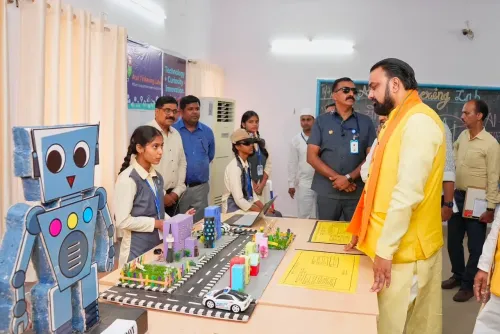
The instruction, for now, is to prepare a plan — not yet a formal rollout. That distinction matters. Officials in the Bihar education department will need to map requirements across thousands of government schools: computer labs, hardware procurement, trained teachers, and a curriculum framework. The scale is significant; Bihar runs one of India's largest networks of government schools, serving tens of millions of students across rural and urban districts.
The move is anchored in urgency. A generation of Bihar's government-school students currently graduates without foundational digital skills at a moment when the national and global job market increasingly demands them. Making computer education compulsory — rather than optional or aspirational — signals a deliberate shift in that calculus.
Nitish Kumar's two-decade bet on public schools
This directive fits a pattern stretching back to 2005, when Chief Minister Nitish Kumar first took office and began a sustained push to rebuild Bihar's public school infrastructure. Flagship initiatives from that era — including the free bicycle scheme for girls that dramatically lifted enrollment — showed that targeted state interventions can move the needle fast in a state with deep structural challenges.
Now the emphasis is shifting from access to quality, and from enrollment to employability. Mandatory computer education is the next logical step in that arc, extending modernisation from buildings and enrollment to what actually happens inside the classroom.
What officials must resolve before next year
The hardest questions are logistical. Government schools in Bihar range from well-equipped urban institutions to single-room rural schools with unreliable electricity. A credible plan will need answers on power supply, device procurement or leasing models, internet connectivity, and — critically — the training pipeline for teachers who may never have delivered a digital curriculum before. Budget provisions and a phased rollout schedule are the immediate deliverables the Chief Minister's directive has now put on officials' desks.
Bihar's students are waiting. The plan is now the test.
Point of View
School construction, bicycle schemes — toward quality and employability, with digital literacy as the new frontier. For Nitish Kumar, who has anchored his political identity on incremental governance and infrastructure delivery, mandating computer education in government schools is both a policy upgrade and a message: Bihar is no longer merely catching up, it is setting a syllabus for the future. The real test, however, is implementation: whether the plan officials are now tasked with preparing can credibly bridge the infrastructure and teacher-training gaps across Bihar's vast and uneven school network will determine whether this becomes a landmark reform or a well-intentioned announcement. Observers will watch closely for budget allocations and a phased timeline as the first proof of seriousness.
NationPress
26 Sept 2026
Frequently Asked Questions
Has Bihar made computer education compulsory in government schools?
Not yet formally. Bihar Chief Minister Nitish Kumar has directed officials to prepare a plan for making computer education mandatory in all government schools starting from next year. The detailed rollout policy has not been announced yet.
From when will computer education start in Bihar government schools?
The directive specifies that the plan should target a start from next year — the academic year beginning in 2027. Officials must first prepare and present the implementation framework.
Which schools will be covered under Bihar's computer education plan?
The directive covers all government schools in Bihar. Bihar operates one of India's largest state-run school networks, spanning both urban and rural areas.
What challenges does Bihar face in implementing computer education in government schools?
Key challenges include providing computer labs, devices, and reliable electricity across thousands of schools — many in rural areas — along with training teachers to deliver a digital curriculum and securing sufficient budget provisions.
What education schemes has Nitish Kumar introduced in Bihar before?
Since taking office in 2005, Nitish Kumar has expanded school infrastructure and launched programmes such as the free bicycle scheme for girls, which significantly improved enrollment in government schools across the state.