Bihar CM's Office Holds Telecom Growth Talks

Synopsis
The Chief Minister's Office of Bihar announced detailed discussions on expanding telecom infrastructure, modernising communication facilities, and leveraging better connectivity to unlock new development possibilities across the state — a signal of renewed digital-growth ambitions in one of India's most populous states.
Key Takeaways
The Chief Minister's Office of Bihar disclosed high-level discussions on November 19, 2026 focused on telecom sector development.
Talks covered the expansion of modern communication facilities and strengthening of telecom infrastructure across Bihar .
The discussions explicitly linked improved communication services to accelerating new development possibilities in the state.
Bihar has historically lagged in rural broadband and 4G penetration despite being home to over 130 million people .
The national BharatNet project , launched in 2011 , aims to bring broadband to gram panchayats in states including Bihar.
Specific project outcomes, 5G timelines, and central funding decisions are yet to be announced following the discussions.
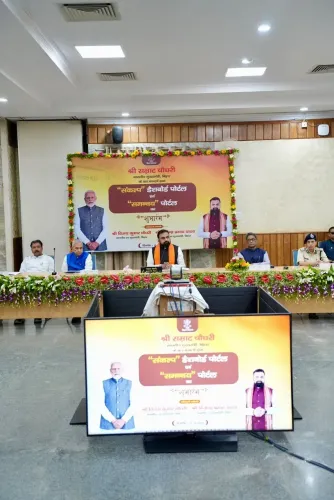
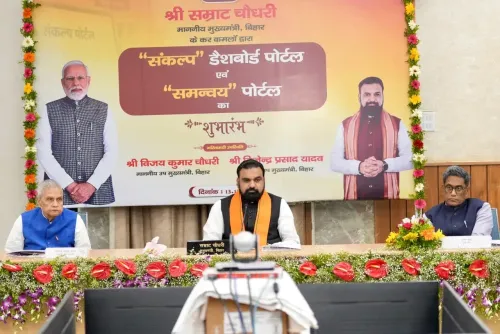
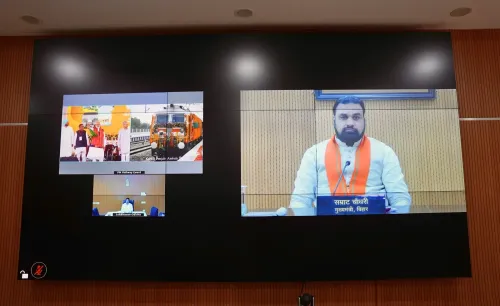
Bihar's connectivity ambitions moved into sharper focus on Thursday, November 19, 2026, as the Chief Minister's Office of Bihar disclosed that wide-ranging discussions were held on expanding and strengthening the state's telecommunications infrastructure — signalling a focused push to close the digital gap that has long held back one of India's most populous states.
The CMO's post described deliberations on 'दूरसंचार क्षेत्र के विकास, आधुनिक संचार सुविधाओं के विस्तार' — the development of the telecom sector and the expansion of modern communication facilities — alongside efforts to 'strengthen telecom infrastructure further.' Critically, the discussions also explored how better communication services could 'accelerate new possibilities of development across the state.'
Why Bihar's telecom deficit matters now
Bihar is home to over 130 million people and ranks among India's fastest-growing states by population — yet it has historically lagged in rural broadband penetration and mobile network quality. Patchy 4G coverage and limited last-mile fibre connectivity have kept large swathes of the state's workforce and small businesses outside the digital economy. Closing that gap isn't just a convenience issue; it's a growth multiplier.
The national BharatNet project, launched in 2011, was designed precisely to push broadband connectivity down to gram panchayats in states like Bihar. Progress has been uneven. The fact that discussions at the Chief Minister's level are now explicitly linking telecom infrastructure to new development possibilities suggests the state is re-energising its own coordination with the central Department of Telecommunications.
Nitish Kumar's infrastructure playbook
Chief Minister Nitish Kumar has built much of his political identity around hard infrastructure — roads, bridges, power — and digital connectivity now fits squarely into that legacy frame. Indian states have increasingly treated telecom density the way they once treated road density: as a headline metric for investor confidence and social inclusion alike.
The Bihar government's signal here is deliberate: modern communication networks are no longer a support system for growth — they are the growth engine itself, capable of drawing investment, enabling remote work, and plugging rural entrepreneurs into national supply chains.
The concrete follow-through — specific project announcements, 5G rollout timelines, or fresh central funding allocations — will be the real test of Thursday's high-level conversations. Watch this space.
Point of View
This is consistent with an infrastructure-first political brand, now updated for the 5G era. The key question is whether these discussions produce binding commitments and central funding, or remain aspirational. With general elections still a live political calculation, a visible telecom push gives the Bihar government a tangible development story to tell.
NationPress
19 Nov 2026
Frequently Asked Questions
What did Bihar's CMO discuss about telecom on November 19, 2026?
The Chief Minister's Office of Bihar held discussions on developing the telecom sector, expanding modern communication facilities, strengthening telecom infrastructure, and using better connectivity to accelerate development across the state.
What is the BharatNet project and how does it affect Bihar?
BharatNet is a national project launched in 2011 to provide broadband connectivity to gram panchayats across India, including Bihar, aiming to bridge the rural digital divide.
Why is Bihar's telecom infrastructure considered underdeveloped?
Bihar has historically had patchy 4G coverage and limited last-mile fibre connectivity despite a population of over 130 million , keeping many residents and small businesses outside the digital economy.
Will Bihar get 5G network coverage soon?
No specific 5G rollout timeline has been confirmed from the November 19 discussions. The CMO indicated talks were held on the subject, but concrete project announcements are yet to follow.
What role does Nitish Kumar play in Bihar's digital infrastructure push?
Chief Minister Nitish Kumar has historically prioritised hard infrastructure in Bihar and is now extending that focus to digital and telecom connectivity as a driver of economic growth.