Bihar CMO: Serious illness care to reach districts, cutting outmigration

Synopsis
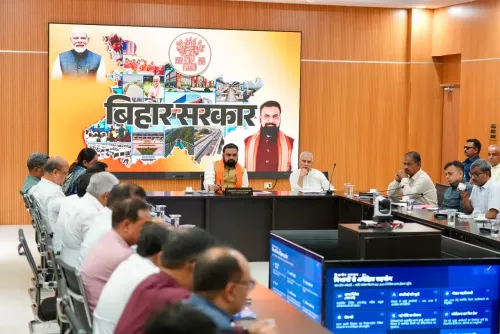
The Chief Minister's Office of Bihar has reaffirmed the state's push to build robust district-level health infrastructure, aiming to eliminate the need for patients to travel outside their districts for serious medical care — a long-standing burden on rural and semi-urban families.
Key Takeaways
The Chief Minister's Office of Bihar stated on 12 August 2026 that new, robust health infrastructure will be developed at the district level.
The goal is to reduce the need for patients with serious illnesses to travel outside their home district for treatment.
Bihar has pursued district-level hospital and medical college expansion through successive state budgets in the 2020s.
The policy approach combines state capital expenditure with central government health schemes to fund new facilities.
The specific district or scheme referenced in the post could not be independently verified from available records.
Patients in Bihar who once had no choice but to travel hours outside their districts for serious medical care may soon find that care coming to them. The Chief Minister's Office of Bihar signalled on Wednesday, 12 August 2026 that the state is actively working to build stronger health infrastructure at the district level, reducing the burden on families forced to seek advanced treatment far from home.
The CMO's post, a reply on X, stated: 'Gambhir bimariyon ke ilaaj ke liye logon ko jile se bahar jaane ki aavashyakta kam hogi tatha kshetra mein swasthya ke kshetra mein nayi evam sudridh aadhaarbhoot sanrachna viksit hogi.' In plain terms: 'The need for people to go outside their district for treatment of serious diseases will reduce, and new and robust health infrastructure will be developed in the area.'
The long-running problem: Bihar's district-level care gap
For decades, a serious diagnosis in rural or semi-urban Bihar has meant one thing — pack a bag and head to Patna, or further still to facilities in other states. District hospitals have historically lacked the specialist staff, equipment, and capacity to handle complex cases. The human cost is steep: lost wages, family disruption, and for many, delayed care that worsens outcomes.
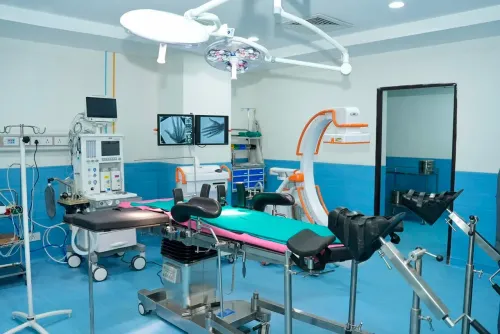
The Bihar Health Department has been working through the 2020s to close that gap, with successive state budgets committing capital expenditure to new government medical colleges and super-specialty blocks across multiple districts. The ambition is decentralisation — bringing tertiary-level care closer to where people actually live.
Building outward from Patna
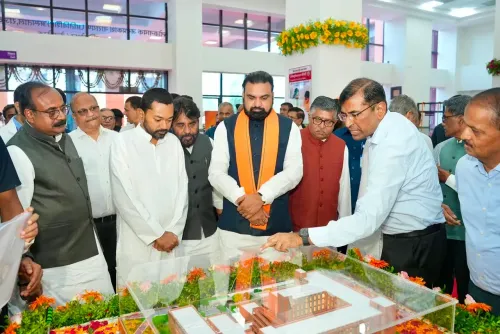
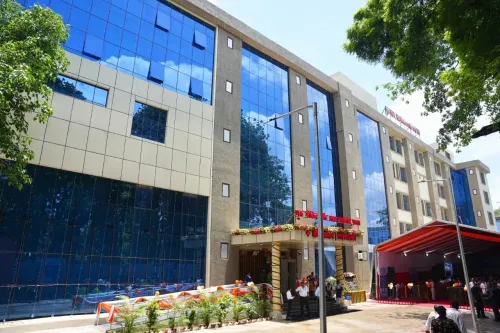
The pattern is deliberate: instead of expanding one central hub, Bihar has pursued district-by-district infrastructure upgrades, integrating them with central government health schemes to unlock additional funding. New medical college campuses and upgraded hospital wings are the twin levers — one builds the facility, the other builds the trained workforce to staff it.
The CMO's statement fits squarely within this arc, affirming that the goal of local, accessible advanced care is not just a budget line but an active policy commitment. The specific district or project referenced in the post could not be independently verified from available records.
The real test will come when new facilities move from announcement to operation — and when a family in a remote block no longer has to choose between quality care and staying close to home.
Point of View
Felt failure that opposition parties readily exploit. By anchoring the message at the CMO level, the Nitish Kumar administration signals that district health infrastructure is a flagship deliverable, not a departmental footnote. The challenge, as with previous announcements, is execution: new buildings and announced medical colleges have historically taken years to become functional. Whether this round of investment translates into staffed, equipped, operational facilities will determine whether the promise holds at the ballot box as much as at the bedside.
NationPress
13 Aug 2026
Frequently Asked Questions
Why do Bihar patients have to travel outside their district for serious treatment?
District hospitals in Bihar have historically lacked specialist doctors, advanced diagnostic equipment, and surgical capacity for complex cases, forcing patients to travel to Patna or other states. The state government is now investing in district-level infrastructure to address this gap.
What is Bihar doing to improve district-level healthcare?
Bihar has been setting up new government medical colleges and super-specialty blocks across multiple districts through state budget allocations and central government health scheme funding, aiming to bring advanced care closer to where patients live.
What did the Bihar Chief Minister's Office say about health infrastructure?
The CMO stated that the need for people to travel outside their district for serious illness treatment will reduce, and that new and robust health infrastructure will be developed in the area.
How does Bihar's district health expansion connect to central government schemes?
Bihar integrates its district hospital and medical college projects with central health programmes, using central scheme funding alongside state budget capital expenditure to build and upgrade facilities.
Which districts in Bihar are getting new hospitals or medical colleges?
The Bihar government has announced medical college and hospital upgrades across multiple districts as part of its decentralisation push, though the specific district referenced in the 12 August 2026 CMO post could not be independently verified.