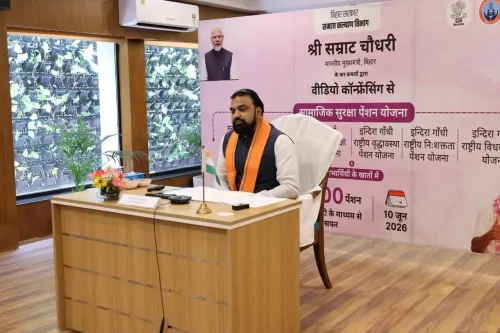
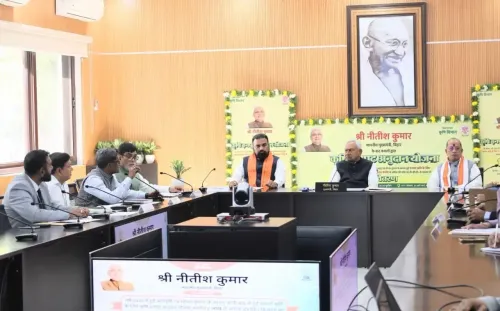
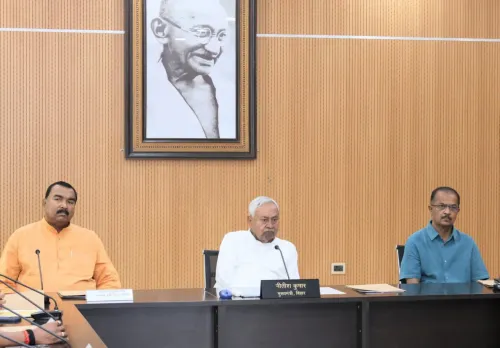
Bihar floods: CM Chaudhary transfers ₹579 crore to 8.27 lakh families via DBT
Synopsis
With over 49 lakh people hit across 15 districts and several rivers still above danger levels, Bihar's flood crisis is far from over. Chief Minister Samrat Chaudhary's ₹579 crore DBT payout to 8.27 lakh families is a significant relief push — but the scale of devastation, from inundated panchayats to threatened livestock, signals that the state's emergency response will need to hold for weeks more.
Key Takeaways
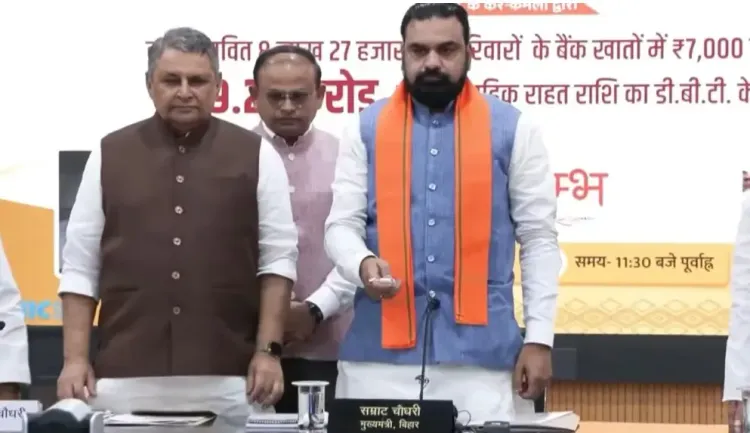
Bihar CM Samrat Chaudhary transferred ₹7,000 each to 8,27,472 flood-affected families on 15 September 2026 , totalling ₹579.23 crore via DBT.
Floods have struck 15 districts , affecting 49.46 lakh people across 575 Gram Panchayats in 88 blocks .
1,260 community kitchens are operational, having served approximately 1.19 crore meals so far.
13 relief camps are sheltering 11,060 people with food, medical care, and accommodation.
13,121 quintals of cattle feed have been distributed to protect agrarian livelihoods.
Several rivers — including the Kosi , Ganga , Punpun , and Ghaghara — remain above the danger mark at multiple points.
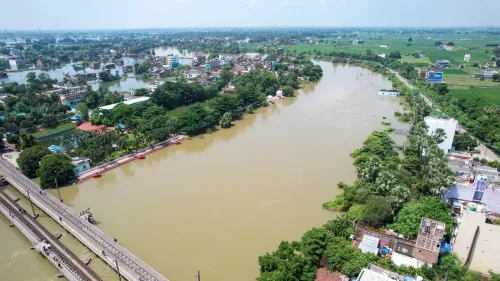
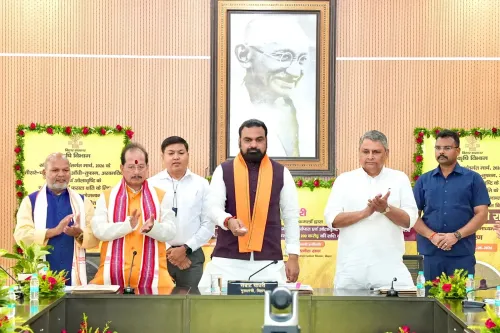
The Bihar government on Tuesday, 15 September 2026, disbursed ₹579.23 crore in flood relief directly to 8,27,472 affected families across the state, with Chief Minister Samrat Chaudhary personally overseeing the transfer of ₹7,000 per family through Direct Benefit Transfer (DBT). The payout is the latest in a series of relief measures as floods continue to batter 15 districts of Bihar, affecting an estimated 49.46 lakh people.
Scale of the Flood Crisis
According to government data, 575 Gram Panchayats across 88 blocks have been inundated this season, with the Ganga, Gandak, Kosi, and Punpun rivers among the primary contributors to the crisis. The 15 affected districts are Patna, Bhojpur, Saran, Vaishali, Bhagalpur, Begusarai, Buxar, Samastipur, Munger, Katihar, Lakhisarai, Khagaria, Purnea, Madhepura, and Arwal.
Deputy Chief Minister Vijay Kumar Chaudhary was also present at the disbursement programme. The Disaster Management Department had compiled beneficiary lists based on field reports submitted by Circle Officers from the flood-hit districts, ensuring the relief reached verified households.
Ground-Level Relief Operations
Beyond the cash transfer, the state government is running 1,260 community kitchens in affected areas — recently scaled up from 1,257 — through which approximately 1.19 crore meals have been served to flood-displaced residents so far. In parallel, 13 relief camps — down from 15 as some areas see receding waters — are currently sheltering 11,060 people, with arrangements for accommodation, food, medical care, and other essential services.
Relief for livestock is also underway. According to state figures, 13,121 quintals of cattle feed have been distributed across flood-affected regions — an acknowledgement that agrarian livelihoods, heavily dependent on livestock, are equally imperilled.
River Levels and Ongoing Risk
Data from the Central Water Commission and the Meteorological Department indicate that the water level of the Ganga is receding at Sultanganj in Bhagalpur. However, several rivers remain above the danger mark. Elevated levels have been recorded in the Kosi at Baltara and Kursela; the Burhi Gandak at Khagaria; the Ganga at Digha Ghat, Gandhi Ghat, and Hathidah in Patna, as well as at Kahalgaon in Bhagalpur and in Munger; the Bagmati at Benibad; the Punpun at Sripalpur; and the Ghaghara at Darauli.
District administrations are maintaining close surveillance of river levels, and the state has signalled it will sustain both financial and humanitarian relief until the threat fully subsides.
Context and What Comes Next
Bihar's annual flooding pattern — driven by Himalayan river systems and monsoon runoff — has long placed the state among India's most flood-vulnerable regions. The DBT mechanism, used here for rapid mass disbursement, reflects a shift toward direct cash transfers over in-kind distribution, which has historically suffered from leakages and delays. Notably, with several rivers still above danger levels, the affected population count and financial outlay could rise further before the monsoon season concludes.
Point of View
But it addresses only a fraction of the economic damage that 49 lakh displaced people face across 15 districts. Bihar's recurrent flooding — year after year, the same rivers, the same districts — raises the harder question of structural mitigation: embankment maintenance, early-warning systems, and catchment management rarely receive the same political urgency as the post-flood relief cheque. The DBT mechanism itself is an improvement over opaque in-kind distribution, but with several rivers still above danger levels, the disbursement may need multiple tranches before the season ends — and accountability for how quickly that happens will matter.
NationPress
15 Sept 2026
Frequently Asked Questions
How much flood relief has Bihar released and who received it?
The Bihar government released ₹579.23 crore on 15 September 2026 , transferring ₹7,000 each to 8,27,472 eligible flood-affected families via Direct Benefit Transfer (DBT). Beneficiary lists were compiled by the Disaster Management Department from Circle Officers' field reports.
Which districts in Bihar have been affected by the 2026 floods?
Fifteen districts are currently flood-affected: Patna, Bhojpur, Saran, Vaishali, Bhagalpur, Begusarai, Buxar, Samastipur, Munger, Katihar, Lakhisarai, Khagaria, Purnea, Madhepura, and Arwal. According to government data, approximately 49.46 lakh people across 575 Gram Panchayats in 88 blocks have been impacted.
What other relief measures is the Bihar government providing?
Besides the cash transfer, the state is running 1,260 community kitchens that have served around 1.19 crore meals , operating 13 relief camps for 11,060 displaced residents, and distributing 13,121 quintals of cattle feed to protect livestock in flood-hit areas.
Are Bihar's rivers still above the danger mark?
Yes, multiple rivers remain above the danger mark even as the Ganga shows signs of receding at Sultanganj in Bhagalpur. Elevated water levels persist in the Kosi, Burhi Gandak, Ganga (at several ghats in Patna, Bhagalpur, and Munger), Bagmati, Punpun, and Ghaghara, according to the Central Water Commission and Meteorological Department.
Why does Bihar flood so frequently, and is this year unusual?
Bihar sits in the floodplain of major Himalayan river systems — including the Kosi, Gandak, and Ganga — making it one of India's most flood-prone states. The 2026 season has affected 15 districts and nearly 50 lakh people , consistent with the state's recurring annual pattern, though the scale of displacement and the breadth of affected panchayats remains significant.