Bihar CM targets 10% share in national, global markets at FTA workshop
Synopsis
Bihar CM Samrat Chaudhary set a 10% market-share target for the state at an FTA workshop, exposing a stark income divide — Sheohar's ₹36,000 per capita vs Noida's ₹13 lakh — and unveiling a silt policy, airport expansions, and an ODOP push to close the gap. The Chhath Puja economy, worth ₹80,000 crore nationally, was his headline proof-of-concept.
Key Takeaways
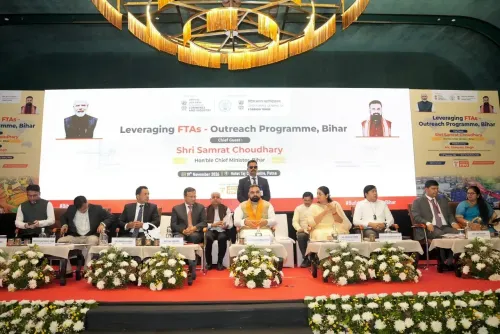
Bihar CM Samrat Chaudhary set a target of a 10 per cent share in national and global markets at the FTA Outreach Programme workshop in Patna on 19 November 2026 .
Per capita income in Sheohar district stands at just ₹36,000 , against ₹13 lakh in Noida — a gap the CM said Bihar must urgently close.
Land has been made available for new airports in Darbhanga and Purnea , with runway expansion under way.
A new silt policy will enable use of four lakh metric tonnes of river silt in road construction, replacing soil priced at around ₹300 per cubic metre .
Chhath Puja generated an estimated ₹80,000 crore in market value nationally this year, cited as proof of Bihar's commercial potential.
District Magistrates directed to hold monthly meetings with BIA , FICCI and other industry bodies, and to enrol local businesses under the ODOP initiative.
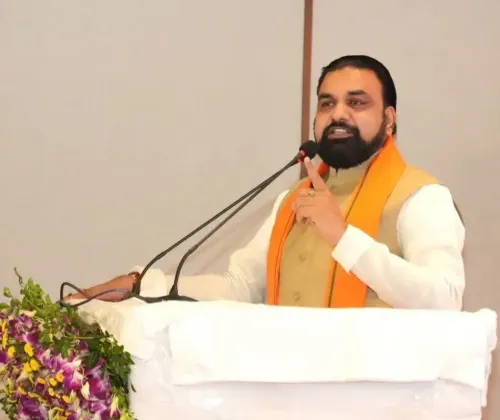
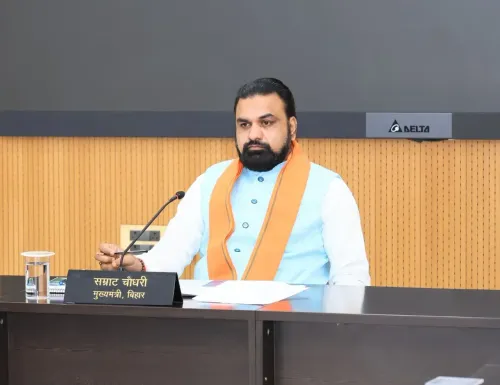
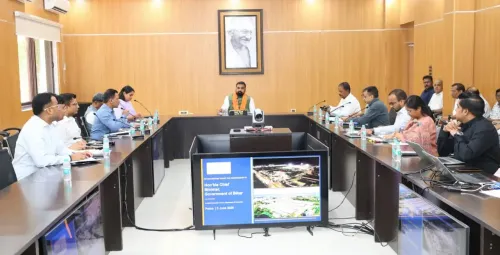
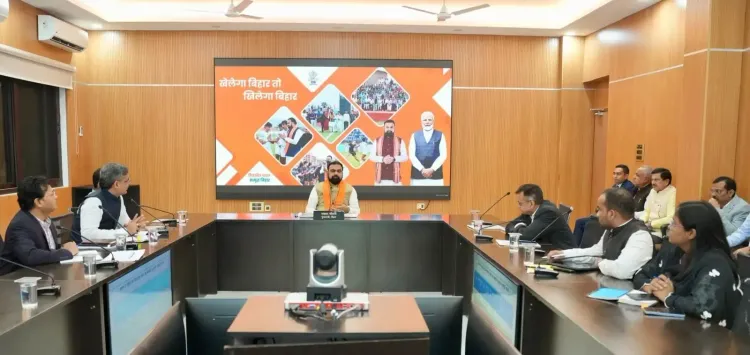
Bihar Chief Minister Samrat Chaudhary on Thursday, 19 November 2026, declared that Bihar must capture a 10 per cent share in both national and international markets, pledging that the state government would work in close partnership with the industrial sector to meet the ambitious target. He was addressing a state-level workshop on the Free Trade Agreement (FTA) Outreach Programme in Patna, jointly organised by the Union Ministry of Commerce and Industry and the Bihar Department of Industries.
The Income Divide Bihar Must Bridge
Chaudhary opened with a stark data point to underscore the urgency: per capita income in Noida, Uttar Pradesh, stands at roughly ₹13 lakh, while Sheohar district in Bihar records just ₹36,000. Even Bihar's better-performing districts average only around ₹2 lakh per capita, the Chief Minister noted. Closing that gap, he argued, would require aggressively expanding business activity and forging direct import-export linkages with other countries.
Infrastructure Push: Roads, Rail, Air and Waterways
Pointing to recent connectivity gains, Chaudhary said Tarapur (Munger) can now be reached from Begusarai in roughly one-and-a-half to two hours and from Patna in approximately two hours and 45 minutes. Land has been made available for new airports in Darbhanga and Purnea, supplementing the existing facility in Patna, with runway expansion under way to improve access to international routes. He added that infrastructure across road, rail, air and waterways was being simultaneously strengthened to support trade logistics.
He also highlighted a 30 per cent subsidy offered by the Central government to businesses transporting goods in containers over distances of up to 400 km, which he said could meaningfully lower logistics costs for Bihar's exporters.
Silt Policy and the ODOP Push
In a notable policy announcement, Chaudhary said the state government had introduced a new silt policy and reached an agreement with the National Highways Authority of India (NHAI) for the use of approximately four lakh metric tonnes of river silt from North Bihar in road construction. With one cubic metre of conventional soil costing around ₹300, river silt is expected to serve as a cost-effective alternative construction material. He also directed all District Magistrates (DMs) and Superintendents of Police (SPs) to hold monthly meetings with the Bihar Industries Association (BIA), FICCI, and other industry bodies to resolve business grievances promptly. He further instructed DMs to bring local entrepreneurs under the One District, One Product (ODOP) initiative and develop district-specific product clusters — citing litchi as one such example — to connect local products with wider markets.
Chhath Economy and the Cultural-Commercial Link
Chaudhary drew an unconventional parallel to make his economic case: Chhath Puja generated an estimated market value of around ₹80,000 crore across the country this year, demonstrating that Bihar's cultural traditions themselves carry significant commercial potential. He identified water management and the state's large population as twin challenges that the government aimed to convert into economic strengths over the next decade through improved policy frameworks.
What Comes Next
The workshop was inaugurated by Chaudhary alongside Industries Minister Shreyasi Singh. Acknowledging that industrial development had not received adequate state priority in the past, the Chief Minister said boosting manufacturing and trade was now central to both revenue generation and youth employment. With FTA negotiations between India and several key trading partners at various stages, Bihar's outreach aligns with the Centre's broader push to ready states for greater export participation — though analysts note that the gap between target-setting and ground-level execution has historically been wide in the state.
Point of View
But the per capita income data Chaudhary himself cited — ₹36,000 in Sheohar versus ₹13 lakh in Noida — reveals how wide the structural chasm actually is. Bihar has repeatedly announced industrial targets without matching them with the regulatory ease, power reliability, or skilling infrastructure that investors require. The silt policy and ODOP push are genuinely practical moves, but monthly DM-industry meetings risk becoming box-ticking exercises unless there is a transparent grievance-resolution mechanism with real accountability. The Chhath Puja analogy is evocative but also illustrative of a dependency on seasonal and informal commerce rather than sustained manufacturing output.
NationPress
19 Nov 2026
Frequently Asked Questions
What target did Bihar CM Samrat Chaudhary set at the FTA Outreach workshop?
Chief Minister Samrat Chaudhary said Bihar must secure a 10 per cent share in both national and international markets, and pledged that the government would work closely with the industrial sector to achieve it. He made the declaration at a state-level FTA Outreach Programme workshop in Patna on 19 November 2026.
How large is Bihar's per capita income gap compared to other states?
Per capita income in Sheohar, one of Bihar's poorest districts, stands at just ₹36,000, while Noida in Uttar Pradesh records around ₹13 lakh. Even Bihar's better-performing districts average only about ₹2 lakh per capita, the Chief Minister noted.
What is Bihar's new silt policy?
The Bihar government has introduced a silt policy under which approximately four lakh metric tonnes of river silt from North Bihar will be used in road construction under an agreement with NHAI. River silt replaces conventional soil, which costs around ₹300 per cubic metre, making it a cost-effective alternative construction material.
What airport expansion plans did Bihar's CM announce?
Land has been made available for new airports in Darbhanga and Purnea, in addition to the existing airport in Patna. Runway expansion is also under way to improve connectivity and facilitate access to international markets.
What is the One District, One Product initiative in Bihar?
The ODOP initiative aims to identify a signature product for each district and develop product clusters to help local goods reach larger national and international markets. Chief Minister Chaudhary directed District Magistrates to bring local entrepreneurs under the scheme, citing litchi as an example of a district-specific product with export potential.