CM Samrat Choudhary Vows to Make Bihar India's Fastest Industrialising State
Synopsis
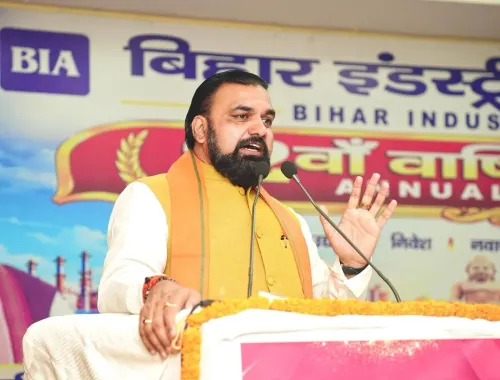
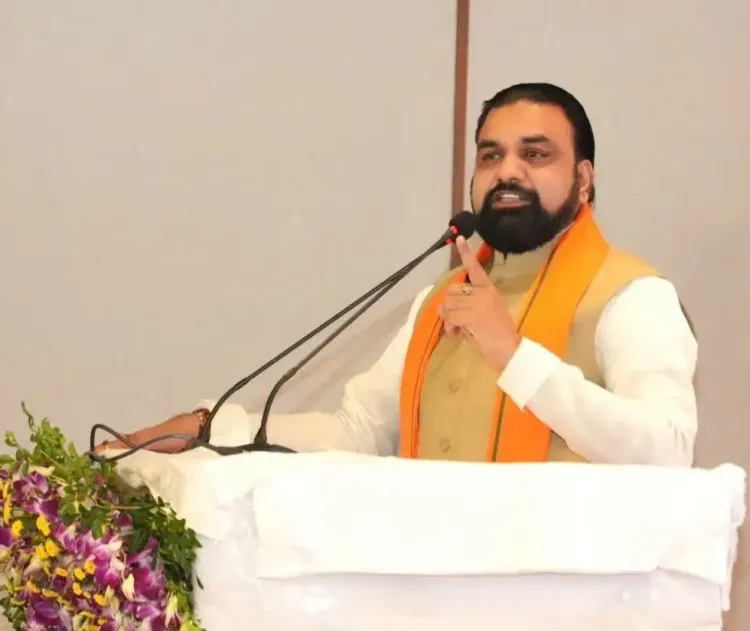
Bihar CM Samrat Choudhary addressed a 'Leveraging Free Trade Agreements' workshop in Patna on 19 November 2026, renewing his vow to make Bihar India's fastest-industrialising state through the One District-One Product model and direct export linkages to global markets via India's expanding FTA network.
Key Takeaways
CM Samrat Choudhary addressed the 'Leveraging Free Trade Agreements' workshop in Patna on 19 November 2026 .
He renewed the pledge to make Bihar India's fastest-industrialising state .
The 'One District-One Product' framework is central to Bihar's export strategy, linking each district's signature product to global markets.
The workshop focused on how India's existing and upcoming Free Trade Agreements can be leveraged by Bihar's manufacturers and artisans.
The industrial push is framed as Bihar's contribution to the national #ViksitBharat (Developed India) goal by 2047 .
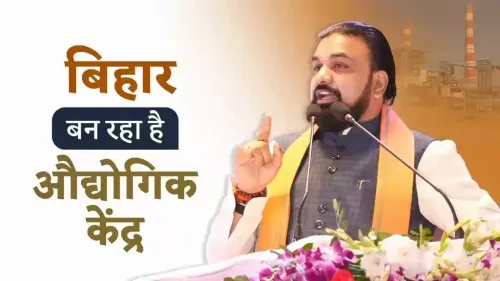
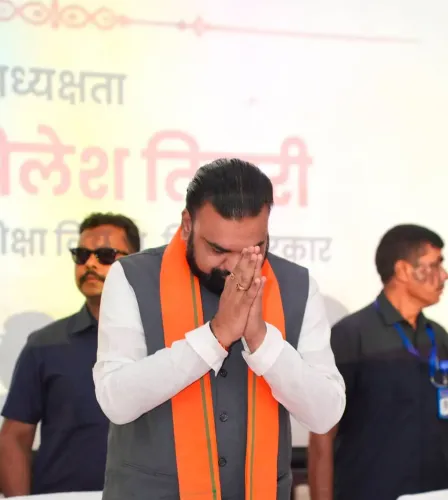
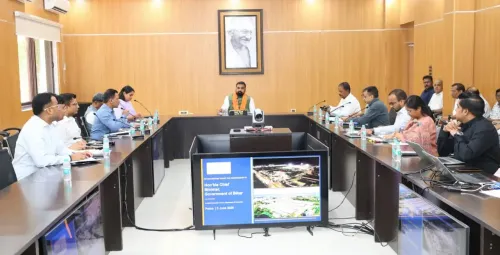
At a packed trade workshop in Patna on Thursday, 19 November 2026, Bihar Chief Minister Samrat Choudhary threw down a pointed economic gauntlet — pledging to transform Bihar into the country's fastest-industrialising state, with exports and global market access as the twin engines of that ambition.
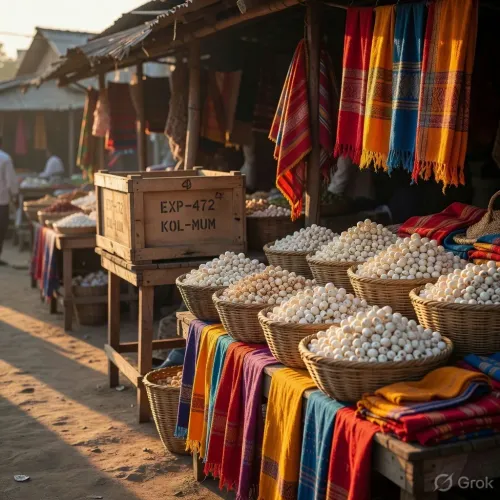
Addressing the 'Leveraging Free Trade Agreements' workshop, CM Choudhary renewed his commitment to the 'One District-One Product' framework — a model that pins each of Bihar's districts to a signature product and builds an entire export chain around it. The idea: rather than chasing generic industrialisation, Bihar identifies what it already does best — Muzzaffarpur's litchis, Bhagalpur's silk, Madhubani's art — and engineers a direct corridor to international buyers through India's growing web of free trade agreements.
FTAs as Bihar's Gateway to Global Markets
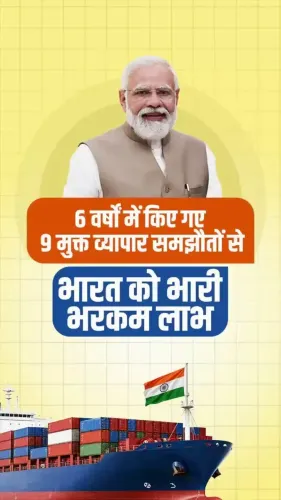
India has significantly expanded its bilateral trade agreement landscape in recent years, and the Patna workshop was designed to show Bihar's industry and district officials exactly how those deals — with the UAE, Australia, and ongoing negotiations with the EU and the UK — can be leveraged at the ground level. CM Choudhary framed the message bluntly: the architecture of global trade is in place; Bihar now needs to load products onto it.
The 'One District-One Product' scheme, anchored in both Union and state policy, gives districts a single exportable identity backed by branding, packaging support, and logistics linkages. When plugged into an FTA framework, local artisans and small manufacturers gain preferential tariff access to markets that were previously out of reach on cost alone.
The 'Samridh Bihar' Industrial Vision
CM Choudhary has consistently positioned the #SamriddhBihar and #MakeInBihar agenda as inseparable from the national #ViksitBharat roadmap — the Union government's overarching goal of a developed India by 2047. For Bihar, a state that has historically ranked near the bottom of industrial output indices, that aspiration demands a step-change, not incremental improvement. The Chief Minister's repeated use of 'fastest industrialising' is a deliberate benchmark — one that invites scrutiny and signals urgency to both investors and his own administration.
Workshops of this kind, bringing together exporters, district collectors, and trade promotion bodies under one roof, are part of a wider state-level push to convert policy intent into floor-level action — translating free trade agreement clauses into actual export consignments from Bihar's hinterland.
Bihar's moment of economic reckoning is arriving on a tighter timeline than ever. The question is no longer whether the state has the ambition — it is whether the pipeline from Patna's workshops to the world's ports can be built fast enough to prove it.
Point of View
Pushing district-level officials to actually use trade agreement architecture. However, with no current research confirming implementation metrics, the gap between workshop ambition and export floor reality remains the credibility test Bihar's administration must now pass.
NationPress
19 Nov 2026
Frequently Asked Questions
What is the 'One District-One Product' scheme in Bihar?
It is a framework that assigns each district a signature exportable product — such as Bhagalpur silk or Muzzaffarpur litchis — and builds branding, logistics, and market-linkage support around it to boost exports.
What was the 'Leveraging Free Trade Agreements' workshop in Patna about?
The workshop, held on 19 November 2026 in Patna , aimed to show Bihar's exporters and district officials how India's bilateral free trade agreements can be practically used to open global markets for local products.
What is CM Samrat Choudhary's industrial vision for Bihar?
CM Choudhary has pledged to make Bihar India's fastest-industrialising state by prioritising exports, global market access through FTAs, and the One District-One Product model under the broader 'Samridh Bihar' agenda.
How does Bihar's industrial push connect to Viksit Bharat?
'Viksit Bharat' is the Union government's goal of making India a fully developed nation by 2047. Bihar's export and industrialisation drive is framed as the state's contribution to meeting that national target.
Which products does Bihar focus on for exports under One District-One Product?
Bihar's One District-One Product map includes items such as Bhagalpur silk, Muzzaffarpur litchis, and Madhubani paintings, each tied to a district and earmarked for export promotion.