CM Samrat Choudhary Hails Bihar Makhana Export to Canada

Synopsis
Bihar CM Samrat Choudhary on July 31, 2026 celebrated the export of 7 metric tons of GI-tagged Mithila makhana to Canada, framing it as a 'local to global' breakthrough for Bihar's farmers and the state's agricultural export ambitions.
Key Takeaways
7 metric tons of Bihar makhana were exported to Canada , as highlighted by CM Samrat Choudhary on July 31, 2026 .
Mithila makhana holds a Geographical Indication (GI) tag , giving it a protected identity in international markets.
The export aligns with India's Agricultural Export Policy 2018 , which targets higher farm incomes through global market access.
CM Choudhary framed the shipment as proof of Bihar farmers' labour and the state's growing agricultural capacity.
Bihar's strategy focuses on niche, GI-tagged crops rather than commoditised grains to capture premium global prices.
Canada's large South Asian diaspora and mainstream superfood demand make it a key early market for makhana.
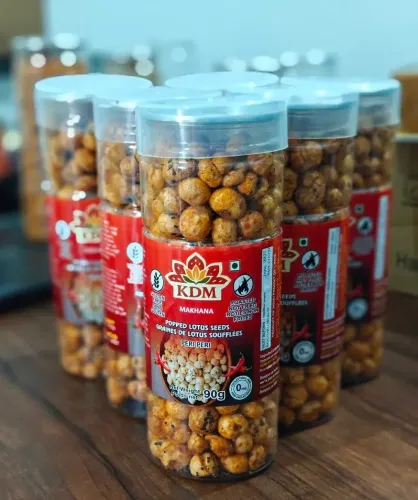
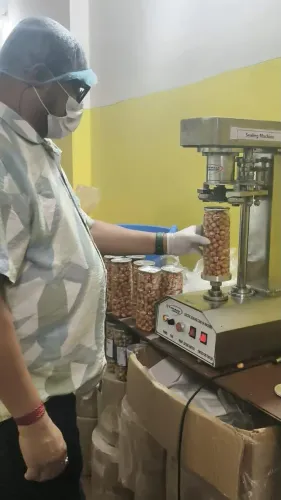
Seven metric tons of Bihar makhana have landed in Canada — and for Bihar Chief Minister Samrat Choudhary, that shipment is more than a trade statistic. It is proof, he argues, that the state's farmers are ready for the world stage. On Friday, July 31, 2026, the Chief Minister took to X to celebrate the export as a milestone in Bihar's agricultural journey, calling it a stride toward taking 'local se global' — local to global.
Mithila's Superfood Finds a Canadian Market
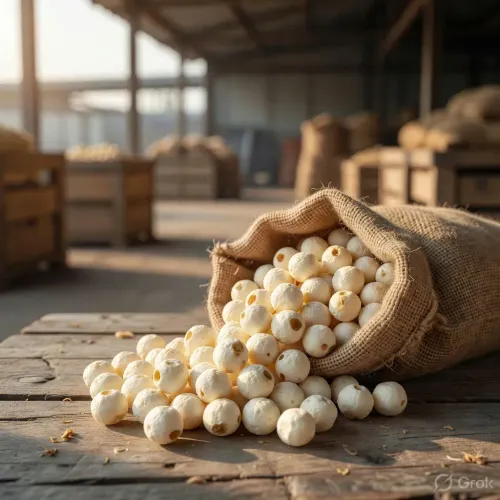
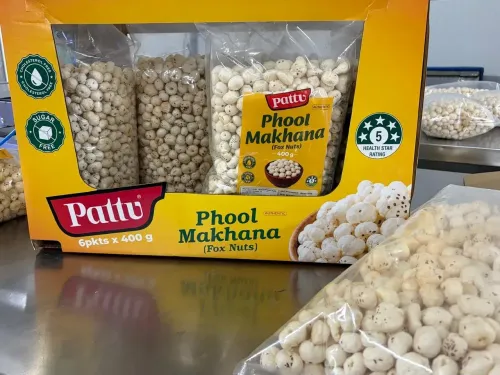
Makhana — the lotus seed cultivated in the wetlands of the Mithila region of Bihar — has long been a staple of Indian kitchens and religious rituals. Its emergence as a health snack with global appeal has quietly been building for years. The crop received a Geographical Indication (GI) tag under India's agricultural branding framework, a designation that formally links the product's identity to its origin and gives exporters a quality credential recognised in international markets.
CM Choudhary framed the Canada shipment as evidence of three converging forces: the hard work of Bihar's farmers, the state's latent agricultural capacity, and rising global demand for clean-label, plant-based foods. 'This achievement,' he wrote, 'is a testament to our farmers' labour, our agricultural strength, and the growing global demand for local products.'
India's Export Policy and Bihar's Niche Bet
The export fits within a national framework that has been taking shape since India's Agricultural Export Policy of 2018, which set out to expand farm exports and improve rural incomes by connecting growers to international buyers. Bihar has pursued that goal by doubling down on crops unique to its geography — makhana being the flagship.
The strategy is deliberate: instead of competing in commoditised grain markets, the state is positioning niche, GI-tagged products where origin and authenticity command a premium. Canada, with a large South Asian diaspora and growing mainstream appetite for superfoods, is a natural early market.
What the Milestone Means for Makhana Farmers
For the smallholder farmers who cultivate makhana in Darbhanga, Madhubani, Sitamarhi, and surrounding districts, export demand translates directly into price support and income stability. Historically, the makhana supply chain was dominated by middlemen, with growers capturing only a fraction of the final value. Direct export pipelines — even when routed through aggregators — shift that calculus.
CM Choudhary's post signals political intent to keep pushing: 'Our resolve is that Bihar's local products establish a distinct identity in global markets and become a vehicle for our farmers' prosperity.' That is a commitment to infrastructure, logistics, and market access — the unglamorous machinery that determines whether a milestone shipment becomes a sustained trade corridor or a one-off headline.
The real test will come in the months ahead, as trade watchers and farm-income trackers measure whether this opening to Canada grows into volume — and whether the gains reach the fields of Mithila.
Point of View
Knitting together national agricultural policy and regional political branding. Whether the shipment seeds a durable trade corridor or remains symbolic will determine how much political capital this milestone ultimately yields.
NationPress
14 Sept 2026
Frequently Asked Questions
What is the significance of Bihar exporting makhana to Canada?
It marks Bihar's entry into the North American market for GI-tagged agricultural products, signalling growing global demand for Mithila makhana and validating the state's push to brand local crops internationally.
What is Mithila makhana and why does it have a GI tag?
Mithila makhana is a lotus seed cultivated in the wetlands of Bihar's Mithila region. It received a Geographical Indication tag to formally link the product's quality and identity to its place of origin, supporting premium pricing in export markets.
How much makhana did Bihar export to Canada?
Bihar Chief Minister Samrat Choudhary stated that 7 metric tons of makhana were exported to Canada, though the exact shipment details are yet to be independently verified from public trade records.
What is India's Agricultural Export Policy and how does it relate to this?
India's Agricultural Export Policy, introduced in 2018, aims to increase farm exports and improve rural incomes by connecting growers to global buyers. Bihar's makhana export to Canada is a direct example of this policy in action.
Who are the main beneficiaries of Bihar's makhana exports?
Smallholder farmers in districts like Darbhanga, Madhubani, and Sitamarhi in Bihar's Mithila belt are the primary beneficiaries, as export demand can improve farm-gate prices and reduce dependence on local middlemen.