Sitacharan Temple, Munger: The Chhath site linked to Goddess Sita's sun worship
Synopsis
In Munger, Chhath Puja is not just a festival — it is a mythological event still being re-enacted. The Sitacharan Temple, perched on a mid-river rock in the Ganga, is where local tradition holds that Goddess Sita herself first offered prayers to the Sun God, making this Bihar district's celebration one of the most spiritually layered in the country.
Key Takeaways
The Sitacharan Temple in Munger, Bihar sits on a rock in the middle of the Ganga and is considered the site of Goddess Sita's original sun worship.
Local belief ties the founding of the Chhath Puja tradition to Maharishi Mudgal's advice to Mata Sita after Lord Ram's victory over Ravan.
The Munger District Gazetteer (1926) documents the mid-river rock and the footprints — though these are presented as matters of faith, not verified history.
Munger's Uttarvahini Ganga at Kashtharanini Ghat — where the river flows northward — adds rare sacred significance to the city's ghats.
Bihar folk singer Sharda Sinha's song 'Mora Bhaiya Jaela Mahenga Munger' has embedded the city in Bihar's Chhath cultural memory.
The Sitacharan Temple in Munger, Bihar, stands at the heart of one of India's most distinctive Chhath Puja traditions — a centuries-old observance rooted in local belief that Goddess Sita herself worshipped the Sun God at this very spot, making the four-day festival here unlike any other in the region.
A Temple on the Ganga
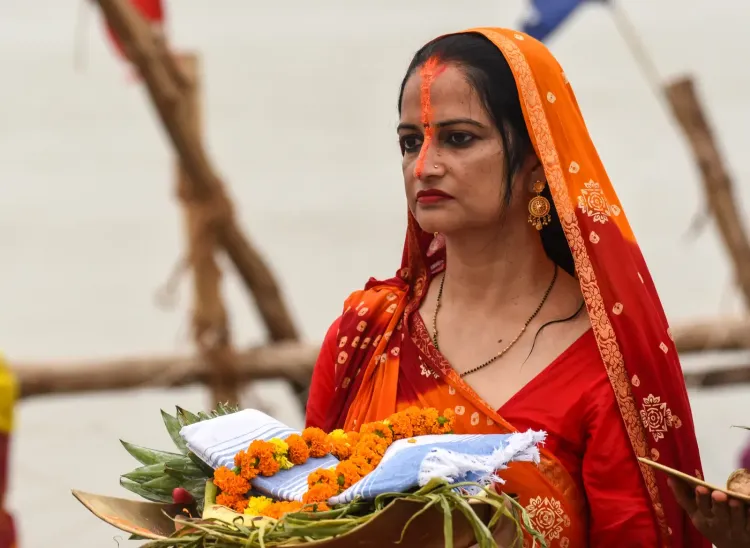
Unlike most riverbank shrines, Sitacharan — also known as Manipashan — sits on a large rock in the middle of the Ganga. During Chhath Puja, devotees reach the site by boat to offer arghya (ritual offerings) to both the setting and the rising sun. Engraved on the rock, according to local tradition, are the footprints of Goddess Sita, lending the site an aura of sacred intimacy.
The Munger District Gazetteer, published in 1926, records the existence of this mid-river rock and the footprints found on it — providing an early documented reference to the site's religious association. As the gazetteer and scholars note, however, these narratives are matters of faith and do not independently establish historical authenticity.
The Mythological Foundation
According to local religious accounts, after Lord Ram defeated the demon king Ravan, he and Mata Sita visited the ashram of Maharishi Mudgal, believed to have been located in what is now Munger. The sage reportedly advised Mata Sita to worship the Sun God, and she performed the rituals at the spot now revered as Sitacharan. This episode is treated as the foundational event of Munger's Chhath tradition.
References to this narrative appear in the Sita-Mudgal episode of the Anand Ramayana, lending the belief a textual anchor within devotional literature. Local traditions also hold that the city's very name evolved from Mudgalpur or Mudgalgiri — a nod to the sage's enduring presence in the region's identity.
The Sacred North-Flowing Ganga
Munger's Chhath carries another rare distinction: the Uttarvahini Ganga. At Kashtharanini Ghat, the river reverses its usual course and flows northward — a phenomenon considered especially sacred in Hindu tradition. This natural quirk draws additional reverence to Munger's ghats during the festival season.
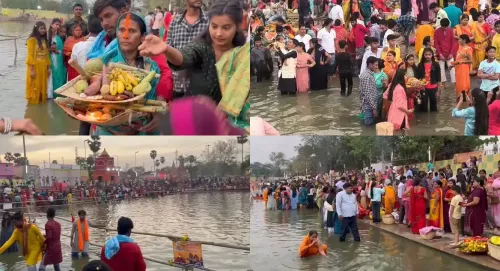
Devotees gather not only at Sitacharan but also along multiple ghats including Babua Ghat, Sojhi Ghat, Jail Ghat, and Kankar Ghat. The four-day observance moves through the rituals of Nahay-Khay, Kharna, Sandhya Arghya (evening offering), and Usha Arghya (dawn offering), each drawing large congregations to the riverbanks.
Folk Culture and the Sharda Sinha Connection
Munger's Chhath legacy extends beyond the sacred into the cultural. The city is immortalised in the celebrated Chhath folk song 'Mora Bhaiya Jaela Mahenga Munger', made famous by Bihar's revered folk singer Sharda Sinha. The song weaves together the traditions of Chhath shopping and family travel, capturing Munger's place in Bihar's collective festive memory.
Taken together, the religious myth of Sitacharan, the legacy of Maharishi Mudgal, the sanctity of the north-flowing Ganga, and the resonance of folk music give Munger's Chhath a layered cultural identity — one that reflects reverence for nature, the river, and social harmony as much as religious devotion.
Point of View
Geography, and identity folded into one. The Sitacharan tradition endures not because it has been verified but because it has been believed, celebrated, and sung about for generations. What makes this worth attention is how a single mid-river rock has anchored an entire city's religious and cultural self-understanding, documented as early as 1926, and kept alive today through boat processions and Sharda Sinha's voice. The layers here — Ramayana reference, colonial-era gazetteer, folk music, northward-flowing river — make Munger's Chhath a richer story than most festive coverage captures.
NationPress
11 Nov 2026
Frequently Asked Questions
What is the Sitacharan Temple in Munger?
The Sitacharan Temple, also known as Manipashan, is a religious site situated on a large rock in the middle of the Ganga river in Munger, Bihar. It is believed by local devotees to be the spot where Goddess Sita worshipped the Sun God during her stay at the ashram of Maharishi Mudgal, making it the spiritual heart of Munger's Chhath Puja tradition.
Why is Chhath Puja in Munger considered special?
Munger's Chhath is considered unique because of its association with Goddess Sita's legendary sun worship at Sitacharan, the presence of the north-flowing Uttarvahini Ganga at Kashtharanini Ghat — regarded as especially sacred — and its deep roots in Bihar's folk music tradition through Sharda Sinha's famous song.
What is the mythological basis of the Sitacharan tradition?
According to local religious accounts and references in the Anand Ramayana, after Lord Ram defeated Ravan, Maharishi Mudgal advised Mata Sita to worship the Sun God. She is said to have performed those rituals at the rock now known as Sitacharan, an episode regarded as the founding event of Munger's Chhath observance.
Is there any historical documentation of the Sitacharan site?
Yes, the Munger District Gazetteer published in 1926 records the existence of the mid-river rock and the footprints found on it. However, the gazetteer and scholars note that these local traditions are matters of faith and do not independently establish the historical authenticity of the events described.
What are the main Chhath rituals observed in Munger?
The four-day Chhath festival in Munger includes the rituals of Nahay-Khay, Kharna, Sandhya Arghya (evening sun offering), and Usha Arghya (dawn sun offering). Devotees travel by boat to Sitacharan in the middle of the Ganga and also gather at ghats including Kashtharanini, Babua, Sojhi, Jail, and Kankar Ghat.