Bihar's 30-day industrial approval rule: applications auto-approved after deadline, says CM Samrat Choudhary
Synopsis
Bihar is moving to end bureaucratic delays with a deemed-approval rule: if officials don't decide on an industrial application within 30 days, it's automatically cleared on day 31. Announced at a Patna summit where ₹2.25 lakh crore in investment proposals were on the table, this is CM Samrat Choudhary's most direct attempt yet to rebrand Bihar as a no-friction investment destination.
Key Takeaways
Bihar CM Samrat Choudhary announced a 30-day industrial approval system on 20 November 2026 ; unresolved applications auto-approved from day 31.
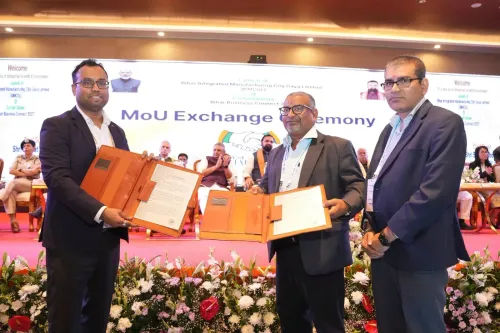
Investment proposals worth around ₹2.25 lakh crore were discussed at the event in Patna , with several MoUs signed.
Power sector projects worth ₹1.72 lakh crore are underway, with agreements to generate 11,000 MW of electricity.
Bihar plans four new expressways , a rapid rail network , and a 125-km Marine Drive from Digha-Patna to Koilwar and Munger to Bhagalpur.
State targets employment for one crore people and one crore women empowered via Lakhpati Didi over the next five years.
Bihar produces around 80% of India's makhana and has the country's first silt management policy , with an NHAI deal covering 4 lakh metric tonnes of silt.
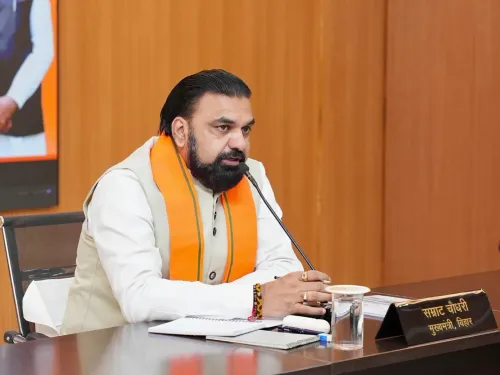
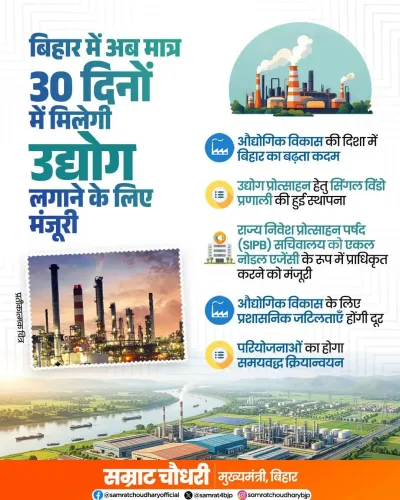
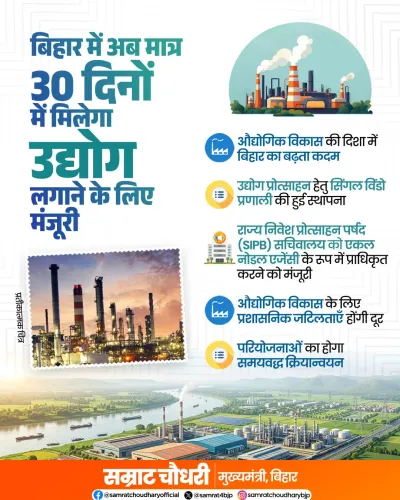
Bihar Chief Minister Samrat Choudhary on Friday, 20 November 2026, announced that the state government will introduce a 30-day time-bound industrial approval system, under which any application for setting up an industry must be decided within a month. If authorities miss the deadline, the application will be treated as automatically approved from the 31st day — a provision designed to eliminate bureaucratic inertia and fast-track investment in Bihar.
Key Announcement: Auto-Approval Mechanism
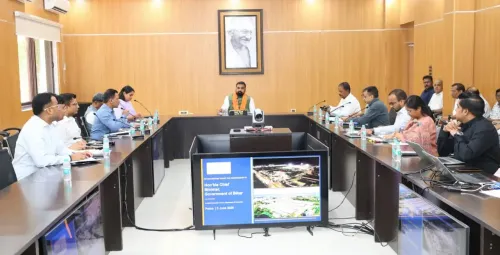
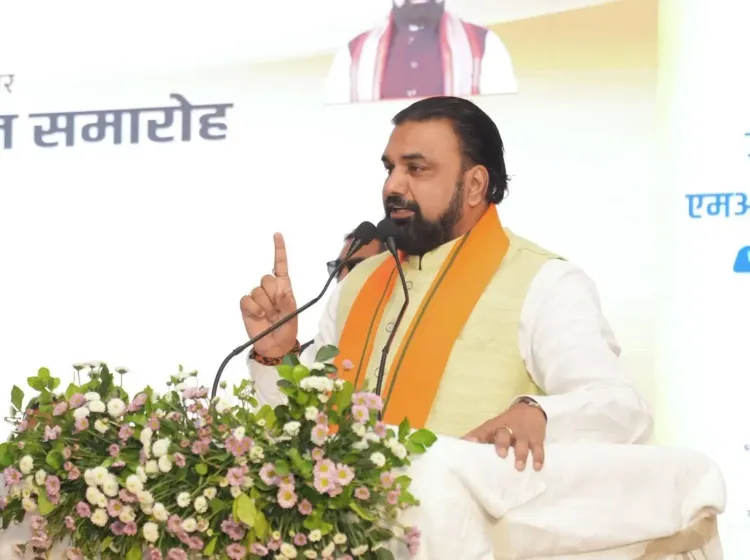
Addressing an event at Hotel Maurya in Patna, Choudhary stated that the era of entrepreneurs running from one government office to another was over. 'The era of running from one government office to another and facing unnecessary delays is over,' he said, adding that investors should not have to wait indefinitely for clearances. The deemed-approval clause puts direct accountability on officials to act within the stipulated window or forfeit the decision to the applicant.
Notably, Choudhary also announced that people constructing houses measuring up to 20×20 metres in areas along the Ganga, Gandak, and Son rivers would not face inquiries or investigations under the proposed provisions — a move aimed at easing regulatory pressure on riverine communities.
Investment Proposals and MoUs Worth ₹2.25 Lakh Crore
The event witnessed discussions on investment proposals worth around ₹2.25 lakh crore for Bihar, with several memorandums of understanding (MoUs) exchanged in connection with the proposed investments. Welcoming industrialists and business representatives, the Chief Minister credited investor confidence in Bihar's improving infrastructure as a key driver.
Choudhary highlighted that the state had made significant strides in roads, electricity, and water supply. Projects worth ₹1.72 lakh crore in the power sector are being advanced, backed by agreements to generate 11,000 MW of electricity. The state government is also providing free electricity to 1.92 crore consumers, supported by a subsidy outlay of ₹23,000 crore.
Infrastructure Pipeline: Expressways, Marine Drive and Rapid Rail
The Chief Minister outlined an ambitious infrastructure agenda. Bihar is working on four new expressways and a rapid rail network. A 125-km Marine Drive is planned, connecting Digha in Patna to Koilwar and extending from Munger to Bhagalpur. Choudhary also referenced the proposed Delhi–Guwahati bullet train corridor, saying such connectivity would directly facilitate business activity in the state.
He sought the cooperation of industrialists in developing an expressway along the Ganga, and urged investors to explore river-based logistics, emphasising waterways as an affordable mode for transporting goods.
Employment, Education and the Lakhpati Didi Initiative
On the employment front, Choudhary said Bihar has already provided 13 lakh government jobs. Over the next five years, the state government aims to create employment for one crore people, support one crore families in starting businesses, and empower one crore women through the Lakhpati Didi initiative.
Bihar is spending ₹18,000 crore on the Student Credit Card scheme, and the Chief Minister appealed to investors to focus on the education sector. Pointing to the state's economic potential, Choudhary noted that around 62 per cent of Bihar's population comprises young people, with a total population of 14 crore representing a substantial consumer base.
Silt Policy, Makhana and Unique State Initiatives
Choudhary highlighted Bihar's silt management policy, describing it as the country's first of its kind. An agreement has been signed with the National Highways Authority of India (NHAI) for the utilisation of around four lakh metric tonnes of silt, which could benefit infrastructure projects while addressing flood and drought challenges. Bihar also accounts for around 80 per cent of the country's makhana production, offering considerable scope for investment in food processing and allied industries.
With its infrastructure pipeline, ease-of-approval reforms, and large youth demographic, Bihar is positioning itself as a competitive industrial destination — the real test will be in implementation.
Point of View
Not a commitment, and the gap between MoU and actual investment in Indian state summits is well-documented. The real indicator to watch is how many of these approvals materialise within 30 days once the system is live — and whether the auto-approval clause survives legal and administrative challenge.
NationPress
20 Nov 2026
Frequently Asked Questions
What is Bihar's new 30-day industrial approval system?
It is a time-bound clearance mechanism announced by Chief Minister Samrat Choudhary, under which all applications for setting up industries in Bihar must be decided within 30 days. If authorities fail to act within that period, the application is treated as automatically approved from the 31st day.
How much investment was proposed at the Patna event?
Investment proposals worth around ₹2.25 lakh crore were discussed at the event held at Hotel Maurya in Patna on 20 November 2026, with several MoUs exchanged between the state government and business representatives.
What infrastructure projects did CM Samrat Choudhary announce?
Choudhary outlined plans for four new expressways, a rapid rail network, and a 125-km Marine Drive connecting Digha in Patna to Koilwar and extending from Munger to Bhagalpur. He also referenced the proposed Delhi–Guwahati bullet train corridor as a connectivity booster for Bihar.
What are Bihar's employment targets under CM Samrat Choudhary?
Over the next five years, the Bihar government aims to create employment for one crore people, support one crore families in starting businesses, and empower one crore women through the Lakhpati Didi initiative. The state has already provided 13 lakh government jobs to date.
Why is Bihar's silt management policy significant?
Bihar's silt management policy is described as the first of its kind in India. An agreement with the National Highways Authority of India (NHAI) covers the utilisation of around four lakh metric tonnes of silt, which could support infrastructure projects while helping manage flood and drought risks in the state.