Bihar expands Kushal Yuva Karyakram with ₹430 crore outlay till 2030
Synopsis
Bihar has quietly rolled out one of its most ambitious youth policy packages in years — extending its flagship skills programme to 2030 with a ₹430 crore outlay, renewing its student credit card scheme through 2031, and topping up the Centre's solar subsidy with ₹1,000 crore of its own. The scale and simultaneity of the three moves signals a deliberate pivot toward employment, education, and energy as Bihar's core political agenda heading into the next electoral cycle.
Key Takeaways
Bihar has approved ₹430.08 crore to extend the Kushal Yuva Karyakram under Saat Nischay-3 through 2030 .
The programme will train more than 2.57 lakh youths annually in fields including AI , drone technology , solar energy , and entrepreneurship .
The scheme is projected to directly create 6,436 employment opportunities .
The Bihar Student Credit Card Scheme has been extended to 2031 , with ₹950 crore sanctioned for 2026–27 ; over 4.15 lakh students have already received ₹8,865 crore in assistance.
The state will provide an additional ₹10,000 per kilowatt (max ₹20,000 per household ) for rooftop solar, with ₹1,000 crore approved for the state component.
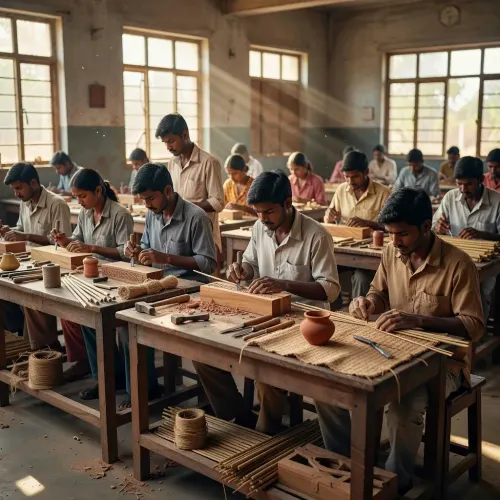
The Bihar government has approved a ₹430.08 crore outlay to extend the Kushal Yuva Karyakram (Skilled Youth Programme) under Saat Nischay-3 (Seven Resolves-3) through 2030, significantly widening its scope to include emerging technology and entrepreneurship training. The programme, originally planned for 2026–27 alone, will now run for four additional years, targeting over 2.57 lakh youths annually.
What the Expanded Programme Covers
Under the revised framework, young people will receive training in artificial intelligence, drone technology, solar energy, networking, digital marketing, banking, Tally, foreign languages, and entrepreneurship. These are fields aligned with current and projected labour market demand, marking a deliberate shift from conventional vocational training toward future-ready skills.
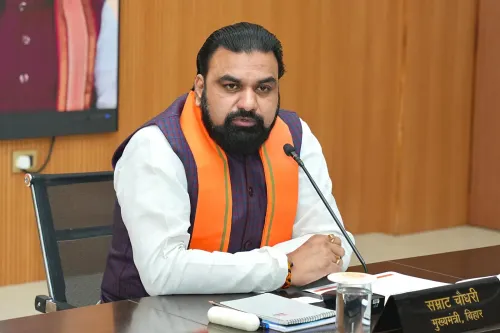
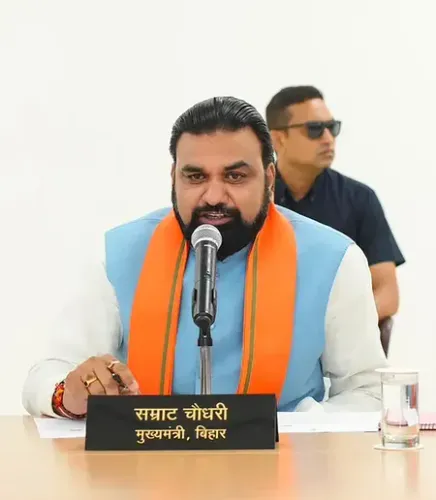
According to the state government, the programme is expected to directly generate 6,436 employment opportunities in addition to training more than 2.57 lakh youths every year. Chief Minister Samrat Choudhary announced the decision on X, underscoring the government's intent to make the initiative a centrepiece of Bihar's youth employment strategy.
Bihar Student Credit Card Scheme Extended to 2031
Alongside the skills programme, the Bihar government has approved the continuation of the Bihar Student Credit Card Scheme for another five years, covering 2026 to 2031. An expenditure of ₹950 crore has been sanctioned for the 2026–27 financial year under the scheme.
According to figures shared by the Chief Minister, more than 4.81 lakh applications have been approved under the scheme so far, with financial assistance of approximately ₹8,865 crore disbursed to more than 4.15 lakh students pursuing higher education.
Solar Energy Push: State Tops Up Central Subsidy
The Bihar government has also announced additional financial assistance for residential consumers under the Pradhan Mantri Surya Ghar Muft Bijli Yojana. Over and above the Central government's existing support, the state will provide ₹10,000 per kilowatt, capped at ₹20,000 per household. An estimated ₹1,000 crore has been approved for this state component over one year.
The top-up subsidy is designed to encourage households to install rooftop solar systems, lower electricity expenditure, and accelerate Bihar's transition toward renewable energy. This comes amid a broader national push to expand solar adoption under the PM Surya Ghar scheme.
Significance and What Comes Next
Taken together, the three announcements — skills training, student credit, and solar subsidies — represent a coordinated attempt by the Bihar government to address youth unemployment, higher education access, and energy affordability in one policy sweep. Notably, Bihar has historically ranked among states with high youth unemployment and low per-capita energy consumption, making these interventions particularly consequential.
Implementation details, including the rollout calendar for the expanded Kushal Yuva Karyakram and the solar subsidy disbursement mechanism, are expected to be formalised in the coming weeks.
Point of View
Credit, and solar — is politically timed but structurally significant. The Kushal Yuva Karyakram's pivot to AI and drone training is a meaningful upgrade from the generic vocational content of earlier rounds, though the gap between training numbers and verifiable employment outcomes has been a persistent weak point in similar state schemes. The student credit card's ₹8,865 crore disbursed to 4.15 lakh students is a credible track record, but the scheme's non-performing asset ratio remains publicly undisclosed — a transparency gap that warrants scrutiny. On solar, Bihar's ₹10,000-per-kilowatt top-up is one of the more aggressive state co-funding positions in the country, and if disbursed efficiently, could meaningfully shift rooftop adoption in a state where grid reliability remains a daily grievance.
NationPress
27 Sept 2026
Frequently Asked Questions
What is the Kushal Yuva Karyakram and how has it been expanded?
The Kushal Yuva Karyakram is Bihar's flagship skilled youth training programme under the Saat Nischay-3 policy framework. It has now been extended from its original 2026–27 timeframe through 2030, with a ₹430.08 crore outlay approved to train over 2.57 lakh youths annually in fields such as AI, drone technology, solar energy, and entrepreneurship.
How many jobs is the expanded programme expected to create?
According to the Bihar government, the expanded Kushal Yuva Karyakram is projected to directly generate 6,436 employment opportunities, in addition to providing annual training to more than 2.57 lakh young people across the state.
What is the Bihar Student Credit Card Scheme and how long has it been extended?
The Bihar Student Credit Card Scheme provides financial assistance to students pursuing higher education. It has been extended for five years, covering 2026 to 2031, with ₹950 crore sanctioned for 2026–27. So far, over 4.15 lakh students have received approximately ₹8,865 crore in assistance.
What additional solar subsidy has Bihar announced?
Bihar will provide ₹10,000 per kilowatt — up to a maximum of ₹20,000 per household — as a state top-up to the Central government's support under the Pradhan Mantri Surya Ghar Muft Bijli Yojana. An estimated ₹1,000 crore has been approved for this state component over one year.
Who announced these decisions and where?
Chief Minister Samrat Choudhary announced the decisions on X, outlining the extension of the Kushal Yuva Karyakram, the renewal of the student credit card scheme, and the additional solar subsidy for Bihar's residential consumers.