CM Samrat Choudhary extends Bihar Student Credit Card scheme to 2031

Synopsis
Bihar CM Samrat Choudhary announced cabinet approval extending the Bihar Student Credit Card Yojana through 2031, sanctioning ₹950 crore for 2026–27. The scheme has already disbursed nearly ₹8,865 crore to over 4.15 lakh students since its 2016 launch.
Key Takeaways
The Bihar Student Credit Card Yojana has been extended and strengthened for 2026–31 by the state cabinet. ₹950 crore has been sanctioned for expenditure in the financial year 2026–27 .
More than 4.81 lakh applications have been approved under the scheme since its 2016 launch.
Over 4.15 lakh students have received nearly ₹8,865 crore in financial assistance to date.
The scheme provides interest-free loans of up to ₹4 lakh to students from economically weaker families for higher education.
The extension continues Bihar's multi-year commitment to reducing financial barriers to college and professional education.
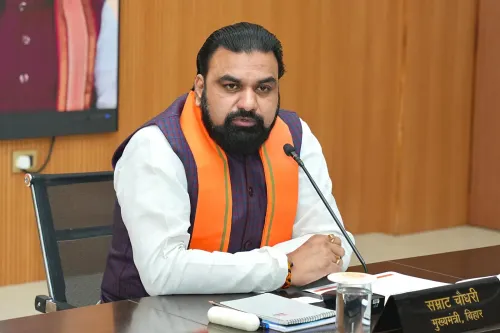
Over 4.15 lakh students in Bihar have already received nearly ₹8,865 crore in higher-education loans — and on Wednesday, 12 August 2026, Bihar Chief Minister Samrat Choudhary announced that the engine powering those numbers is getting a five-year extension. The state cabinet has approved the strengthening and continuation of the Bihar Student Credit Card Yojana through 2026–31, with ₹950 crore sanctioned for the first year alone.
Posting on X, CM Choudhary said the decision deepens the state's resolve to provide financial support for higher education: 'आर्थिक बाधाओं को दूर कर बिहार के युवाओं को उच्च शिक्षा, बेहतर अवसर और आत्मनिर्भर भविष्य की ओर आगे बढ़ाने में महत्वपूर्ण भूमिका निभाएगी' — ('This will play a crucial role in removing financial barriers and pushing Bihar's youth towards higher education, better opportunities, and a self-reliant future.')
From a 2016 launch to ₹8,865 crore disbursed
The Bihar Student Credit Card Scheme was born in 2016 as an interest-free loan instrument of up to ₹4 lakh for students from economically weaker families pursuing higher education. A decade on, the numbers tell the story of scale: more than 4.81 lakh applications approved, and over 4.15 lakh students with funds in hand. That is not a pilot programme anymore — it is a structural pillar of how Bihar finances its human capital.
The cabinet's fresh approval locks in ₹950 crore for 2026–27 as the opening tranche of the extended phase. The five-year horizon to 2031 signals that this is not a one-budget gesture but a medium-term commitment — the kind that allows students to plan degree timelines around guaranteed availability of credit.
Why the extension matters for Bihar's youth
Bihar has historically faced among the country's lowest gross enrolment ratios in higher education, a gap rooted less in aspiration than in economics. The credit card scheme directly targets that gap — not with a scholarship that covers a fraction of costs, but with a loan large enough to fund tuition, boarding, and incidentals at a professional college. The pattern of periodic multi-year budget commitments to this programme reflects a deliberate state-level bet: invest in student credit access now, harvest a more skilled workforce later.
The 2026–31 extension also arrives as competitive pressure on state governments to demonstrate welfare delivery ahead of electoral cycles intensifies. For the NDA government in Bihar, the scheme's cumulative ₹8,865 crore disbursement figure is a concrete, auditable record — the kind of number that travels from cabinet briefings to campaign rallies with equal ease.
The next test is execution: whether the ₹950 crore earmarked for 2026–27 reaches students on time, and whether annual utilisation reports show improving repayment performance as early beneficiaries enter the workforce. Bihar's classrooms are waiting to find out.
Point of View
865 crore disbursed is a figure that commands political credibility. For the NDA government in Bihar, locking in a 2026–31 horizon converts a welfare scheme into a long-term infrastructure argument: that credit access, not just scholarships, is the right lever for a state with persistently low higher-education enrolment. The ₹950 crore first-year allocation will be watched closely as a test of whether the extension is funded ambition or aspirational arithmetic. If repayment data from early cohorts strengthens over the next two years, the scheme could become a template other states cite — and Bihar's government will make sure they know it.
NationPress
27 Sept 2026
Frequently Asked Questions
What is the Bihar Student Credit Card Yojana?
The Bihar Student Credit Card Yojana is a state government scheme launched in 2016 that provides interest-free loans of up to ₹4 lakh to students from economically weaker families in Bihar to fund higher education, including tuition, boarding, and related expenses.
How long has the Bihar Student Credit Card scheme been extended?
The scheme has been extended for five years, covering the period 2026 to 2031, with ₹950 crore sanctioned for the first year, 2026–27.
How many students have benefited from the Bihar Student Credit Card so far?
As of the August 2026 cabinet announcement, more than 4.15 lakh students have received financial assistance, with over 4.81 lakh applications approved in total.
How much money has been disbursed under the Bihar Student Credit Card Yojana?
Nearly ₹8,865 crore in financial assistance has been disbursed to students under the scheme since its launch in 2016.
Who announced the extension of the Bihar Student Credit Card scheme?
Bihar Chief Minister Samrat Choudhary announced the cabinet's approval of the scheme's extension and strengthening on 12 August 2026 via a post on X.