CM Samrat Choudhary: Bihar's Sahyog Shivir Clears 90% of 7 Lakh Grievances
Synopsis
Bihar CM Samrat Choudhary announced that the Sahyog Shivir initiative has processed over 7 lakh digital grievance applications across all 534 state blocks, with more than 90 per cent resolved under direct Chief Minister's Office oversight.
Key Takeaways
Bihar CM Samrat Choudhary announced progress of the Sahyog Shivir grievance redressal initiative on 25 July 2026 .
Digital applications are being accepted from all 534 prakhands (blocks) across Bihar.
Over 7 lakh applications have been received under the scheme so far.
More than 90 per cent of applications have been resolved, according to the Chief Minister.
All applications are monitored directly by the Chief Minister's Office to enforce accountability and timelines.
The initiative aligns with Bihar's Right to Public Services Act (2011) and India's broader Digital India e-governance framework.
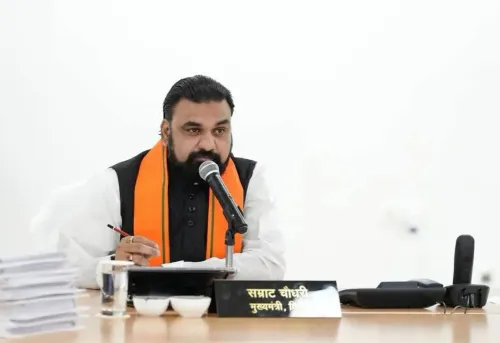
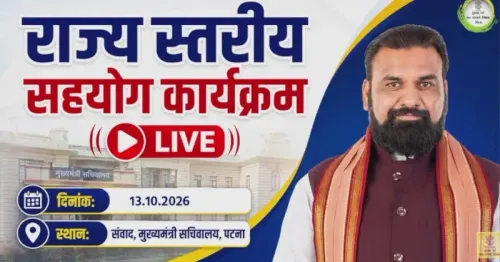
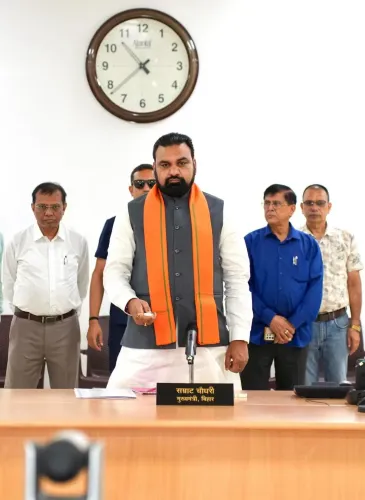
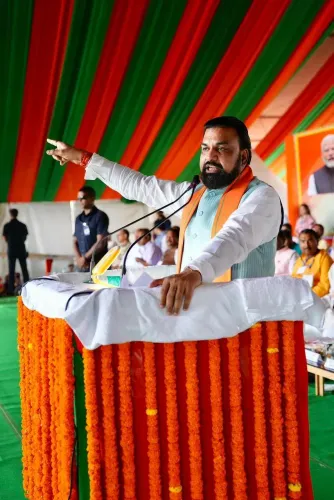
Bihar Chief Minister Samrat Choudhary on Saturday, 25 July 2026, highlighted the progress of the state's Sahyog Shivir initiative, stating that over 7 lakh applications have been received across all 534 blocks of Bihar, with more than 90 per cent already resolved through a digitally monitored, time-bound grievance redressal system.
Context
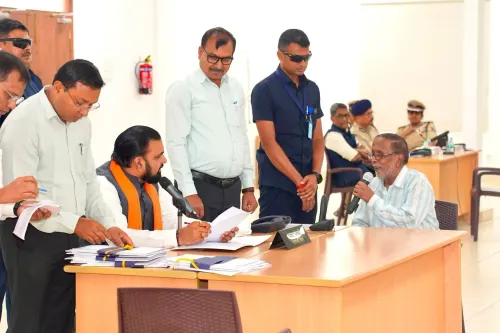
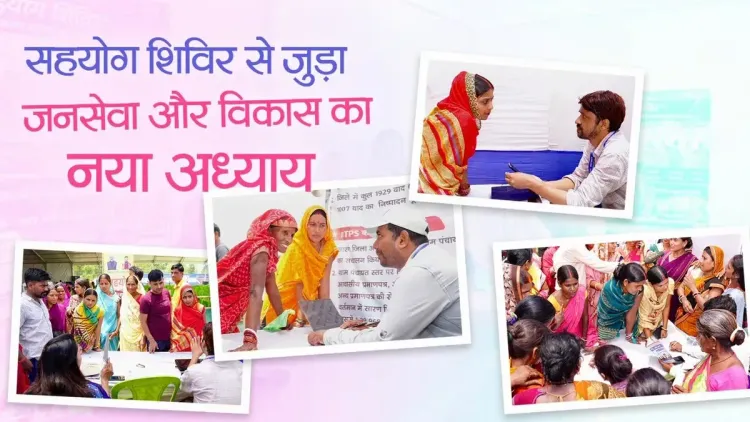
In his post on X, Samrat Choudhary described the Sahyog Shivir as 'जनसेवा और विकास का नया अध्याय' — 'a new chapter in public service and development'. He said the initiative was launched to ensure 'त्वरित और पारदर्शी समाधान' — 'swift and transparent resolution' — of citizens' problems. Applications are being accepted digitally from all 534 prakhands (blocks) in the state, with oversight exercised directly by the Chief Minister's Office.
The Chief Minister noted that a robust accountability mechanism has been put in place to ensure action within defined timelines, so that every citizen's grievance is addressed in a time-bound manner.
Policy Backdrop
Bihar enacted the Right to Public Services Act in 2011, one of the earlier state-level legislative frameworks in India mandating time-bound delivery of government services. The Sahyog Shivir model builds on this foundation by layering digital intake and centralised monitoring on top of the existing administrative machinery.
The initiative aligns with India's Digital India programme, launched in 2015, which has pushed states to digitise citizen-facing services and grievance systems. Central monitoring by chief ministerial offices to enforce timelines on block-level officials has become a recurring feature of governance reform across multiple Indian states in recent years.
Stakeholders and Impact
The primary beneficiaries are Bihar's residents at the grassroots level — particularly those in rural and semi-urban areas who previously had to travel to district headquarters to file complaints or access services. With applications now accepted digitally at the block level, the initiative reduces the physical and financial burden on ordinary citizens.
Block administration officials are directly accountable under the scheme's monitoring framework, with the Chief Minister's Office tracking disposal rates in real time. The 90-per-cent-plus resolution rate cited by the Chief Minister, if sustained, would represent a significant benchmark for sub-district grievance redressal in a large state like Bihar.
What's Next
Observers will watch for periodic, publicly released performance reports on disposal rates across individual blocks, which would allow independent assessment of the claims made. A potential formal linkage with the central government's CPGRAMS (Centralised Public Grievance Redress and Monitoring System) portal could further integrate the initiative into the national e-governance architecture.
The Sahyog Shivir's long-term credibility will rest on whether the accountability mechanisms translate into sustained, verifiable outcomes for citizens — particularly in Bihar's more remote blocks where administrative capacity has historically been uneven.
Point of View
Positioning his administration as data-driven and accountable ahead of what remains a politically competitive landscape in Bihar. Centralising oversight in the Chief Minister's Office is a well-established statecraft tool — it signals intent to bypass entrenched local bureaucratic delays while keeping political credit firmly at the top. The 90-per-cent disposal claim, if independently verifiable, would mark a meaningful departure from Bihar's historically sluggish service-delivery record and could be deployed as a campaign credential. The initiative also dovetails with the BJP's broader national narrative on digital governance and 'last-mile' delivery, giving it resonance beyond state boundaries.
NationPress
25 Oct 2026
Frequently Asked Questions
What is the Sahyog Shivir initiative in Bihar?
Sahyog Shivir is a Bihar government programme that accepts digital grievance applications from citizens at all 534 administrative blocks (prakhands) in the state, with resolution monitored directly by the Chief Minister's Office to ensure time-bound action.
How many applications have been received under Sahyog Shivir?
According to Bihar Chief Minister Samrat Choudhary, over 7 lakh applications have been received under the Sahyog Shivir initiative as of July 2026.
What percentage of Sahyog Shivir applications have been resolved?
Chief Minister Samrat Choudhary stated that more than 90 per cent of the applications received under Sahyog Shivir have been resolved.
Who monitors the Sahyog Shivir grievance applications in Bihar?
The applications filed under Sahyog Shivir are monitored directly by the Bihar Chief Minister's Office, which oversees accountability and ensures action within defined timelines.
How does Sahyog Shivir relate to Bihar's Right to Public Services Act?
Bihar's Right to Public Services Act, enacted in 2011, mandates time-bound delivery of government services. Sahyog Shivir builds on this legal framework by adding a digital application layer and centralised CMO-level monitoring across all 534 blocks.