Om Birla releases 89-volume Central Legislative Assembly proceedings, Delhi journal
Synopsis
Lok Sabha Speaker Om Birla oversaw the release of 89 volumes documenting 407 meetings of India's pre-independence Central Legislative Assembly — a 32,376-page archive spanning 1924 to 1930. The publication, paired with the launch of Delhi's new parliamentary journal 'Vidhan-Chetna', is among the most substantive efforts to preserve the legislative record of the freedom-era parliament that preceded the modern Lok Sabha.
Key Takeaways
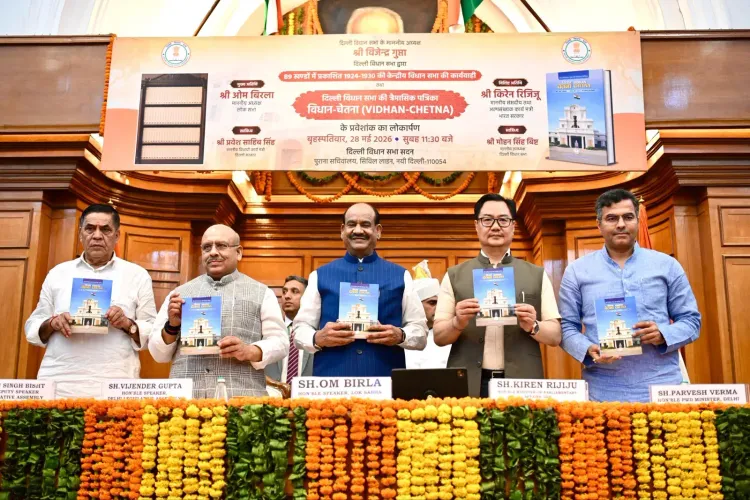
Lok Sabha Speaker Om Birla launched 89 volumes of Central Legislative Assembly proceedings on 28 May 2025 at the Delhi Assembly .
The volumes cover 407 historic meetings from 1924 to 1930 , spanning 32,376 pages .
The inaugural issue of 'Vidhan-Chetna' , a new quarterly journal of the Delhi Legislative Assembly , was also released at the event.
Union Minister Kiren Rijiju and Delhi Minister Parvesh Sahib Singh attended; Delhi Assembly Speaker Vijender Gupta chaired the ceremony.
The publication highlights contributions of luminaries including Vithalbhai Patel , Lala Lajpat Rai , and Madan Mohan Malaviya in the pre-independence legislature.
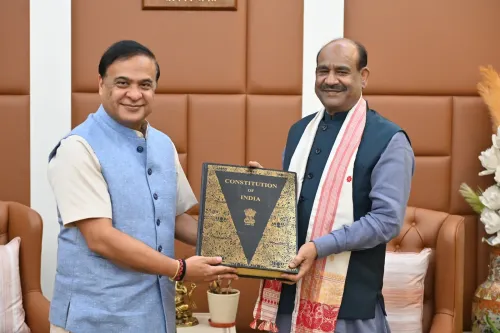
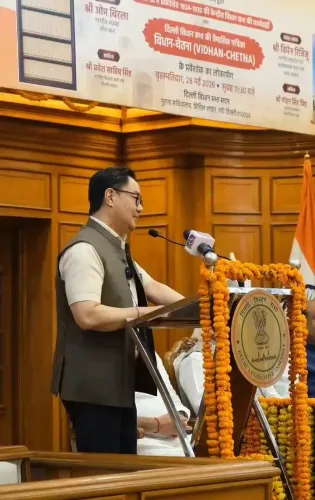
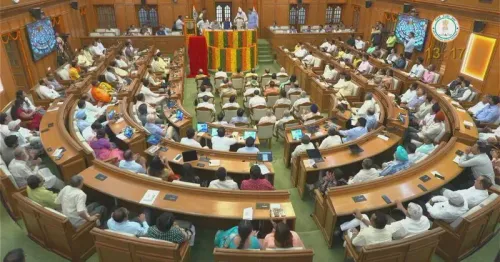
Lok Sabha Speaker Om Birla on Thursday, 28 May launched the inaugural issue of 'Vidhan-Chetna', a quarterly journal of the Delhi Legislative Assembly, alongside the release of the proceedings of the Central Legislative Assembly (1924–1930) compiled across 89 volumes. The event, held at the Delhi Assembly, marks a significant effort to preserve India's pre-independence parliamentary heritage for future generations.
What Was Released
The 89-volume publication documents 407 historic meetings of the Central Legislative Assembly, spanning 32,376 pages of deliberations from 1924 to 1930. The Delhi Legislative Assembly undertook the publication as part of a broader initiative to archive India's foundational democratic record. Alongside this, the maiden issue of 'Vidhan-Chetna' — a new quarterly magazine — was unveiled to foster ongoing parliamentary scholarship.
What Speaker Birla Said
Addressing the gathering, Birla described the twin releases as a milestone for democratic discourse and parliamentary research. 'Dialogue, reasoning, and knowledge-based discussion are the true strength of democracy. It is believed that this historic publication will connect the new generation to their constitutional heritage, parliamentary traditions, and the values of nation-building, thereby making India's democratic future even more empowered and enriched,' he said.
In a post on X, Birla noted that the volumes reflect 'the invaluable imprint of the impartial presidential leadership of the first Indian President Vithalbhai Patel, the patriotism of Mahamana Pandit Madan Mohan Malaviya, the resounding voice of Punjab Kesari Lala Lajpat Rai, the fiery nationalist ideas of Vipin Chandra Pal, the constitutional reflections of Madhav Shrihari Aney, and the ideological churning of numerous great luminaries.'
Historical Significance
Vithalbhai Patel was the first Indian to serve as President of the Central Legislative Assembly — the precursor to the modern Lok Sabha. Birla underscored that Patel's tradition of impartiality, autonomy, and parliamentary decorum continues to inspire democratic institutions. The old secretariat premises, where the event was held, were themselves witness to many of the deliberations now preserved in print.
Key Attendees and Delhi Assembly's Role
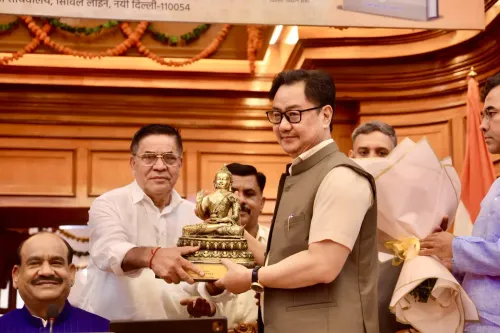
The event was attended by Union Minister of Parliamentary Affairs and Minority Affairs Kiren Rijiju, Delhi Minister Parvesh Sahib Singh, and several legislators. Delhi Assembly Speaker Vijender Gupta, who chaired the ceremony, described it as a vital bridge between India's rich parliamentary legacy and its contemporary legislative evolution, reaffirming a commitment to preserving institutional history while fostering modern democratic discourse.
What This Means for Parliamentary Studies
The release is expected to benefit researchers, historians, and students of constitutional law by making century-old legislative debates accessible in a structured format. This comes amid a broader national push to document and digitise India's pre-independence governance records. The 'Vidhan-Chetna' journal, if sustained, could further institutionalise parliamentary scholarship at the state assembly level — a relatively underexplored space in Indian academic circles.
Point of View
Yet its debates have been largely inaccessible to researchers. Whether this archive translates into genuine scholarly engagement depends on distribution and digitisation, neither of which was addressed at the launch. The pairing with 'Vidhan-Chetna' is an interesting signal that state assemblies may be reclaiming a role in parliamentary education — but a quarterly journal will need editorial rigour and consistent funding to outlast the ceremony that launched it.
NationPress
19 Sept 2026
Frequently Asked Questions
What are the 89 volumes of Central Legislative Assembly proceedings released by Om Birla?
They are a comprehensive archive of 407 meetings of the Central Legislative Assembly held between 1924 and 1930, compiled across 89 volumes and 32,376 pages by the Delhi Legislative Assembly. The Central Legislative Assembly was the pre-independence legislature that served as the precursor to the modern Lok Sabha.
What is 'Vidhan-Chetna' and why was it launched?
'Vidhan-Chetna' is a new quarterly journal of the Delhi Legislative Assembly, launched to promote parliamentary studies, research, and democratic discourse. Its inaugural issue was released alongside the Central Legislative Assembly proceedings on 28 May 2025.
Who was Vithalbhai Patel and why is he significant to this publication?
Vithalbhai Patel was the first Indian to serve as President of the Central Legislative Assembly, the body that preceded the Lok Sabha. His leadership, impartiality, and commitment to parliamentary decorum are highlighted in the newly released proceedings as an enduring inspiration for democratic institutions.
Who attended the launch event at the Delhi Assembly?
The event was attended by Lok Sabha Speaker Om Birla, Union Minister of Parliamentary Affairs and Minority Affairs Kiren Rijiju, Delhi Minister Parvesh Sahib Singh, and several legislators. Delhi Assembly Speaker Vijender Gupta chaired the ceremony.
Why does this publication matter for Indian parliamentary history?
The volumes make century-old legislative debates accessible in a structured format for the first time, preserving the record of India's freedom-era parliament. They document contributions of national figures including Lala Lajpat Rai, Madan Mohan Malaviya, and Vipin Chandra Pal, offering researchers a primary source on pre-independence democratic deliberation.