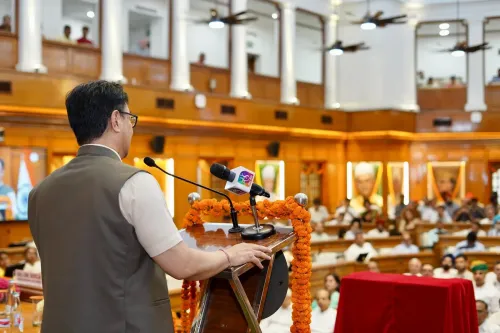
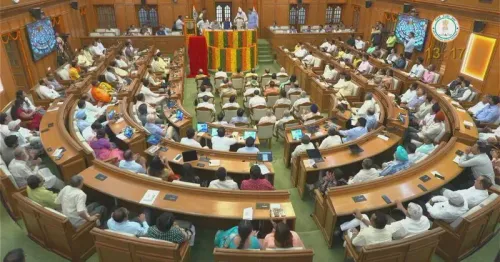
Rijiju attends unveiling of CLA proceedings, Delhi Assembly magazine
Synopsis
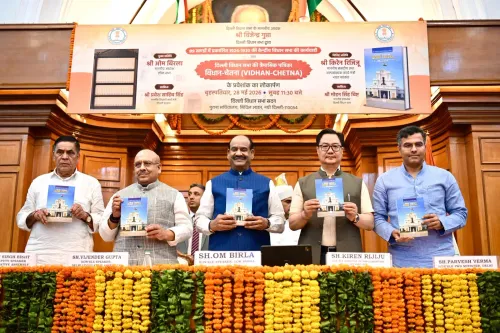
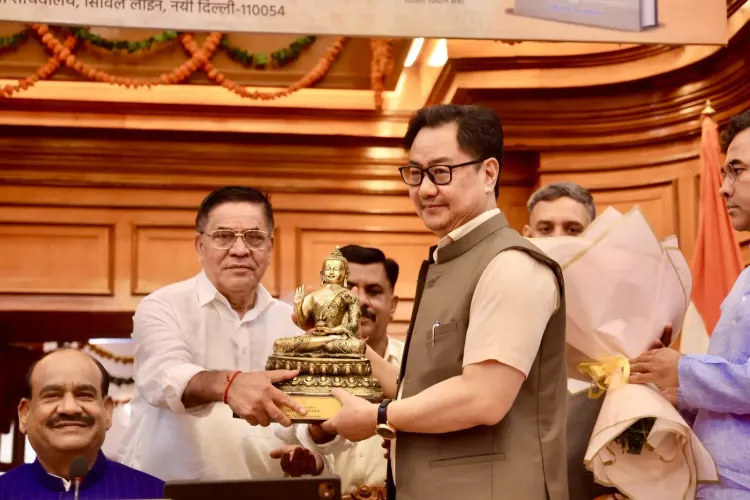
Union Parliamentary Affairs Minister Kiren Rijiju joined Lok Sabha Speaker Om Birla and Delhi Assembly leaders on 28 May 2026 to unveil 89 volumes of Central Legislative Assembly proceedings from 1924–1930 and the debut issue of quarterly magazine Vidhan-Chetna, marking a significant archival milestone for Indian parliamentary history.
Key Takeaways
89 volumes of the Proceedings of the Central Legislative Assembly covering 1924 to 1930 were formally unveiled at the Delhi Legislative Assembly on 28 May 2026 .
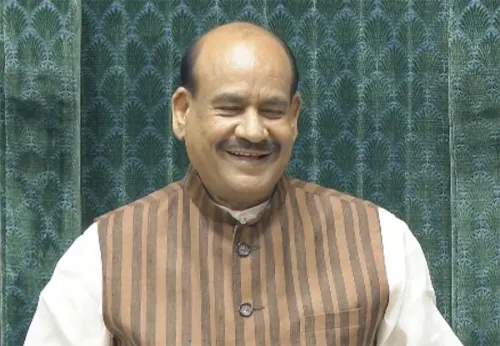
Lok Sabha Speaker Om Birla performed the formal unveiling, representing the central legislature at the state assembly event.
The quarterly magazine Vidhan-Chetna , published by the Delhi Legislative Assembly, was also launched at the same ceremony.
Kiren Rijiju (Union Parliamentary Affairs Minister), Vijender Gupta (Delhi Assembly Speaker), Deputy Speaker Bisht , and Delhi Minister Sahib Singh were among the dignitaries present.
The Central Legislative Assembly was constituted under the Government of India Act, 1919 and operated from 1921 to 1947 .
Possible digitisation of the 89-volume archive could make colonial-era legislative debates accessible to researchers globally.
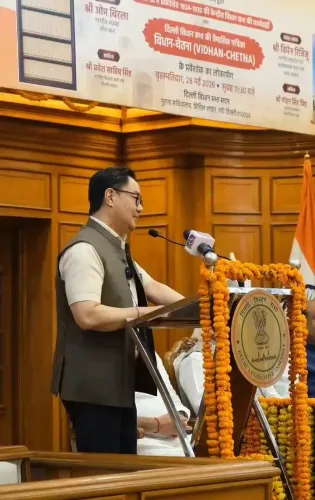
Union Parliamentary Affairs Minister Kiren Rijiju attended the unveiling of two landmark publications at the Delhi Legislative Assembly in New Delhi on 28 May 2026 — a 89-volume compilation of the Proceedings of the Central Legislative Assembly during 1924–1930 and the inaugural issue of the quarterly magazine Vidhan-Chetna, published by the Delhi Assembly.
Context
The publications were formally unveiled by Lok Sabha Speaker Om Birla, who presided over the ceremony alongside senior legislative figures from both the national and Delhi governments. The event was also attended by Delhi Legislative Assembly Speaker Vijender Gupta, Deputy Speaker Bisht, and Delhi Minister of Legislative Affairs Sahib Singh, reflecting a rare convergence of central and state legislative leadership.
Rijiju, sharing details on X, described the occasion as a significant step in documenting India's parliamentary heritage, noting the presence of 'other esteemed dignitaries' at the Delhi Assembly premises.
Policy Backdrop
The Central Legislative Assembly (CLA) was constituted under the Government of India Act, 1919 and functioned as the lower house of the Imperial Legislative Council in British India from 1921 until 1947. Its proceedings from the period 1924 to 1930 — now compiled across 89 volumes — cover a politically charged era that included debates on fiscal autonomy, civil liberties, and early nationalist legislative manoeuvres.
India's Parliament has maintained a continuous tradition of publishing official debates and proceedings since the Constituent Assembly era of 1946–49. Periodic compilation of historical records by both central and state legislatures has been part of broader efforts to preserve the institutional memory of Indian democracy.
The Delhi Legislative Assembly itself was constituted in 1993 under the 69th Constitutional Amendment, which granted limited statehood to the National Capital Territory. The new quarterly magazine Vidhan-Chetna is intended to disseminate information on legislative processes and history to a wider public audience.
Stakeholders and Impact
The 89-volume CLA proceedings are expected to be a primary resource for historians, political scientists, and constitutional researchers studying the transition from colonial governance to independent parliamentary democracy. The volumes document legislative debates at a time when Indian nationalist leaders were actively using the assembly as a platform for political assertion.
Vidhan-Chetna, as a quarterly publication, is aimed at a broader readership — legislators, students, and citizens — seeking to understand the functioning and history of state-level legislatures. The involvement of the Lok Sabha Speaker at a Delhi Assembly event signals institutional solidarity between national and sub-national legislative bodies on archival and outreach initiatives.
What's Next
Archival observers and parliamentary researchers will watch for the possible digitisation and public release of the 89 volumes, which would make the CLA proceedings accessible to a global audience of scholars and policy analysts. The launch of Vidhan-Chetna may also prompt other state assemblies to develop similar publications linking their own legislative histories with contemporary democratic practice.
The event sets a precedent for collaborative documentation efforts between central institutions such as the Lok Sabha Secretariat and state assemblies, a model that could be replicated across India's 28 states and union territories in the coming years.
Point of View
From digitisation drives to centenary commemorations of colonial-era legislatures. The launch of Vidhan-Chetna signals the Delhi Assembly's intent to build a public-facing identity around legislative education, a space most state assemblies have left underexplored. Taken together, the two publications represent a quiet but deliberate effort to anchor present-day democratic practice in a documented historical continuum stretching back to the pre-Independence period.
NationPress
11 Oct 2026
Frequently Asked Questions
What are the Central Legislative Assembly proceedings unveiled in 2026?
The 89-volume publication compiles the official proceedings of the Central Legislative Assembly — the lower house of British India's Imperial Legislative Council — covering the years 1924 to 1930, a period of significant nationalist legislative activity.
What is Vidhan-Chetna magazine published by Delhi Legislative Assembly?
Vidhan-Chetna is a quarterly magazine published by the Delhi Legislative Assembly, launched in May 2026 to disseminate information on legislative processes, history, and the functioning of state-level legislatures to a wider public audience.
Who unveiled the CLA proceedings volumes at the Delhi Assembly?
Lok Sabha Speaker Om Birla performed the formal unveiling, joined by Union Parliamentary Affairs Minister Kiren Rijiju, Delhi Assembly Speaker Vijender Gupta, Deputy Speaker Bisht, and Delhi Minister of Legislative Affairs Sahib Singh.
What was the Central Legislative Assembly of India?
The Central Legislative Assembly was constituted under the Government of India Act, 1919 and served as the lower house of the Imperial Legislative Council in British India from 1921 until Independence in 1947. It was a key platform for early Indian nationalist political activity.
Will the 89 volumes of CLA proceedings be digitised and made available online?
No official announcement on digitisation has been made as of the launch event, but archival observers expect the possibility of a digital release to be explored, which would make the colonial-era legislative records accessible to researchers and the public globally.