Rijiju Hails Historic Parliamentary Publications
Synopsis
Union Parliamentary Affairs Minister Kiren Rijiju on 28 May 2026 hailed historic parliamentary publications as a valuable tribute to India's legislative heritage, saying they preserve key debates and democratic traditions for future generations.
Key Takeaways
Kiren Rijiju , Union Minister of Parliamentary Affairs, publicly praised a set of historic parliamentary publications on 28 May 2026 .
He described the publications as 'a valuable tribute to India's rich parliamentary and legislative heritage.' The post was accompanied by 4 images of the publications on X.
Official archiving of Indian parliamentary debates dates to the first Lok Sabha in 1952 , building on Constituent Assembly debates of 1946-1949 .
The Ministry of Parliamentary Affairs has a standing mandate to support compilation and release of legislative records for institutional memory.
Further digitisation or new volumes covering state legislatures may follow, per the ministry's broader transparency agenda.
Union Parliamentary Affairs Minister Kiren Rijiju on Thursday, 28 May 2026 praised a set of historic parliamentary publications, describing them as a valuable tribute to India's rich legislative heritage and a resource for preserving democratic traditions for future generations.
Context
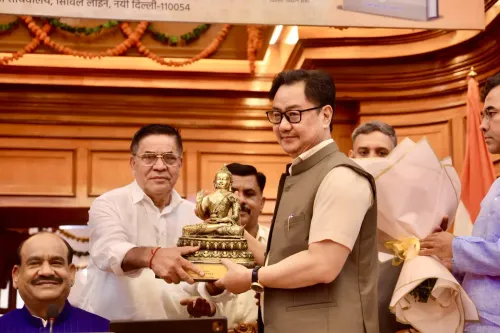
Responding to a post on X, Rijiju wrote that the publications are 'a valuable tribute to India's rich parliamentary and legislative heritage, preserving important debates, ideas and democratic traditions for future generations.' The minister's remarks were accompanied by four images, underscoring the significance of the volumes being highlighted. The endorsement from the minister who oversees parliamentary affairs lends institutional weight to the archiving effort.
Policy Backdrop
The official publication and archiving of parliamentary debates in India dates to the first Lok Sabha in 1952, itself an extension of the practice established during the Constituent Assembly debates of 1946 to 1949. These records form the bedrock of legislative history, capturing the arguments, dissents, and consensus-building that shaped the republic. The Ministry of Parliamentary Affairs has periodically supported compilation and release of such legislative records to maintain institutional memory and promote transparency in democratic processes.
Publication projects of this nature have historically coincided with anniversaries of the Constitution or Parliament, serving both commemorative and scholarly purposes. They provide researchers, students, and policymakers with primary-source access to the evolution of Indian law and governance.
Stakeholders and Impact
Parliamentary researchers and legislative historians stand to benefit most directly from such publications, gaining curated access to debates and proceedings that might otherwise remain scattered across archives. Educators and civil society organisations engaged in constitutional literacy programmes also find such volumes indispensable. Broader public access to these records reinforces the principle that democratic deliberation belongs to citizens, not merely to institutions.
The minister's public endorsement signals that the Ministry of Parliamentary Affairs views preservation of legislative heritage as a priority, potentially encouraging further digitisation and wider distribution of such material.
What's Next
The ministry may follow this recognition with announcements on digitisation of parliamentary records or the release of further volumes covering state legislatures, particularly as India continues to mark milestones in its constitutional journey. Observers will watch for any formal launch events or budget allocations tied to expanded archiving initiatives in upcoming parliamentary sessions. Such steps would align with broader government efforts to make democratic processes more transparent and accessible to the public.
Point of View
Not a dusty archival footnote. Coming at a time when constitutional anniversaries are being actively commemorated, the move fits a broader BJP-era pattern of invoking parliamentary history to reinforce institutional legitimacy. For opposition benches and independent researchers alike, greater access to historical debates is a double-edged resource: it enriches scholarship but also invites scrutiny of how legislative norms have evolved. The real test will be whether this recognition translates into funded digitisation and open-access mandates.
NationPress
11 Oct 2026
Frequently Asked Questions
What did Kiren Rijiju say about the parliamentary publications?
Rijiju called them 'a valuable tribute to India's rich parliamentary and legislative heritage,' saying they preserve important debates, ideas, and democratic traditions for future generations.
What is the Ministry of Parliamentary Affairs responsible for?
The Ministry of Parliamentary Affairs manages the government's legislative business in both Houses of Parliament, coordinates between the executive and legislature, and supports initiatives related to parliamentary functioning and records.
When did India start officially archiving parliamentary debates?
Official publication and archiving of parliamentary debates began with the first Lok Sabha in 1952 , extending the practice established during the Constituent Assembly debates of 1946 to 1949 .
Who benefits from historic parliamentary publications?
Parliamentary researchers, legislative historians, educators, and civil society organisations engaged in constitutional literacy are the primary beneficiaries, as these volumes provide primary-source access to the evolution of Indian law and governance.
Could India digitise its parliamentary records?
The Ministry of Parliamentary Affairs has been associated with broader transparency and accessibility initiatives, and observers expect possible digitisation announcements or further volumes on state legislatures in upcoming sessions.