BJP chief Nitin Nabin leads Delhi padyatra, questions Rahul Gandhi on voter roll revision
Synopsis
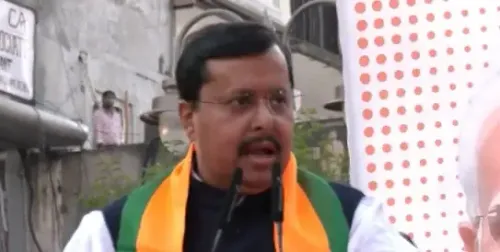
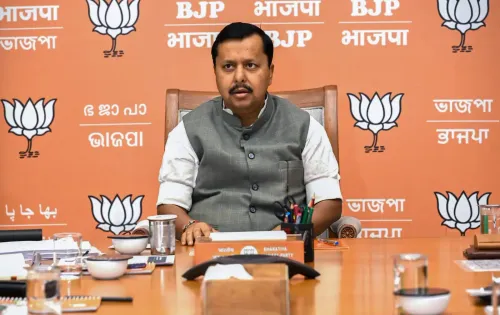
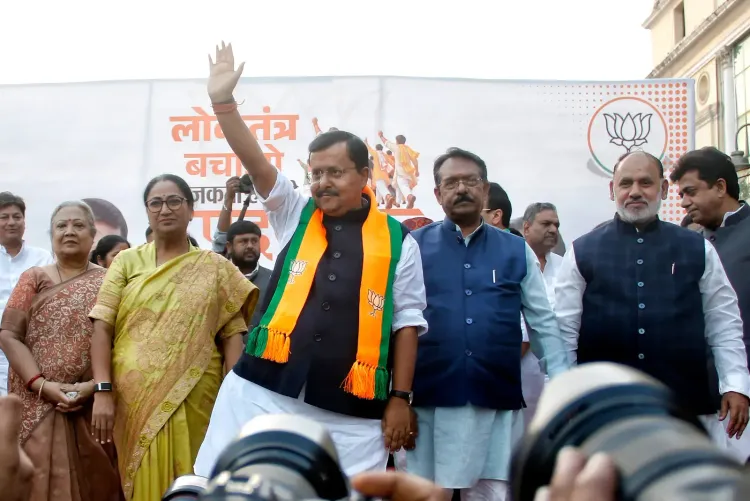
BJP National President Nitin Nabin took his party's political offensive to Delhi's streets on 28 October, leading a high-profile padyatra that pivoted on a pointed question: why is Rahul Gandhi opposed to cleaning up voter rolls? The march blended nationalism, anti-AAP rhetoric, and electoral integrity messaging — a preview of BJP's street-level campaign playbook heading into the next cycle.
Key Takeaways
BJP National President Nitin Nabin led the 'Loktantra Bachao, Arajakta Hatao' padyatra in New Delhi on 28 October 2026 .
The march began near Jain Lal Mandir and was attended by Delhi CM Rekha Gupta , MoS Harsh Malhotra , and several Lok Sabha MPs.
Nabin alleged voter rolls contain deceased voters, duplicate entries, and names of alleged infiltrators, and questioned Rahul Gandhi's opposition to the revision exercise.
He accused Congress of dynastic politics and cited the dismissal of more than 90 elected state governments during its rule as evidence of anti-democratic conduct.
The BJP chief vowed to eliminate the remaining influence of AAP in Delhi and reiterated the Viksit Bharat 2047 goal.
Nabin said the BJP currently governs 22 states and expressed confidence that PM Modi would hoist the flag at the Red Fort in 2029 .
Bharatiya Janata Party (BJP) National President Nitin Nabin on Wednesday, 28 October 2026, led the 'Loktantra Bachao, Arajakta Hatao' (Save Democracy, Remove Anarchy) padyatra through New Delhi, rallying party workers to defend democratic institutions and counter what he described as anarchic political tendencies. The march drew senior party leadership and was positioned as a show of organisational strength in the national capital.
March Route and Key Attendees
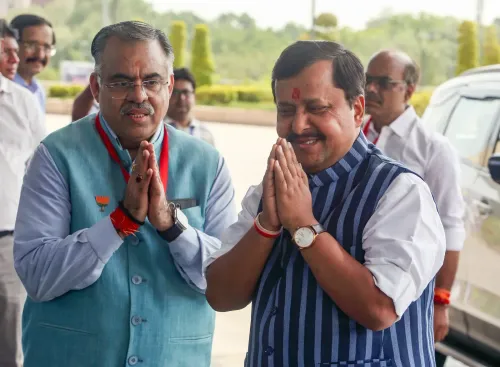
The padyatra commenced near the historic Jain Lal Mandir in central Delhi. Among those accompanying Nabin were Delhi BJP President and Union Minister of State Harsh Malhotra, Chief Minister Rekha Gupta, Lok Sabha MPs Praveen Khandelwal and Ramvir Singh Bidhuri, Delhi Minister Parvesh Verma, and BJP National Secretary Jaiprakash. The presence of state and central leaders underlined the event's dual character — part internal mobilisation, part political messaging ahead of ongoing electoral contests.
What Nabin Said on Democracy and Congress
Addressing party workers, Nabin asserted that democracy remains secure under Prime Minister Narendra Modi's leadership, and that the faith of the country's 140 crore citizens continues to rest with him. He accused the Indian National Congress (Congress) of prioritising dynastic interests over national welfare, referencing the Emergency and the dismissal of more than 90 elected state governments during Congress rule as historical evidence of its approach to power.
He also alleged that Congress MP Rahul Gandhi's leadership is weakening the party, and argued that Congress leaders should introspect on their repeated electoral defeats. Nabin further questioned the silence of Gandhi and other opposition figures over what he described as alleged misconduct involving a JNU professor who is a Congress MP.
Nabin's Challenge on Electoral Roll Revision
One of the sharper lines of attack was aimed at Gandhi's reported opposition to the ongoing electoral roll purification exercise. Nabin compared voter lists to account books that must be periodically audited and corrected. He alleged the rolls currently contain deceased voters, duplicate entries, and names of individuals whose whereabouts cannot be established — including, he claimed, alleged infiltrators.
Framing the revision as essential to electoral integrity, he questioned why Gandhi would oppose a process designed to ensure every eligible citizen is enrolled while ineligible entries are removed. Critics of the revision exercise, however, argue that large-scale deletions risk disenfranchising genuine voters from marginalised communities — a concern Nabin's remarks did not directly address.
On Nationalism, AAP, and Viksit Bharat
Nabin invoked the BJP's 2011 Tiranga Yatra to Srinagar's Lal Chowk as an illustration of the party's nationalist credentials, alleging the then Congress-led government had failed to respond adequately to the situation there. Turning to Delhi's political landscape, he credited Chief Minister Rekha Gupta's leadership with the BJP's recent success in the capital and vowed to 'eliminate the remaining influence' of the Aam Aadmi Party (AAP) and its founder Arvind Kejriwal.
The BJP chief reiterated the party's goal of achieving a Viksit Bharat (Developed India) by 2047 and expressed confidence that Prime Minister Modi would hoist the national flag from the Red Fort in 2029 as well. He noted the party currently governs 22 states and argued that India's youth have moved from an atmosphere of uncertainty in 2013 towards optimism and hope.
Call to Workers
Nabin urged BJP workers to continue household outreach after the padyatra, counter opposition narratives both on the streets and in Parliament, and build public trust in the party's commitment to democracy, national development, and good governance. The BJP's decision to frame this as a street-level campaign — rather than a press conference — signals the party's intent to take its political messaging directly to Delhi's constituencies, where the AAP's grassroots networks remain formidable.
Point of View
Opposition parties and civil society have repeatedly documented cases of genuine voters being dropped in bulk drives. By asking 'why is Rahul Gandhi troubled by this?', Nabin sidesteps that uncomfortable data. The broader optics — a national president leading a street march in a city the BJP already governs — also suggest the party is not taking Delhi's next electoral moment for granted, despite the AAP's weakened position.
NationPress
29 Oct 2026
Frequently Asked Questions
What is the 'Loktantra Bachao, Arajakta Hatao' padyatra?
It is a political march organised by the BJP on 28 October 2026 in New Delhi, led by party National President Nitin Nabin. The march was aimed at rallying party workers to defend democratic institutions and counter what the BJP describes as anarchic politics by the opposition.
Why did Nitin Nabin question Rahul Gandhi over electoral roll revision?
Nabin alleged that voter rolls contain deceased voters, duplicate entries, and names of alleged infiltrators, and argued that the revision exercise is essential to electoral integrity. He accused Gandhi of opposing the process to preserve irregularities for political advantage, though Gandhi's specific objections were not detailed in the BJP's remarks.
Who attended the padyatra with Nitin Nabin?
Delhi Chief Minister Rekha Gupta, Union Minister of State and Delhi BJP President Harsh Malhotra, Lok Sabha MPs Praveen Khandelwal and Ramvir Singh Bidhuri, Delhi Minister Parvesh Verma, and BJP National Secretary Jaiprakash were among those present.
What did Nabin say about the Aam Aadmi Party?
Nabin credited Chief Minister Rekha Gupta's leadership for the BJP's political success in Delhi and vowed to 'eliminate the remaining influence' of the AAP and its founder Arvind Kejriwal in the capital.
What is the BJP's stated long-term political goal mentioned at the march?
Nabin reiterated the BJP's goal of achieving a Viksit Bharat (Developed India) by 2047 and expressed confidence that Prime Minister Narendra Modi would hoist the national flag from the Red Fort in 2029 as well. He noted the party currently governs 22 states.