Punjab urban body polls 2026: BJP gains ground as AAP falls below 1,000-seat mark
Synopsis
AAP's Punjab urban body tally has stalled below the symbolic 1,000-seat mark — a first for a ruling party in the state in 11 years — while BJP, contesting alone, nearly tripled its ward count to 169. Amit Malviya is calling it the opening act of a 'saffron surge,' though history warns that local body wins rarely predict the Assembly outcome in Punjab.
Key Takeaways
AAP won 945 seats out of 1,941 declared — falling below the symbolic 1,000-seat mark , the first ruling party in Punjab to do so in 11 years .
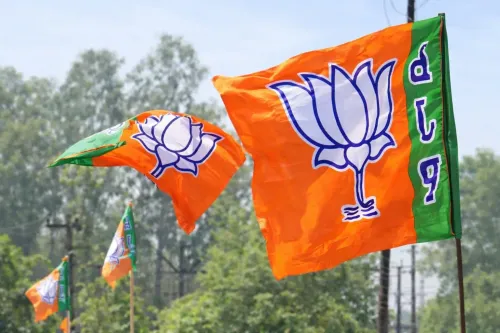
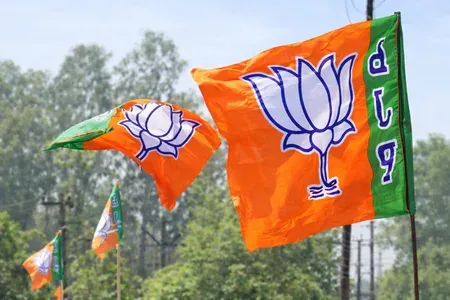
BJP won 169 wards contesting without any alliance, up from 59 wards in 2021 — an increase of 110 wards in five years.
Full tally (1,941 of 1,977 seats declared): AAP 945 , INC 380 , SAD 191 , BJP 169 , BSP 7 , Independents 249 .
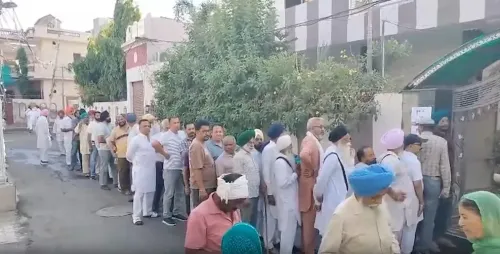
Polling was held on 26 May across Municipal Corporations, Municipal Councils, and Nagar Panchayats, with 7,555 candidates in the fray.
Opposition parties alleged nomination rejections, booth capturing, and intimidation by AAP MLAs — claims NationPress could not independently verify.
BJP leader Amit Malviya declared 'the saffron surge is loading,' framing the result as a pre-Assembly bellwether.
Bharatiya Janata Party (BJP) leader Amit Malviya on Friday, 30 May 2026 claimed that the ruling Aam Aadmi Party (AAP) in Punjab had failed to cross the 1,000-seat mark in the state's urban local body elections, while the BJP stood poised to install its Mayor and Chairman in multiple municipal bodies. The results, with 1,941 of 1,977 seats declared, showed AAP at 945 seats — a tally Malviya described as reflecting 'visible anti-incumbency' against the Bhagwant Mann government.
Key Developments in the Count
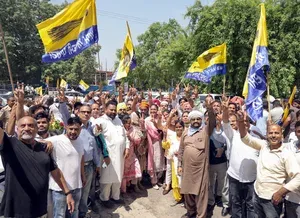
Counting of votes began early Friday under tight security after polling was conducted on 26 May using ballot papers. A total of 7,555 candidates had contested across Municipal Corporations, Municipal Councils, and Nagar Panchayats statewide. The ruling AAP had fielded 1,801 candidates, followed by Congress with 1,550, BJP with 1,316, and the Shiromani Akali Dal (SAD) with 1,251 contestants.
With results largely in, the seat tally stood at: AAP 945, Indian National Congress (INC) 380, SAD 191, BJP 169, BSP 7, and Independents 249, according to Malviya's post on X.
What Malviya Said
Posting on social media platform X, Malviya — the BJP's National Executive member and head of the party's IT department — called it a 'big highlight' that AAP had fallen short of the symbolic 1,000-seat threshold despite the advantages of incumbency and state machinery. He described the BJP's tally of 169 wards as a significant improvement from the 59 wards it won in the 2021 local body elections — an increase of 110 wards in five years, and notably achieved without any alliance support.
'Punjab's political churn has begun and the saffron surge is loading,' Malviya wrote, framing the result as an early indicator ahead of the next state Assembly elections.
Historical Context: A Decade of Local Body Trends
Malviya drew a pointed parallel with previous cycles. In the 2015 local body elections, the SAD-BJP alliance dominated with 1,060 SAD wins, 360 BJP wins, and 356 Congress wins — yet the alliance went on to lose the subsequent Assembly elections. In 2021, Congress surged to 1,432 wins while AAP managed only 69 — and Congress still lost the Assembly polls that followed.
Malviya argued this pattern underscores that local body results do not automatically translate into Assembly mandates, but he maintained that AAP's sub-1,000 performance this time is historically significant. According to him, this is the first time in 11 years that a ruling party in Punjab has failed to breach the 1,000-seat mark in local body polls.
Opposition Allegations and Contested Process
Malviya also cited a series of opposition complaints during the poll campaign. These included allegations that several nominations were rejected on technical grounds, that 63 AAP candidates were elected unopposed after no rival nominations were filed in their wards, and that AAP MLAs allegedly intimidated opposition supporters. Reports of booth capturing and violence against opposition candidates also emerged from several areas during polling, Malviya claimed, attributing the allegations to opposition parties including Congress.
Congress and other opposition parties also accused AAP of misusing state police and administrative machinery, he added. NationPress could not independently verify these claims.
What It Means Going Forward
Malviya criticised Congress for appearing 'directionless' and noted that SAD has still not fully recovered politically. With the BJP nearly tripling its ward count in five years — all without alliance support — the party appears to be consolidating a foothold in urban Punjab ahead of the next Assembly cycle. Whether the trend holds or reverses, as it did for SAD in 2015 and Congress in 2021, remains the central question Punjab's political watchers will be tracking.
Point of View
With the dominant local force losing the bigger election each time. The more telling data point is structural: BJP nearly tripled its ward count without an alliance, suggesting real urban consolidation rather than a protest vote. AAP's sub-1,000 performance is a genuine warning sign for the Mann government, but the party still finished first by a wide margin. The real story is whether AAP can convert state machinery into Assembly votes when incumbency fatigue is already showing at the ward level.
NationPress
19 Sept 2026
Frequently Asked Questions
What were the Punjab urban local body election results 2026?
With 1,941 of 1,977 seats declared, AAP led with 945 seats, followed by Congress at 380, SAD at 191, BJP at 169, BSP at 7, and Independents at 249. AAP finished first but fell below the symbolic 1,000-seat mark, which BJP leader Amit Malviya highlighted as historically significant.
Why is AAP falling below 1,000 seats significant?
According to BJP leader Amit Malviya, this is the first time in 11 years that a ruling party in Punjab has failed to cross the 1,000-seat mark in local body elections, despite enjoying the advantages of incumbency and state machinery. It is being read as a sign of anti-incumbency against the Bhagwant Mann government.
How did BJP perform in the Punjab urban body polls compared to 2021?
BJP won 169 wards in 2026, up from 59 wards in 2021 — an increase of 110 wards in five years. Notably, the party contested without any alliance support in both cycles, making the gain more significant in organisational terms.
What allegations were raised about the conduct of the Punjab urban body elections?
Opposition parties, as cited by Amit Malviya, alleged that several nominations were rejected on technical grounds, that 63 AAP candidates were elected unopposed after no rival nominations were filed, and that AAP MLAs intimidated opposition supporters. Reports of booth capturing and violence also emerged from some areas, though these claims could not be independently verified.
Do Punjab local body election results predict Assembly election outcomes?
Historical trends suggest they do not reliably. In 2015, the dominant SAD-BJP alliance won locally but lost the subsequent Assembly elections. In 2021, Congress won over 1,400 local body seats but still lost the Assembly polls to AAP. Analysts caution against reading local body mandates as direct Assembly predictors in Punjab.