BJP launches 'save democracy' march in Jharkhand, targets Hemant Soren govt
Synopsis
BJP's Jharkhand unit took its 'save democracy, remove anarchy' campaign to the streets of Ranchi on 2 November, with Union Ministers, the Leader of the Opposition, and the state president jointly targeting Chief Minister Hemant Soren over law and order and alleged threats to democratic institutions. The two-phase march, running until 5 November, is the party's most coordinated ground mobilisation in Jharkhand in recent memory.
Key Takeaways
Jharkhand BJP launched its 'save democracy, remove anarchy' march in Ranchi on 2 November 2026 .
The march started at Bapu Vatika, Morabadi Ground and ended at Bhagwan Birsa Munda Memorial Park near Jail More.
Union Minister Jual Oram invoked the 1975 Emergency to counter Congress criticism of constitutional bodies.
BJP president Aditya Sahu cited the Gamharia police station case in Seraikela-Kharsawan as evidence of deteriorating law and order.
The campaign runs in two phases until 5 November , covering districts including Giridih, Hazaribagh, Palamu, Jamshedpur , and Dumka .
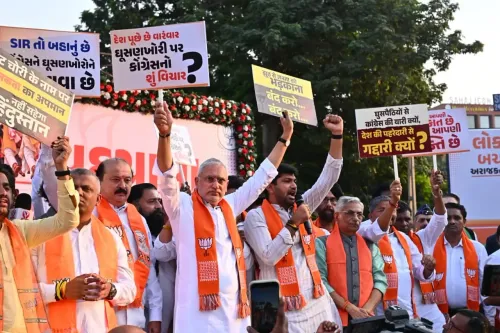
The Special Intensive Revision (SIR) of electoral rolls was a central theme on banners and placards throughout the march.
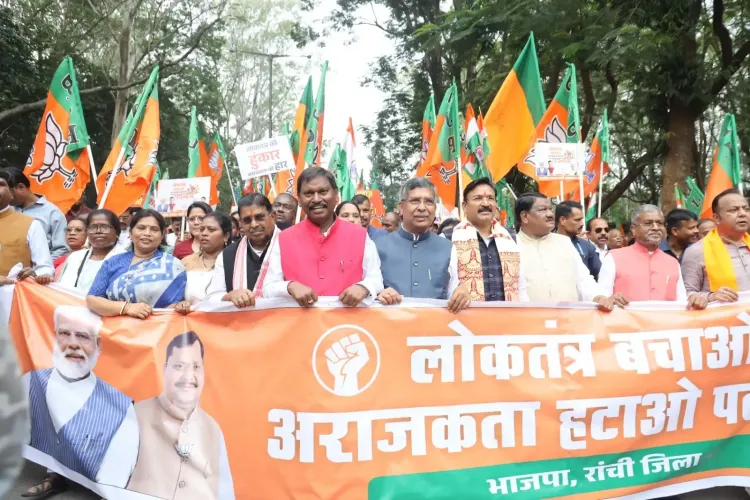
Jharkhand BJP on Monday, 2 November 2026 formally launched its state-wide 'save democracy, remove anarchy' march from Ranchi, turning up pressure on the Hemant Soren-led government over law and order, administrative failures, and women's safety. The campaign marks a coordinated escalation by the opposition ahead of its two-phase outreach covering all major districts through 5 November.
How the March Unfolded
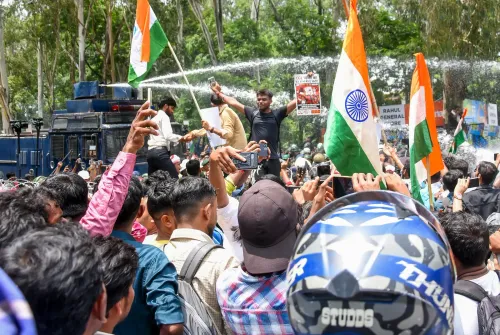
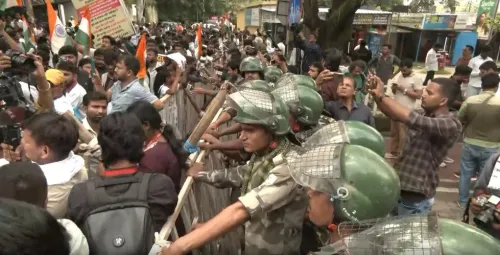
The procession began at Bapu Vatika at Morabadi Ground, where BJP leaders and workers paid homage at Mahatma Gandhi's statue. It moved through the SSP residence area and Kachahari Chowk before culminating at Bhagwan Birsa Munda Memorial Park near Jail More. Workers carried banners and placards highlighting issues including the Special Intensive Revision (SIR) of electoral rolls, alleged illegal infiltration, and development-related concerns.
Key Attacks on the Ruling Alliance
Addressing the gathering, Union Minister Jual Oram targeted the Indian National Congress and Congress leader Rahul Gandhi, saying the opposition should remember the 1975 Emergency before questioning constitutional institutions. He alleged that repeated electoral setbacks had prompted the Congress to cast doubts on electronic voting machines, the Election Commission of India (ECI), and even the Supreme Court.
Jharkhand BJP president Aditya Sahu accused the ruling alliance of misleading the public with what he described as a false narrative of 'vote theft'. Referring to a recent case at Gamharia police station in Seraikela-Kharsawan district involving allegations of misconduct by police personnel, he argued it reflected a deteriorating law-and-order environment. He further claimed that women and girls felt unsafe while, in his words, the Chief Minister remained preoccupied with Opposition alliance activities in Delhi.
Opposition Leaders Add Their Voice
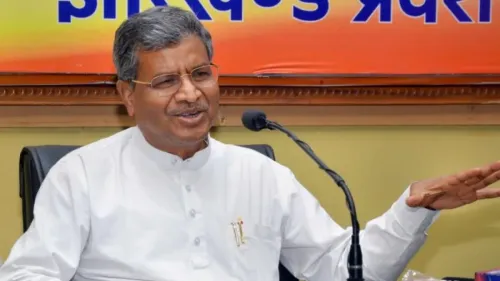
Leader of the Opposition Babulal Marandi alleged that the ruling dispensation and the Congress were creating an atmosphere of disorder in the state. He urged party workers to carry the government's alleged failures and anti-people policies to the grassroots. Former Union Minister Arjun Munda and BJP state in-charge Gajendra Singh Patel also criticised the opposition, accusing it of attempting to weaken constitutional institutions out of frustration over electoral defeats.
Scope and Next Steps
The campaign is scheduled to run in two phases until 5 November, with marches planned at the Assembly constituency level across all major districts including Giridih, Hazaribagh, Palamu, Jamshedpur, and Dumka. The Bharatiya Janata Party (BJP) reiterated its commitment to creating public awareness about the SIR exercise as a central campaign plank. This is the party's most visible street mobilisation in Jharkhand since the last state election cycle, signalling its intent to build a sustained opposition narrative ahead of any political reckoning.
Point of View
Electoral rolls, women's safety) under a single narrative frame before the next electoral cycle. What is notable is the choice of the SIR exercise as a campaign plank: it signals the party's intent to make voter-roll integrity a wedge issue, a tactic that has proven potent in other states. The Emergency reference by Oram is a well-worn rhetorical device, but its deployment here suggests the BJP is fighting a perception battle as much as a policy one. The real test will be whether the district-level marches through 5 November generate durable grassroots energy or dissolve into routine political theatre.
NationPress
2 Nov 2026
Frequently Asked Questions
What is the BJP's 'save democracy, remove anarchy' march in Jharkhand?
It is a two-phase state-wide campaign launched by the Jharkhand BJP on 2 November 2026 from Ranchi, aimed at highlighting what the party describes as threats to democratic institutions, deteriorating law and order, and women's safety under the Hemant Soren-led government. The march covers all major districts through 5 November.
Where did the Ranchi march begin and end?
The march began at Bapu Vatika at Morabadi Ground, where leaders paid homage at Mahatma Gandhi's statue, and concluded at Bhagwan Birsa Munda Memorial Park near Jail More, passing through the SSP residence area and Kachahari Chowk.
Which BJP leaders addressed the march?
Union Minister Jual Oram, Jharkhand BJP president Aditya Sahu, Leader of the Opposition Babulal Marandi, former Union Minister Arjun Munda, and BJP state in-charge Gajendra Singh Patel all addressed participants at the Ranchi march.
What is the Special Intensive Revision (SIR) of electoral rolls?
The SIR is an exercise by the Election Commission of India to rigorously update and verify voter rolls. The BJP used the march to build public awareness about the SIR, making it a central plank of its campaign messaging alongside concerns over alleged illegal infiltration.
Which districts will the campaign cover?
The two-phase campaign will cover all major districts of Jharkhand including Giridih, Hazaribagh, Palamu, Jamshedpur, and Dumka, with marches planned at the Assembly constituency level through 5 November 2026.