Is Communalising the National Song a Form of Criminal Anarchy?
Synopsis
BJP leader Mukhtar Abbas Naqvi vehemently defends the national song Vande Mataram, asserting that efforts to communalise it are acts of criminal anarchy. Amidst opposition criticism, he emphasizes the song's deep-rooted connection to India's nationalist spirit and the legacy of its freedom fighters.
Key Takeaways
Vande Mataram is seen as a symbol of India's nationalism .
New directives formalize its role in official events.
Criticism from opposition highlights concerns over freedom of expression .
Naqvi emphasizes the song's historical significance.
Debate reflects broader issues of unity and identity.
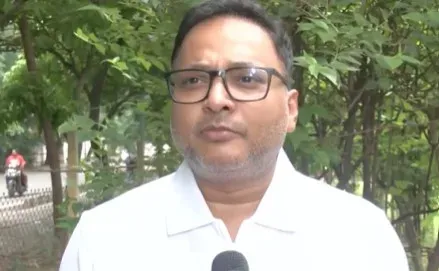
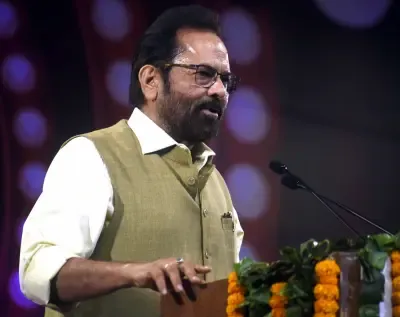
New Delhi, Feb 16 (NationPress) BJP leader Mukhtar Abbas Naqvi on Monday firmly defended the national song, Vande Mataram, labeling any efforts to communalise or criticize it as “a form of criminal anarchy.”
During a fresh debate surrounding the song's ceremonial significance at official gatherings, Naqvi called on critics to reassess their opinions, asserting that the national song embodies India's nationalist spirit and honors the legacy of freedom fighters.
“I would urge such individuals: If your conscience falters at the thought of singing, listening to, or standing for the national song, then no one is more dishonest than you. If your belief is so fragile that it is threatened by the national song, you should reconsider your integrity. Vande Mataram is the essence of our nationalist spirit,” Naqvi told IANS.
“How weak is your integrity if it can be disturbed by the national song? Remember, Vande Mataram symbolizes the nationalist spirit of our nation. Our freedom fighters fought for Independence with the spirit of Vande Mataram, while the Muslim League opposed it and fostered division. Those attempting to sow confusion in the country using Vande Mataram and similar issues will never prevail,” he added.
These comments follow the Union Home Ministry's recent directives that formalize the status and ceremonial function of Vande Mataram at public and government events. Per the new protocol, the complete six-stanza version of the song, lasting around 3 minutes and 10 seconds, is to be performed during significant state occasions.
Such events include flag hoisting ceremonies, formal arrivals and departures of the President and Governors, as well as before and after their scheduled speeches at these occasions. The guidelines also outline the expected decorum from attendees, ensuring respect for both the national song and the National Anthem.
This decision has drawn criticism from opposition leaders. Congress leader Husain Dalwai labeled the directive as “forceful and wrong,” arguing that it contradicts previous resolutions regarding the national song’s recognition. “They do this deliberately… This is forceful and wrong. It goes against the earlier decision,” Dalwai stated.
While detractors have raised concerns about compulsion, Naqvi characterized the action as a move to reinforce India’s patriotic traditions. He emphasized the historical significance of Vande Mataram in the freedom struggle, asserting that attempts to stir confusion or communal controversy around the song will ultimately fail.
Point of View
It's imperative to remain unbiased while acknowledging the importance of national symbols. The discussion surrounding Vande Mataram isn't just about a song; it's a reflection of the broader discourse on national identity and unity. The sentiments expressed by Naqvi resonate with many who hold the song dear, while critics raise valid concerns about compulsion and freedom of expression. Our role is to ensure a balanced perspective that respects both the emotional and rational aspects of this debate.
NationPress
3 Oct 2026
Frequently Asked Questions
Why is Vande Mataram significant?
Vande Mataram represents India's spirit of nationalism and is associated with the freedom struggle.
What are the recent directives regarding Vande Mataram?
The Union Home Ministry has formalized its ceremonial role, stating it should be performed at major state events.
Who criticized the new directives?
Congress leader Husain Dalwai described the directives as 'forceful and wrong,' opposing the renewed emphasis on the national song.
What is Mukhtar Abbas Naqvi's stance?
Naqvi defends Vande Mataram, calling attempts to communalize it a form of criminal anarchy, urging critics to reassess their views.
How does the public view the national song?
Public opinion is divided, with some viewing it as a vital symbol of unity, while others express concerns over its enforced recognition.