BJP leader Smriti Irani hails ABVP's 9-0 Goa University sweep
Synopsis
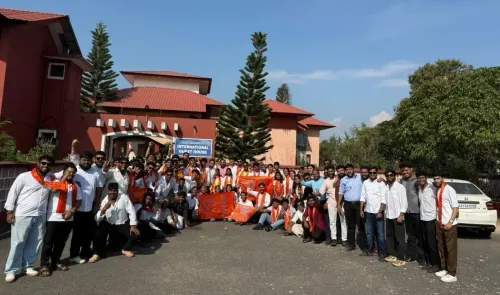
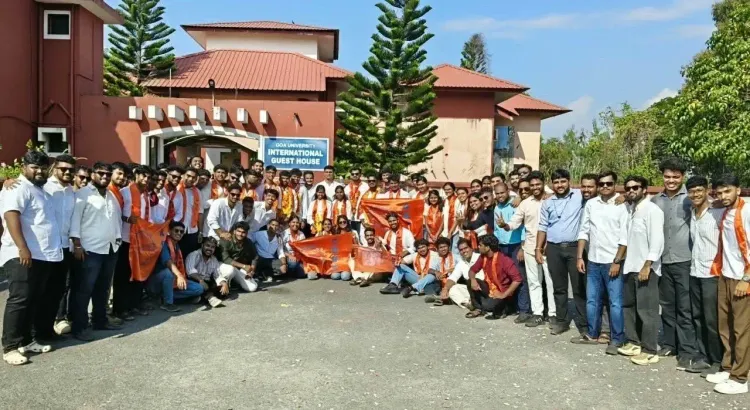
BJP leader Smriti Irani hailed ABVP's sweep of all nine Goa University Students' Council seats, calling it a mandate of trust and urging the winning panel to deliver for students.
Key Takeaways
BJP leader Smriti Irani on 27 November 2026 hailed ABVP for winning all 9 seats in the Goa University Students' Council elections.
She called the result a resounding mandate and a sign of student trust in ABVP's welfare and nation-building work.
Irani congratulated the winning panel and asked it to turn that trust into action for students.
ABVP, founded in 1949 and affiliated with the RSS, is India's largest student organisation and regularly contests campus polls.
Goa University, established in 1985, is the state's principal public university.
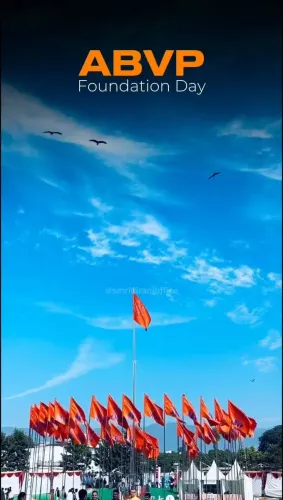
BJP leader Smriti Irani on Friday turned a campus scoreboard in Goa into a national political signal, hailing the Akhil Bharatiya Vidyarthi Parishad for what she called a spectacular sweep of the Goa University Students' Council elections. Every seat, she said, 9 out of 9, had gone to ABVP, a result she framed as young students backing welfare work, constructive leadership and nation-building.
Irani's 9-0 scoreboard from Goa University
In a post on X on 27 November 2026, Irani described the outcome as a resounding mandate for ABVP in Goa. She wrote that the sweep 'reflects the trust of young students in ABVP's commitment to student welfare, constructive leadership and nation-building.'
Heartiest congratulations, she added, to the winning panel. Her brief was pointed: translate that trust into meaningful action, champion students' interests, and inspire a new generation of nation-builders. The post tagged ABVP's official handle.
Goa University, established in 1985 as the state's principal public university, elects a students' council on a periodic cycle. Irani's account treats this contest as a complete house, a single panel taking every seat on a nine-member council.
ABVP's campus machine and the Goa signal
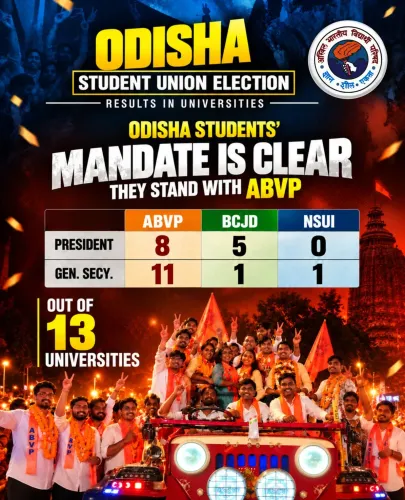
ABVP, founded in 1949 and affiliated with the Rashtriya Swayamsevak Sangh, is India's largest student organisation. It regularly contests university council elections nationwide, competing with groups such as the NSUI and SFI. Victories of this kind are routinely amplified by BJP leaders as proof of youth outreach and organisational strength on campus.
A clean sweep at the state's academic flagship fits that pattern. The political value is the picture it paints: not a split campus, but an uncontested mandate, on Irani's telling. The organisational question that follows is delivery, welfare work the new council can actually own, and whether similar scoreboards appear at other universities in the months ahead.
Nine seats is a full house. The harder brief, as Irani herself put it, is to turn that trust into work students can feel.
Point of View
And the new council's actual welfare work, sustain that story.
NationPress
27 Nov 2026
Frequently Asked Questions
What did Smriti Irani say about the Goa University elections?
BJP leader Smriti Irani said ABVP had won all 9 of 9 seats in the Goa University Students' Council elections and called it a resounding mandate reflecting students' trust in the organisation's welfare and nation-building work.
How many seats did ABVP win at Goa University according to Irani?
She said the organisation won all nine seats on the Goa University Students' Council.
What did Irani ask the winning ABVP panel to do?
She congratulated the panel and asked it to translate students' trust into meaningful action, champion student interests and inspire a new generation of nation-builders.
What is Goa University?
Goa University is the state's primary public university, established in 1985, and it periodically elects a students' council.