BJP accuses Nehru of 'first vote theft', denying Sardar Patel PM post
Synopsis
In a sharp political counter-punch, BJP's Sambit Patra turned the INDIA bloc's 'vote theft' charge back on the Congress itself — invoking a decades-old historical grievance that Nehru, not any election body, committed India's original electoral injustice by denying Sardar Patel the Prime Ministership in 1947.
Key Takeaways
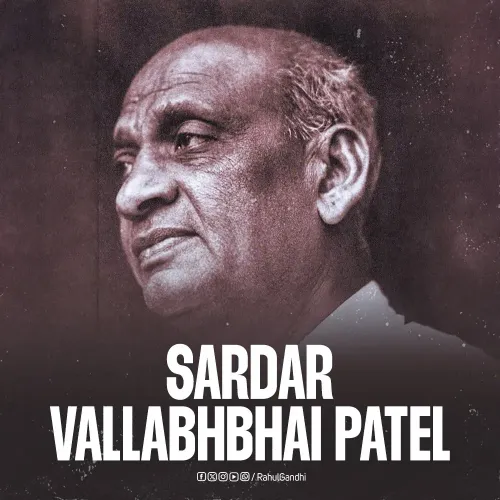
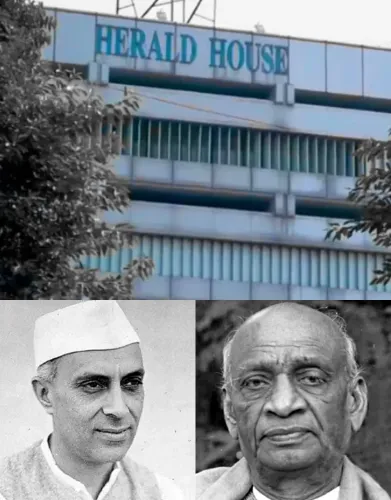
BJP spokesperson Sambit Patra accused Jawaharlal Nehru of the 'first vote theft' in India by allegedly denying Sardar Patel the Prime Minister's post after 1947 .
The remarks were a direct rebuttal to the INDIA bloc 's 'public impeachment' event targeting Chief Election Commissioner Gyanesh Kumar .
Patra disputed Mallikarjun Kharge 's claim that votes of 130 million citizens were stolen through the ongoing Special Intensive Revision (SIR) process.
He cited a Supreme Court order dated 27 May 2026 confirming that Form 6 was not amended — only a declaration was added.
Patra asserted that the decision on the SIR exercise by the Election Commission was unanimous among all three commissioners.
He dismissed the INDIA bloc's 'mock Parliament' exercise and took a pointed jab at Rahul Gandhi , calling him a 'mock Prime Minister.'
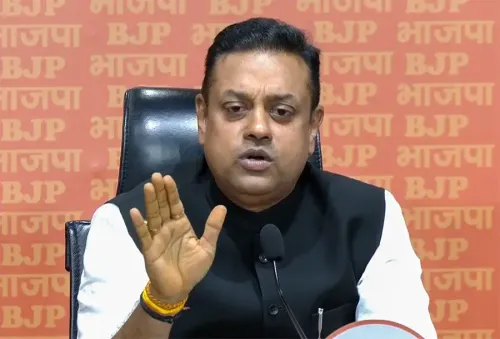
The Bharatiya Janata Party (BJP) on Saturday, 31 October accused former Prime Minister Jawaharlal Nehru of committing the 'first vote theft' in independent India by allegedly engineering Sardar Vallabhbhai Patel's exclusion from the Prime Minister's office after 1947. The remarks came in direct response to the INDIA bloc's 'public impeachment' event targeting Chief Election Commissioner Gyanesh Kumar over alleged electoral irregularities.
BJP's Core Allegation Against Nehru
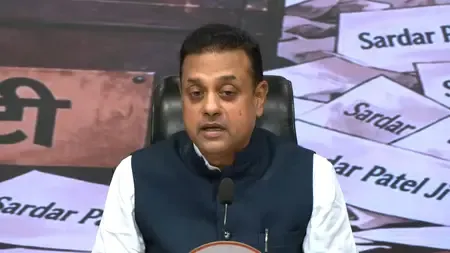
Addressing a press conference in New Delhi, BJP national spokesperson Sambit Patra invoked Congress president Mallikarjun Kharge's speech at the INDIA bloc event, saying: 'I would like to tell him that there is indeed some truth to the issue of vote theft; vote theft did take place...If the first vote theft in India ever happened anywhere, it was done by the first member of the Gandhi family, Pt. Jawaharlal Nehru.'
Patra alleged that senior Congress leaders had voted for Sardar Patel to become Prime Minister, but those votes were 'effectively taken away,' allowing Nehru to assume the office instead. He described Nehru as an 'unelected Prime Minister' and claimed Patel was 'deprived of his rightful position and humiliated.' The BJP did not present new documentary evidence at the press conference; the allegation draws on a long-contested historical debate over the 1946 Congress Presidential election, in which Patel won the most votes from Provincial Congress Committees but later stood down following an appeal attributed to Mahatma Gandhi.
BJP Pushes Back on Electoral Roll Controversy
Patra directly challenged Kharge's claim that votes of 130 million citizens had been 'stolen' through the Special Intensive Revision (SIR) process currently underway. 'Had the votes of 130 million people actually been deleted, there would have been widespread protests across the country,' he said. He clarified that the SIR process has not yet been completed and that the absence of names from draft voter lists does not amount to vote deletion. He also urged citizens who find their names missing to file Form 6, calling the process transparent and accessible.
Responding to Kharge's allegation that Form 6 had been modified, Patra said no changes had been made to the form itself — only an additional declaration had been attached. He cited a Supreme Court judgment dated 27 May 2026, which he said confirmed that Form 6 had not been amended and that only a declaration had been appended to it.
Defence of Chief Election Commissioner
Patra rejected allegations that Chief Election Commissioner Gyanesh Kumar had sidelined the other two Election Commissioners in deciding on the SIR exercise. 'You may repeat a lie a hundred times, but it does not become the truth. The Chief Election Commissioner and the other two Election Commissioners sat together and clearly stated, through both photographs and public statements, that the decision on SIR was unanimous,' he said.
He also pushed back on the INDIA bloc's claim that the BJP had introduced a new law granting immunity to the CEC. Patra argued that constitutional protection for the President and CEC already exists, and that recent legislative steps only formalised the procedure after a special court in Telangana ordered an FIR against the CEC in August 2023 — an order later quashed by the High Court.
BJP's Broader Attack on the INDIA Bloc
Turning sharply political, Patra dismissed the INDIA bloc's 'mock Parliament' exercise as a 'mockery' of the real legislature. He accused Congress and its allies of 'sleeping in the actual Parliament, winking, remaining absent, creating a ruckus, and stalling the real Parliament without letting work happen.' Taking a pointed swipe at Leader of the Opposition Rahul Gandhi, Patra said: 'The world has already realised that Rahul Gandhi lacks the fuel. This satellite will never launch.' He sarcastically invited the bloc to retain Gandhi as a 'mock Prime Minister for life.'
Context and What Comes Next
The exchange underscores a deepening political battle over the integrity of the voter roll revision process, with the INDIA bloc mounting institutional challenges and the BJP defending both the Election Commission and its own legislative record. The SIR process remains ongoing, and its final outcome — including the number of names added or removed — is expected to shape the electoral optics heading into upcoming state elections. Both sides are likely to escalate their public campaigns as the final voter lists approach publication.
Point of View
But it lands with particular force here because the INDIA bloc chose 'vote theft' as its framing — a phrase that now legally and historically ricochets. The deeper issue, however, is the SIR process itself: whether voter roll revisions are being conducted equitably is a legitimate democratic question that neither theatrical impeachments nor historical counter-attacks actually address. Patra's citation of the May 2026 Supreme Court order on Form 6 is the most substantively useful moment in the exchange, yet it was buried under political theatre on both sides. The real accountability gap is the absence of granular, disaggregated data on whose names are being added and removed — until that is published and independently audited, charges of manipulation will remain impossible to either prove or disprove.
NationPress
31 Oct 2026
Frequently Asked Questions
What did BJP's Sambit Patra say about Nehru and Sardar Patel?
Patra alleged that Jawaharlal Nehru committed India's 'first vote theft' by engineering Sardar Vallabhbhai Patel's exclusion from the Prime Minister's post after independence in 1947. He claimed senior Congress leaders had voted for Patel but those votes were 'effectively taken away,' allowing Nehru to become PM — a charge he levelled at a press conference on 31 October 2026.
Why did BJP make these remarks on 31 October?
The statement came in direct response to the INDIA bloc's 'public impeachment' event against Chief Election Commissioner Gyanesh Kumar over alleged electoral irregularities. BJP used the occasion — also Sardar Patel's birth anniversary — to turn the bloc's 'vote theft' framing back on the Congress party's own history.
What is the Special Intensive Revision (SIR) process at the centre of the dispute?
The SIR is an ongoing exercise by the Election Commission of India to comprehensively revise voter rolls. The INDIA bloc has alleged that the process has resulted in the removal of millions of legitimate voters, a charge BJP disputes, saying the revision is incomplete and that Form 6 allows any citizen to register a missing name.
Did the Supreme Court rule on the Form 6 controversy?
Yes, according to BJP spokesperson Sambit Patra, a Supreme Court judgment dated 27 May 2026 stated that Form 6 had not been amended — only an additional declaration was attached to it. He cited this ruling to counter Congress president Kharge's claim that Form 6 had been modified.
What is the historical basis for the Nehru-Patel Prime Ministership debate?
The debate stems from the 1946 Congress Presidential election, in which Sardar Patel received votes from a majority of Provincial Congress Committees. He subsequently stood down, in an act widely attributed to an appeal by Mahatma Gandhi, allowing Nehru to become Congress president and eventually India's first Prime Minister. Historians continue to debate the precise sequence of events and the role of various political pressures.