BJP forms division-level poll committees for Rajasthan Panchayati Raj elections
Synopsis
With more than 1.55 lakh seats on the line, the BJP in Rajasthan isn't waiting — it has already constituted division-level election management committees across all seven divisions and is leaning on its 'double-engine plus third engine' framing to carry its rural development record directly to the voter.
Key Takeaways
BJP has constituted division-level election management committees across all seven divisions of Rajasthan ahead of Panchayati Raj polls.
The elections will elect more than 1.55 lakh public representatives across the state.
BJP State President Madan Rathore says the party has expanded public representative participation by over 20 per cent compared to the previous election.
Senior leaders including Chief Minister Bhajan Lal Sharma have already visited districts and interacted with party workers as part of poll preparations.
The BJP is contesting on the combined record of central schemes and 31 months of the Sharma government, with a focus on farmers, youth, women, and economically weaker sections.
Formal committee members for all seven divisions — Jaipur, Jodhpur, Udaipur, Kota, Bikaner, Bharatpur, and Ajmer — have been announced by State General Secretary Shravan Singh Bagdi .
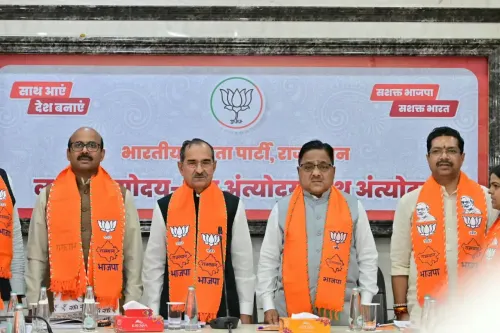
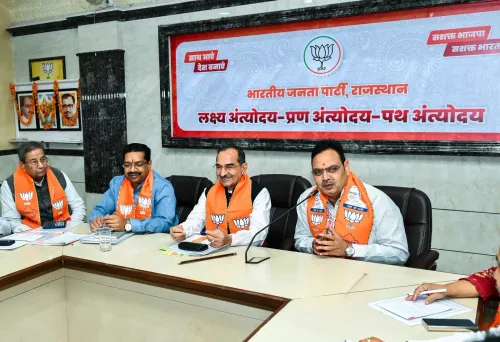
The Bharatiya Janata Party (BJP) has launched formal preparations for the upcoming Panchayati Raj elections in Rajasthan, constituting division-level election management committees across all seven administrative divisions of the state. The polls are expected to elect more than 1.55 lakh public representatives, making them among the largest grassroots electoral exercises in the state.
Key Developments
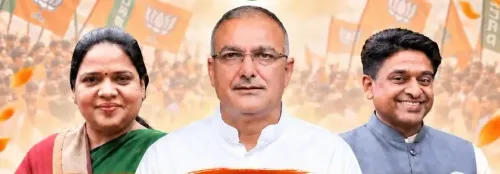
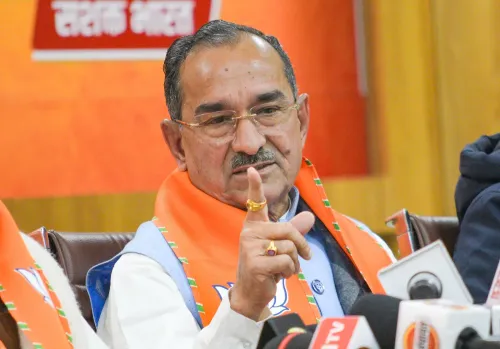
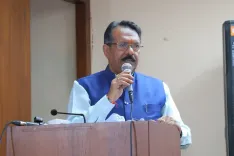
BJP State President Madan Rathore stated that the party has constituted division-level election management committees as a core part of its poll strategy. He said the BJP government has expanded participation opportunities for public representatives by more than 20 per cent compared with the previous Panchayati Raj election cycle, framing this as a structural improvement in democratic representation at the local level.
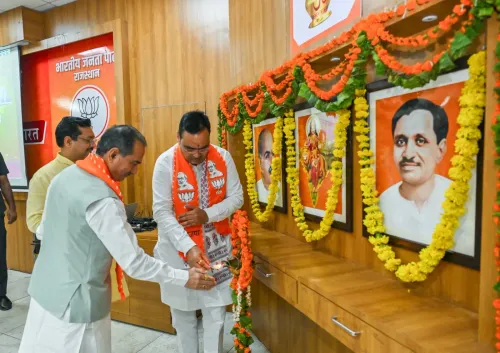
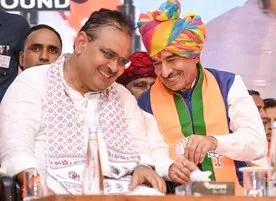
Senior party leaders — including Chief Minister Bhajan Lal Sharma, State in-charge Sanjay Bhatia, co-in-charges Kuljeet Chahal and Kavita Patidar, and State General Secretary (Organisation) Ajay Kumar — have already visited multiple districts and engaged directly with party workers ahead of the polls, according to Rathore.
Division-Level Committee Appointments
BJP State General Secretary Shravan Singh Bagdi announced the composition of the seven division-level committees. Jaipur Division will be managed by Omkar Singh Lakhawat, Alka Gurjar, and Shankar Singh Rajpurohit. Jodhpur Division has been assigned to C.R. Chaudhary, Pramod Samar, and Champa Lal Gedar. Udaipur Division will be overseen by Rajendra Rathore, Narayan Panchariya, and Hemant Vijay.
For Kota Division, the members are Mukesh Dadhich, Meghraj Lohia, and Mahendra Kumawat. Bikaner Division is assigned to Prasanna Chand Mehta, Kailash Choudhary, and Rajendra Kumar Gehlot. Bharatpur Division will be handled by Ashok Parnami, Hemraj Meena, and Chhagan Mahur. Ajmer Division has been assigned to Arun Chaturvedi, Devji Bhai Patel, and Lalchand Kataria.
BJP's Electoral Strategy and Messaging
Rathore described Panchayati Raj institutions as a 'third engine' that would complement the party's established 'double-engine' formulation — referring to aligned governments at both the Centre and the state. The party intends to contest the polls on the combined record of Prime Minister Narendra Modi's central schemes and Chief Minister Bhajan Lal Sharma's 31-month state government tenure, which Rathore credited with giving 'fresh momentum' to rural development.
The BJP is also drawing confidence from its performance in recent urban local body elections, which Rathore cited as a reference point for the party's booth-level organisational machine. According to him, a similar approach — candidate selection based on worker feedback and active booth-level mobilisation — will be replicated for the Panchayati Raj campaign. The party's stated focus areas include farmers, youth, women, and economically weaker sections in rural Rajasthan.
Context and What's Next
This comes amid a broader pattern of state-level Panchayati Raj elections across India becoming increasingly high-stakes, as political parties treat them as a barometer of rural sentiment ahead of assembly elections. For the BJP in Rajasthan, a strong showing would reinforce the Sharma government's rural development narrative. With more than 1.55 lakh seats at stake, the organisational machinery set in motion on 3 October 2026 will be tested across seven divisions and hundreds of districts. Formal election dates are yet to be announced by the state election commission.
Point of View
The real test will be whether the Sharma government's rural development claims hold up under voter scrutiny at the gram panchayat level, where the gap between announced schemes and on-ground delivery tends to be most visible. The mention of a 20 per cent increase in public representative participation, without a corresponding benchmark or source, also warrants independent verification.
NationPress
3 Oct 2026
Frequently Asked Questions
What are the BJP's preparations for the Rajasthan Panchayati Raj elections?
The BJP has constituted division-level election management committees across all seven administrative divisions of Rajasthan and is deploying a booth-level organisational strategy similar to the one used in recent urban local body elections. Senior leaders including Chief Minister Bhajan Lal Sharma have already visited multiple districts to engage party workers.
How many representatives will the Rajasthan Panchayati Raj elections elect?
The upcoming Panchayati Raj elections in Rajasthan are expected to elect more than 1.55 lakh public representatives, covering gram panchayats and intermediate bodies across the state. Election dates are yet to be formally announced by the state election commission.
Who are the BJP's division-level committee members for the Rajasthan Panchayat polls?
The committees span seven divisions: Jaipur (Omkar Singh Lakhawat, Alka Gurjar, Shankar Singh Rajpurohit), Jodhpur (C.R. Chaudhary, Pramod Samar, Champa Lal Gedar), Udaipur (Rajendra Rathore, Narayan Panchariya, Hemant Vijay), Kota (Mukesh Dadhich, Meghraj Lohia, Mahendra Kumawat), Bikaner (Prasanna Chand Mehta, Kailash Choudhary, Rajendra Kumar Gehlot), Bharatpur (Ashok Parnami, Hemraj Meena, Chhagan Mahur), and Ajmer (Arun Chaturvedi, Devji Bhai Patel, Lalchand Kataria).
What is the BJP's 'third engine' concept in the context of Panchayati Raj?
BJP State President Madan Rathore described Panchayati Raj institutions as a 'third engine' complementing the party's 'double-engine' formulation, which refers to aligned BJP governments at the Centre and in the state. The framing suggests the party intends to extend its national-state governance narrative to the grassroots level.
What is the BJP's focus in the Rajasthan Panchayati Raj elections?
The party has stated its priority groups as farmers, youth, women, and economically weaker sections in rural Rajasthan. It also plans to campaign on the implementation of central schemes under Prime Minister Narendra Modi and rural development initiatives of the Bhajan Lal Sharma government over its 31-month tenure.