Punjab BJP slams Congress for calling 1984 riots convict Sajjan Kumar a 'role model'
Synopsis
Punjab BJP President Kewal Singh Dhillon has demanded a public apology from Congress after party leaders called 1984 anti-Sikh riots convict Sajjan Kumar a 'role model' following his death at 80. The row reopens one of independent India's most painful chapters — and lands squarely in Punjab's politically volatile terrain.
Key Takeaways
Punjab BJP President Kewal Singh Dhillon condemned Congress leaders on 21 August for describing convicted 1984 riots accused Sajjan Kumar as a 'role model.' Sajjan Kumar died at Safdarjung Hospital, New Delhi on Thursday at the age of 80 , while serving a life sentence in Tihar Jail .
The Delhi High Court convicted Kumar on 17 December 2018 for criminal conspiracy and abetment in the killing of five Sikh men in Palam Colony and the burning of a gurdwara during the 1984 violence.
The court described the 1984 anti-Sikh violence as 'crimes against humanity' in its judgment.
Dhillon demanded an unconditional apology from Congress to the families of victims and the entire Sikh community .
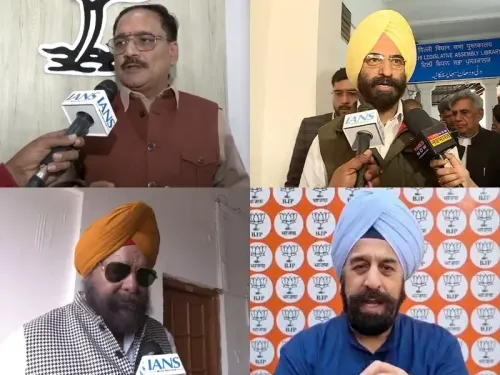
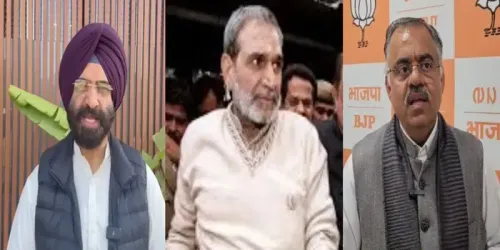
Punjab Bharatiya Janata Party (BJP) President Kewal Singh Dhillon on Friday, 21 August sharply condemned remarks by Congress leaders who described former MP Sajjan Kumar — convicted for his role in the 1984 anti-Sikh riots — as a 'role model,' calling the statement a fresh wound on victim families still awaiting full justice.
BJP's Condemnation
Dhillon said the remarks once again exposed what he described as the party's 'anti-Sikh mindset.' He argued that even 42 years after the riots, the wounds of survivor families remain unhealed, making it particularly callous to lionise a man convicted of orchestrating the violence.
'No amount of condemnation is enough for Congress' anti-Sikh mindset. The Congress has repeatedly acted in a manner that has hurt the sentiments of the Sikh community,' Dhillon said. He demanded that the party issue an unconditional apology to the families of victims and to the broader Sikh community.
Who Was Sajjan Kumar
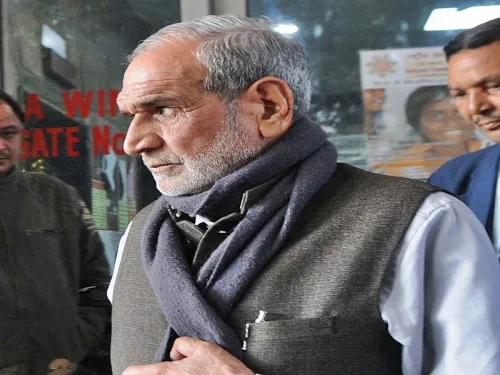
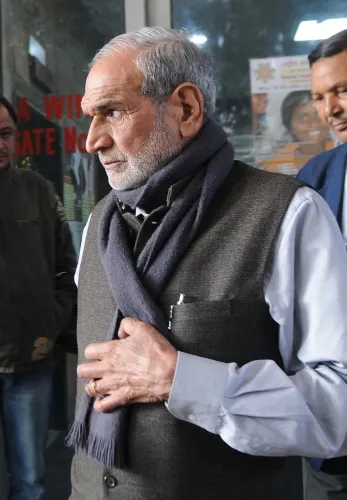
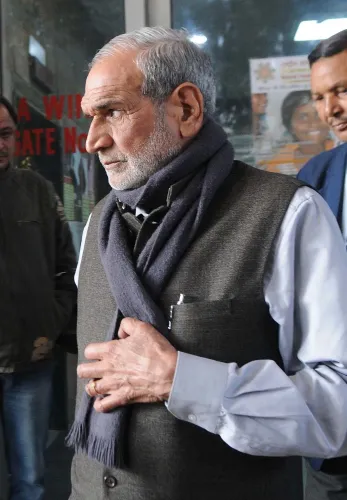
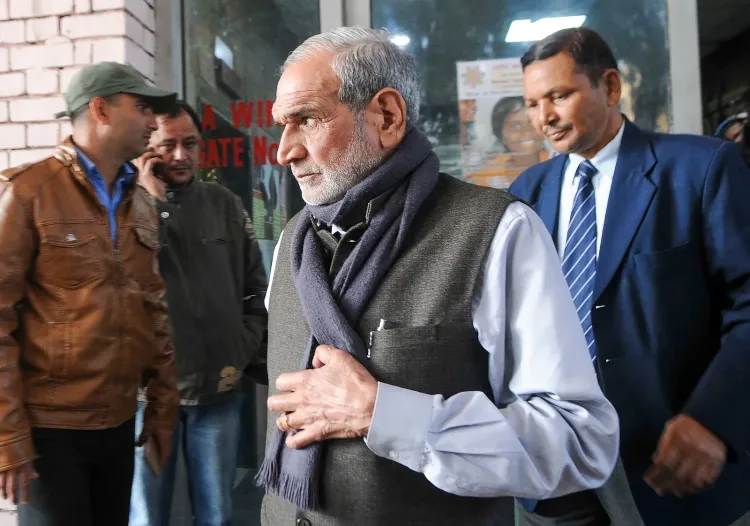
Kumar, a former Congress MP, died on Thursday at Safdarjung Hospital in New Delhi at the age of 80. He had been lodged in Tihar Jail, serving a life sentence, when his health deteriorated and he was rushed to hospital, where doctors declared him brought dead on arrival.
He was convicted for his role in the killing of five Sikh men in Raj Nagar Part I, Palam Colony, and the burning of a gurdwara on 1 and 2 November 1984 — violence that erupted in Delhi following the assassination of then Prime Minister Indira Gandhi by her two Sikh bodyguards.
The Legal Journey
A trial court acquitted Kumar in 2013. The Delhi High Court reversed that verdict on 17 December 2018, convicting him of criminal conspiracy and abetment and sentencing him to life imprisonment — directing that he remain in prison for the remainder of his natural life.
In its landmark judgment, the court described the 1984 anti-Sikh violence as 'crimes against humanity,' a characterisation that underscored the gravity of the offences for which Kumar was ultimately held accountable.
Political Fallout
The BJP's broadside comes at a politically sensitive moment. The 1984 riots remain a deeply charged issue in Punjab, where the Sikh community forms the majority. Critics argue that any attempt — by any party — to rehabilitate the image of those convicted in the violence risks inflaming long-standing grievances. The Congress has not publicly responded to Dhillon's demand for an apology as of the time of this report.
With Punjab heading into an extended period of political manoeuvring ahead of future elections, the controversy is likely to reverberate well beyond a single news cycle.
Point of View
But the underlying outrage has genuine roots. Describing a man convicted of 'crimes against humanity' as a role model is a political miscalculation of the first order — one that Congress can ill afford in Punjab, where the 1984 wounds have never fully closed. What mainstream coverage misses is the intra-Congress dynamic: such remarks rarely emerge without some degree of internal sanction, raising questions about whether the party has genuinely reckoned with its 1984 legacy or merely performed contrition when electorally convenient. The BJP, for its part, is not a disinterested party — it has its own record of shielding accused in communal cases — but on this specific charge, the political arithmetic is firmly against Congress.
NationPress
5 Oct 2026
Frequently Asked Questions
Why is the BJP criticising Congress over Sajjan Kumar's death?
The BJP is criticising Congress because some party leaders reportedly described Sajjan Kumar — a former Congress MP convicted for his role in the 1984 anti-Sikh riots — as a 'role model' after his death on Thursday. Punjab BJP President Kewal Singh Dhillon called this an attempt to reopen the wounds of survivor families and demanded an unconditional apology.
Who was Sajjan Kumar and what was he convicted of?
Sajjan Kumar was a former Congress MP convicted by the Delhi High Court on 17 December 2018 for criminal conspiracy and abetment in the killing of five Sikh men and the burning of a gurdwara in Palam Colony, New Delhi, during the 1984 anti-Sikh riots. He was sentenced to life imprisonment and died at Safdarjung Hospital at the age of 80 while serving that sentence.
What did the Delhi High Court say about the 1984 violence?
The Delhi High Court, in its 2018 judgment convicting Sajjan Kumar, described the 1984 anti-Sikh violence as 'crimes against humanity.' The court reversed a 2013 trial court acquittal and directed that Kumar remain in prison for the remainder of his natural life.
What triggered the 1984 anti-Sikh riots?
The 1984 anti-Sikh riots erupted following the assassination of then Prime Minister Indira Gandhi by her two Sikh bodyguards on 31 October 1984. Widespread violence broke out across Delhi and other parts of India, with some of the worst incidents recorded in areas including Palam Colony.
Has Congress responded to the BJP's demand for an apology?
As of the time of this report, the Congress party had not publicly responded to Punjab BJP President Kewal Singh Dhillon's demand for an unconditional apology to the families of 1984 riot victims and the Sikh community.