BJP slams Rahul Gandhi as LoP; TMC's Saugata Roy backs his student protest stand
Synopsis
On 22 August, BJP leaders including Union Minister Giriraj Singh and Dilip Ghosh dismissed Rahul Gandhi's nine-hour Jantar Mantar protest and FIR filing as political theatre, while TMC MP Saugata Roy broke ranks to call it a 'major achievement' for students. The split reaction reveals how Gandhi's LoP role is simultaneously a liability with rivals and a rallying point for unlikely allies.
Key Takeaways
BJP leaders on 22 August accused Rahul Gandhi of failing to fulfil his duties as Leader of Opposition in the Lok Sabha .
Union Minister Giriraj Singh alleged Gandhi exploited the Vande Mataram issue for political purposes.
BJP leader Dilip Ghosh questioned why Gandhi did not visit Jharkhand , where students are actively protesting.
TMC MP Saugata Roy praised Gandhi's nine-hour protest at Jantar Mantar , calling the subsequent FIR in the pellet gun case a 'major achievement'.
The episode highlights a rare moment of TMC-Congress alignment even as the two parties remain rivals in West Bengal .
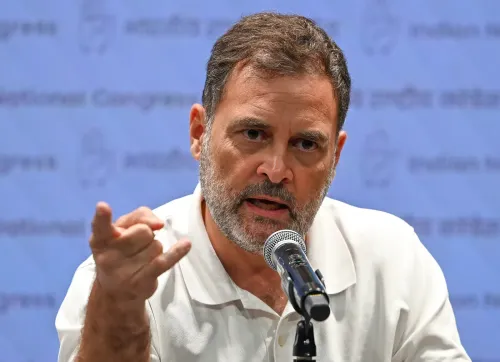
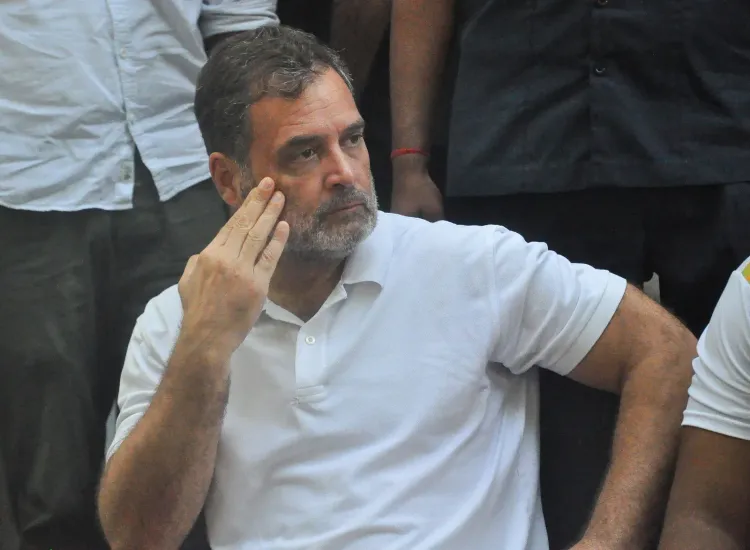
Congress leader Rahul Gandhi, serving as Leader of Opposition (LoP) in the Lok Sabha, faced sharp criticism from Bharatiya Janata Party (BJP) leaders on Saturday, 22 August, who accused him of neglecting his constitutional responsibilities and exploiting the Vande Mataram controversy for political gain. In contrast, All India Trinamool Congress (TMC) MP Saugata Roy praised Gandhi's nine-hour protest and credited him with securing an FIR in the pellet gun use case against students.
BJP's Criticism of Gandhi's Role as LoP
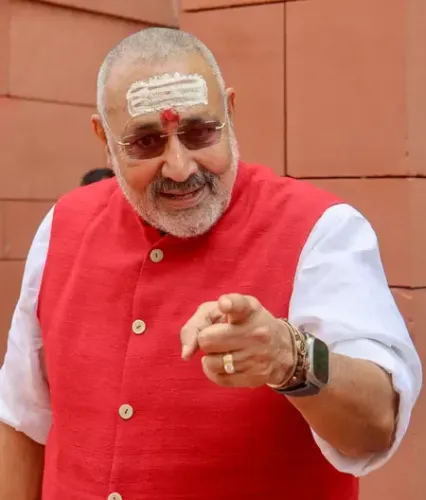
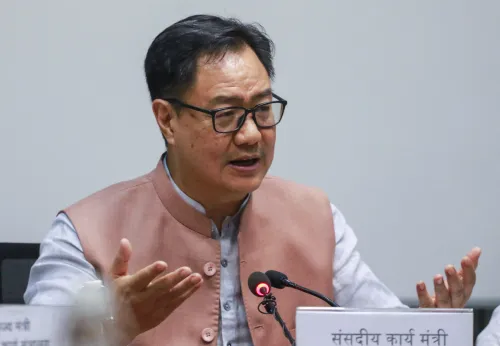
Union Minister Giriraj Singh, speaking in Mumbai, alleged that Gandhi had consistently failed to live up to the duties of the Leader of Opposition. Singh drew a historical parallel over the Vande Mataram row, claiming the Opposition was weaponising the issue. 'Rahul Gandhi is unfortunately the Leader of Opposition of India, but he has never fulfilled the duties of a LoP. Yesterday's incident was related to the pellet-gun case to remain in the media. The Opposition is talking about Vande Mataram. Even in 1937, it was removed under the pressure of Jinnah. And now Narendra Modi is the Prime Minister of the country. He worked to restore it...' Singh said.
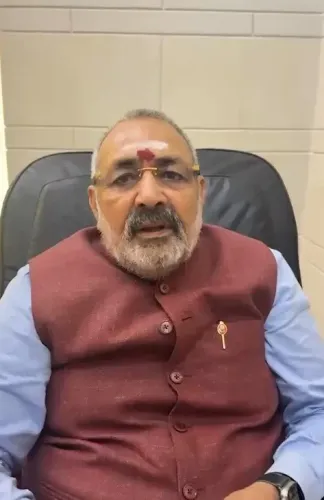
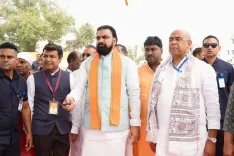
In West Bengal, BJP leader Dilip Ghosh questioned why Gandhi chose to travel elsewhere rather than visiting Jharkhand, where students have been protesting over issues directly affecting them. 'He isn't going to Jharkhand, where students are protesting for their own interest. Their government is in power there, and the decision taken by the government was proven wrong by the court. So now, there is nothing left for Rahul Gandhi to do...' Ghosh said.
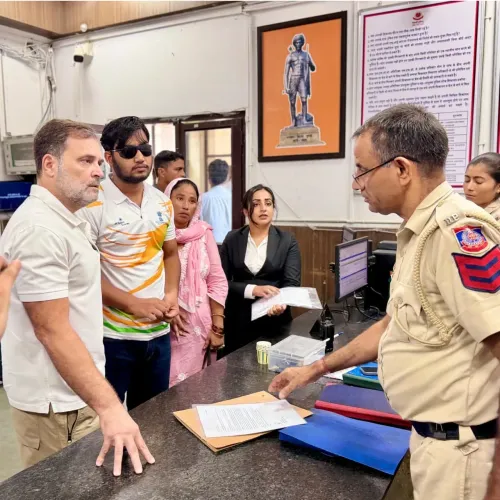
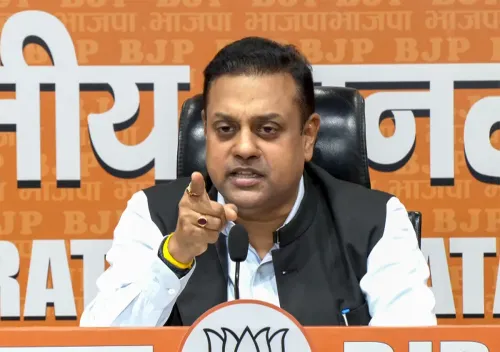
BJP leader T.R. Sriniwas was more pointed in his attack, dismissing Gandhi's filing of an FIR at the Parliament Street Police Station over the Jantar Mantar demonstration as political theatre. 'Yesterday, there was entire FIR drama of Rahul Gandhi at the Parliament Street Police Station over the so-called Jantar Mantar fiasco. I would like to say to Rahul Gandhi, there was a drama in the late 80s and 90s called ‘Bakra Kishton Pe’. Now, what you are doing is ‘politics kishton pe’. This is what is happening. You are not a full-time politician, sir. You come at your leisure, do some drama, and go away. This is what you have done,' Sriniwas said.
TMC Backs Gandhi's Intervention for Students
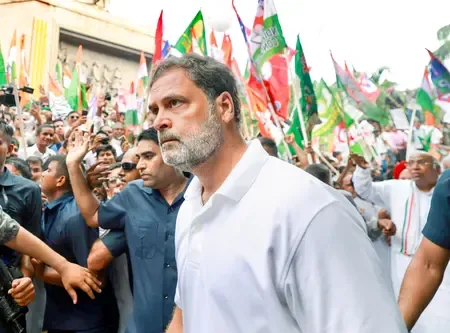
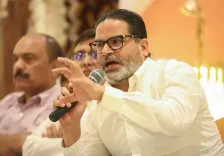
TMC MP Saugata Roy offered a starkly different assessment, hailing Gandhi's role in the students' protest as a meaningful exercise of opposition leadership. Roy said, 'I am happy that Rahul Gandhi, as a Leader of the Opposition, fought for the students' cause. He staged a protest for nine hours, and finally, an FIR was registered regarding the police action and police atrocities against the students. This is a major achievement for Rahul Gandhi.'
Roy's remarks represent a notable moment of cross-party solidarity, as the TMC and Congress have often been at odds over electoral strategy in West Bengal.
Background: The Pellet Gun Case and Jantar Mantar Protest
The political flashpoint centres on the use of pellet guns by police against protesting students, a matter Gandhi brought to the Parliament Street Police Station by filing an FIR. His protest at Jantar Mantar lasted nine hours, drawing both supporters and critics. The BJP has framed the move as a media stunt, while opposition voices argue it reflects legitimate accountability for alleged police excesses.
Notably, the episode also intersects with the broader Vande Mataram controversy, which the BJP has used to question the Opposition's nationalist credentials — a recurring pattern in Indian political discourse ahead of state elections.
Political Divide in Focus
The contrasting reactions underscore the widening fault lines over Gandhi's conduct as LoP — a role he assumed after the Indian National Congress (INC) improved its seat count in the 2024 Lok Sabha elections. For the BJP, his actions represent selective and performative opposition. For the TMC, at least on this occasion, they represent a meaningful stand for citizens' rights. How Gandhi navigates this dual scrutiny — from both rivals and nominal allies — will shape perceptions of his leadership in the months ahead.
Point of View
Which makes the praise notable rather than reflexive. The deeper question mainstream coverage skips is whether the Jharkhand argument holds: if BJP leaders want Gandhi in Jharkhand, they are implicitly conceding that the student protests there deserve national attention.
NationPress
6 Oct 2026
Frequently Asked Questions
Why are BJP leaders criticising Rahul Gandhi as Leader of Opposition?
BJP leaders allege that Rahul Gandhi has consistently failed to fulfil the duties of the Leader of Opposition, and that his recent Jantar Mantar protest and FIR filing were media-driven stunts rather than substantive opposition work. Union Minister Giriraj Singh also accused him of politicising the Vande Mataram issue.
What did Rahul Gandhi do at Jantar Mantar that triggered the political row?
Gandhi staged a nine-hour protest at Jantar Mantar and subsequently filed an FIR at the Parliament Street Police Station over the alleged use of pellet guns by police against protesting students. The BJP called it a 'drama', while TMC MP Saugata Roy described it as a major achievement.
Why did TMC's Saugata Roy support Rahul Gandhi despite the two parties being rivals?
Roy said he was 'happy' that Gandhi fought for students' rights and secured an FIR regarding police action against them. The endorsement is notable because the TMC and Congress compete directly in West Bengal, making cross-party solidarity on this issue significant.
What is the Vande Mataram controversy mentioned by BJP leaders?
BJP leaders, particularly Giriraj Singh, accused the Opposition of raising the Vande Mataram issue for political purposes. Singh claimed the song was removed in 1937 under pressure and that Prime Minister Narendra Modi had worked to restore its prominence, using the comparison to question the Opposition's nationalist credentials.
Which BJP leaders spoke against Rahul Gandhi on 22 August?
Three BJP leaders publicly criticised Gandhi: Union Minister Giriraj Singh in Mumbai, West Bengal BJP leader Dilip Ghosh, and BJP leader T.R. Sriniwas, each targeting different aspects of his conduct as Leader of Opposition.