BJP passes resolution defending Vande Mataram, slams CWC's two-stanza limit
Synopsis
The BJP has turned the Congress's reaffirmation of its 89-year-old two-stanza rule into a full political offensive — passing a formal resolution, invoking the Constitution, Parliament's 2026 legislation, and Mahatma Gandhi in one sweep. The dispute over how many stanzas of Vande Mataram Congress sings at its own events is now being framed by the BJP as a question of national honour versus vote-bank politics.
Key Takeaways
The BJP passed a resolution on 22 August 2026 defending the complete six-stanza Vande Mataram at its national office-bearers' meeting in New Delhi .
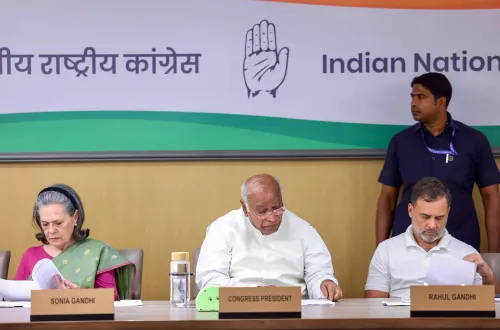
The resolution condemns the CWC's 19 August 2026 decision reaffirming its 1937 pledge to limit Vande Mataram to the first two stanzas at Congress programmes.
The BJP cited the Constituent Assembly's 1950 declaration and Parliament's 2026 legislation as placing Vande Mataram on par with the national anthem Jana Gana Mana .
The party invoked Mahatma Gandhi 's description of Vande Mataram as an 'anti-imperialist slogan' of 'purest national sentiment.' A nationwide youth awareness campaign on Vande Mataram's history and significance has been announced by the BJP.
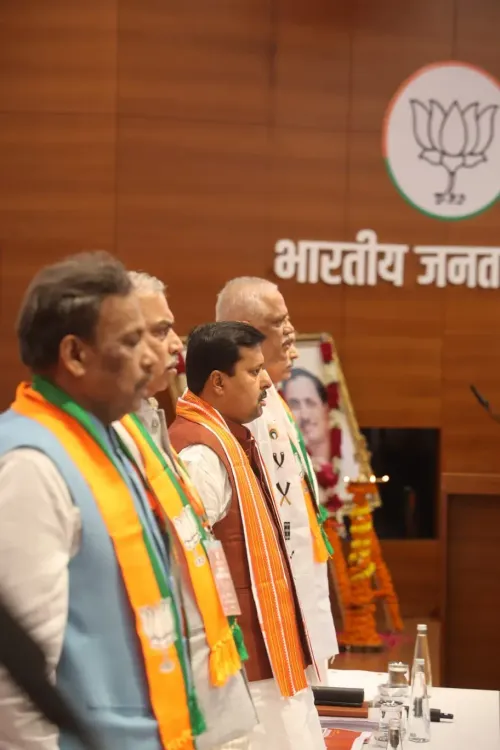
The Bharatiya Janata Party (BJP) on Saturday, 22 August 2026, passed a formal resolution at its party headquarters in New Delhi defending the honour and historical legacy of the national song Vande Mataram, while strongly condemning the Congress Working Committee (CWC)'s decision to reaffirm its 1937 pledge restricting the song's rendition at Congress programmes to only the first two stanzas. The resolution was adopted at the first meeting of the party's new national office-bearers.
What the BJP Resolution Says
In the resolution shared by party chief Nitin Nabin, the BJP declared that it 'strongly condemns and unequivocally opposes' the CWC's 19 August 2026 decision to reaffirm the 1937 restriction. The party said it is committed to protecting the 'honour, dignity, historical legacy and national character' of the complete Vande Mataram, comprising all six stanzas.
The BJP argued that the political understanding reached in 1937 cannot be placed above the constitutional position established by the Constituent Assembly in 1950 or legislation enacted by Parliament in 2026, which the party said accorded Vande Mataram legal protection comparable to the national anthem Jana Gana Mana.
The Congress Position and Its Historical Roots
The CWC's resolution, passed on 19 August 2026, reaffirmed a position the Congress has maintained since 1937, when the party decided that only the first two stanzas of Vande Mataram would be sung at its programmes. The decision, taken during the freedom struggle, was linked at the time to objections raised by the Muslim League over the song's later stanzas, which contain references to Hindu goddesses.
The BJP said it would bring before the public the historical and political circumstances surrounding those restrictions, including the role of communal and separatist pressures during the independence movement.
Gandhi, the Constitution, and the Legacy Argument
The BJP's resolution invoked Mahatma Gandhi's historical remarks, citing his description of Vande Mataram as an 'anti-imperialist slogan' associated with the 'purest national sentiment.' The party stressed that the song served as a rallying cry during India's freedom movement and that its complete rendition is an integral part of national heritage.
The resolution stated: 'The words of Vande Mataram were once so powerful that an empire trembled in fear of them. The British tried to suppress them because those words had awakened the consciousness of resistance. Generations of Indians embraced them as the mantra of freedom, sacrifice, and national pride.'
Planned Awareness Campaign
The BJP announced that its workers would carry the history, meaning, and national significance of Vande Mataram to people across the country. A special awareness campaign targeting youth is also planned to ensure that the complete national song and its historical context are not forgotten.
The party maintained that no compromise would be made on Vande Mataram's honour 'for the sake of political convenience or appeasement,' and framed the issue as transcending partisan politics. The resolution declared that under the leadership of Prime Minister Narendra Modi, Vande Mataram would serve as the 'great clarion call' of Viksit Bharat in 2047.
What Comes Next
The BJP's resolution signals that the Vande Mataram dispute is likely to become a sustained political flashpoint ahead of upcoming electoral cycles. With a public awareness campaign announced and the party framing the issue in constitutional terms, pressure on the Congress to respond is expected to intensify in the coming days.
Point of View
Not a post-Independence invention; the BJP's framing elides that nuance entirely. The invocation of Parliament's 2026 legislation is the sharpest edge here: if Vande Mataram now carries statutory force comparable to Jana Gana Mana, the legal and political implications for how parties conduct their own programmes deserve serious scrutiny that neither side is yet offering. The youth awareness campaign signals this will not stay an elite political debate for long.
NationPress
22 Aug 2026
Frequently Asked Questions
Why did the BJP pass a resolution on Vande Mataram on 22 August 2026?
The BJP passed the resolution to condemn the Congress Working Committee's 19 August 2026 decision reaffirming its 1937 pledge to sing only the first two stanzas of Vande Mataram at Congress programmes. The BJP argues the complete six-stanza song is protected by both the Constituent Assembly's 1950 declaration and Parliament's 2026 legislation.
What is the Congress's position on Vande Mataram and why does it date to 1937?
The Congress has since 1937 restricted the singing of Vande Mataram at its programmes to the first two stanzas. The decision was linked to objections raised by the Muslim League during the freedom struggle over the song's later stanzas, which contain references to Hindu goddesses. The CWC reaffirmed this position on 19 August 2026.
What legal status does Vande Mataram hold in India?
According to the BJP's resolution, Parliament enacted legislation in 2026 that accorded Vande Mataram legal protection placing it on a comparable footing to the national anthem Jana Gana Mana. The Constituent Assembly had also declared its status in 1950. The BJP argues this constitutional and legal framework supersedes any party resolution from 1937.
What did Mahatma Gandhi say about Vande Mataram?
The BJP's resolution cited Mahatma Gandhi's historical remarks describing Vande Mataram as an 'anti-imperialist slogan' associated with the 'purest national sentiment.' The BJP invoked Gandhi's words to argue that restricting the song contradicts the spirit of the freedom movement.
What is the BJP planning to do next on the Vande Mataram issue?
The BJP has announced a nationwide public awareness campaign, with a special focus on youth, to highlight the history, meaning, and national significance of the complete Vande Mataram. The party also said it will publicly discuss the historical circumstances behind the restrictions, including the Muslim League's objections during the freedom struggle.