BJP targets Rahul Gandhi's silence on ED raids over Congress exam scams
Synopsis
The BJP has turned the exam-integrity debate on its head — using ED actions against aides of Harish Rawat and Bhupesh Baghel to demand that Rahul Gandhi, vocal champion of students on NEET leaks, explain his silence when the corruption trail leads inside his own party.
Key Takeaways
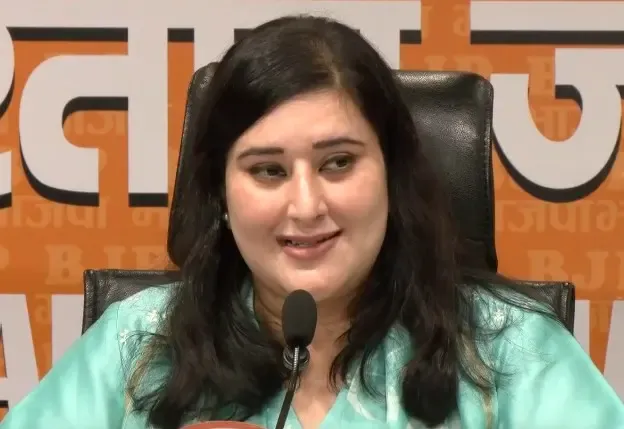
BJP MP Bansuri Swaraj held a press conference on 15 September in New Delhi questioning Rahul Gandhi’s silence on ED actions against Congress aides.
The ED raided the premises of Chandan Singh Jeena , PA to former Uttarakhand CM Harish Rawat , recovering cash and jewellery allegedly disproportionate to his income, in connection with the VPDO exam scam .
Rawat subsequently resigned from two party posts following the ED action, according to reports.
Former Chhattisgarh CM Bhupesh Baghel’s ex-OSD Chetan Borghariya was arrested by the ED on Monday in the alleged CGPSC scam involving illegal appointments through exam paper leaks.
BJP also attacked Congress over Chief Ministers of Telangana , Himachal Pradesh , and Karnataka reportedly skipping a dinner at the BRICS Summit .
Bharatiya Janata Party (BJP) leaders on Tuesday, 15 September publicly challenged Leader of Opposition Rahul Gandhi to explain his silence following Enforcement Directorate (ED) actions against close aides of two senior Congress figures linked to exam irregularity cases. The BJP pressed the attack through a press conference in New Delhi, drawing a pointed contrast between Gandhi's vocal campaigning on student issues and his alleged quietude on corruption allegations within his own party.
The ED Actions That Sparked the Row
The controversy centres on two separate enforcement actions in quick succession. In Uttarakhand, ED raids on the premises of Chandan Singh Jeena, personal assistant to former state Chief Minister and senior Congress leader Harish Rawat, reportedly yielded large amounts of cash and jewellery described as disproportionate to his known income. The raids were linked to the VPDO exam scam. Following the ED action, Rawat resigned from two party posts, according to reports.
Separately, on Monday, the ED arrested Chetan Borghariya, former Officer on Special Duty (OSD) to ex-Chhattisgarh Chief Minister Bhupesh Baghel. Borghariya's arrest is connected to allegations of illegal appointments of Deputy Superintendents of Police (DSPs) and Collectors through exam paper leaks, in what is being referred to as the CGPSC scam.
What BJP's Bansuri Swaraj Said
Addressing the press conference, BJP Member of Parliament Bansuri Swaraj deployed sharp language to target the Congress leadership directly. “It seems that the only business conducted in the Congress party’s so-called ‘Mohabbat ki Dukaan’, is that of corruption,” she said, invoking Rahul Gandhi’s own political branding.
Swaraj further asked: “I want to ask Rahul Gandhi, on one hand, he talks about students, but when people from his own party tamper with the future of the nation’s youth and students, does that ‘goonj’ fail to reach his ears?” The reference to ‘goonj’ was a deliberate jab at Gandhi’s ‘Chattron ki Goonj’ outreach programmes, launched in the backdrop of repeated NEET paper leak controversies nationally.
She also claimed that “the son of a politician” had been accused of receiving cut money in outsourced recruitments in Himachal Pradesh, though she did not name the individual. She added that such incidents raise “grave questions” about political patronage in recruitment systems under Congress-governed states.
BRICS Summit Dinner Snub: BJP Widens the Attack
The BJP MP also turned her fire on the Congress over reports that the Chief Ministers of Telangana, Himachal Pradesh, and Karnataka declined a dinner invitation at the recently held BRICS Summit. Swaraj called the absence “extremely shameful,” particularly given Prime Minister Narendra Modi’s stated ‘Team India’ messaging at the summit.
Notably, Swaraj alleged that Telangana Chief Minister Revanth Reddy had initially accepted the invitation but subsequently backed out, reportedly citing political compulsions. “In their opposition to Prime Minister Narendra Modi, have they now started opposing Bharat Mata as well?” she asked. The Congress had not issued a formal public response to these specific allegations at the time of reporting.
Context and What It Means
The BJP’s broadside comes amid a sustained national debate on exam integrity, ignited by the high-profile NEET-UG paper leak crisis earlier this year. Congress had used that controversy aggressively to corner the Centre. The ED’s latest actions now give the ruling party an opening to reframe the narrative around state-level corruption in Congress-governed or formerly Congress-governed states. This is a recurring pattern in Indian politics: competitive accountability claims between the Centre and the Opposition, with each enforcement action becoming as much a political flashpoint as a legal one.
Whether these cases result in judicial convictions remains to be seen, and the Congress has not formally addressed the BJP’s allegations at a national level. All charges remain at the investigation or allegation stage, and the courts will be the final arbiter.
Point of View
One showing Congress-era state machinery allegedly implicated in the same category of wrongdoing. What is missing from both sides of this debate is a consistent, non-partisan push for institutional reform of India’s exam system — one that holds all political formations to account. Until enforcement actions are complemented by credible structural change, each raid risks being read as political theatre rather than a genuine reckoning.
NationPress
15 Sept 2026
Frequently Asked Questions
Why is the BJP questioning Rahul Gandhi over exam scams?
The BJP is questioning Rahul Gandhi's silence after the ED took action against personal aides of two senior Congress leaders — former Uttarakhand CM Harish Rawat and former Chhattisgarh CM Bhupesh Baghel — in separate exam irregularity cases. The BJP argues that Gandhi, who has publicly championed students' causes over NEET paper leaks, has not spoken out when the alleged corruption involves his own party.
What is the VPDO exam scam linked to Harish Rawat's PA?
The VPDO exam scam refers to alleged irregularities in the Village Panchayat Development Officer recruitment process in Uttarakhand. The ED raided the premises of Chandan Singh Jeena, personal assistant to former CM Harish Rawat, and reportedly recovered cash and jewellery allegedly disproportionate to his known income. Rawat subsequently resigned from two Congress party posts.
Why was Bhupesh Baghel's former OSD Chetan Borghariya arrested?
Chetan Borghariya, former OSD to ex-Chhattisgarh Chief Minister Bhupesh Baghel, was arrested by the ED on Monday in connection with the alleged CGPSC scam involving illegal appointments of DSPs and Collectors through exam paper leaks. All charges remain under investigation and are subject to judicial proceedings.
What is the 'Chattron ki Goonj' campaign the BJP referenced?
'Chattron ki Goonj' was a Congress outreach programme led by Rahul Gandhi addressing students' concerns, launched amid national outrage over repeated NEET-UG paper leaks. BJP MP Bansuri Swaraj used the phrase sarcastically to ask why Gandhi's concern for students did not extend to calling out alleged corruption within his own party's ranks.
What did the BJP say about Congress CMs skipping the BRICS Summit dinner?
BJP MP Bansuri Swaraj alleged that the Chief Ministers of Telangana, Himachal Pradesh, and Karnataka refused a dinner invitation at the recently held BRICS Summit, calling it 'extremely shameful' given PM Modi's 'Team India' messaging. She also claimed that Telangana CM Revanth Reddy had initially accepted the invitation before pulling out citing political reasons, though this could not be independently verified at the time of reporting.