West Bengal CEO on BJP's 206-seat win: Assembly term ends today, Mamata's refusal not our concern
Synopsis
West Bengal's 15-year Trinamool Congress rule has collapsed — the BJP has won 206 of 293 declared seats, Mamata Banerjee lost her own constituency to Suvendu Adhikari by over 15,000 votes, and she is refusing to resign. The state CEO says the Constitution will take its course regardless.
Key Takeaways
BJP has secured 206 seats in the 294-member West Bengal Assembly , well above the majority mark, ending TMC's 15-year rule .
Mamata Banerjee lost the Bhabanipur constituency to BJP's Suvendu Adhikari by a margin exceeding 15,000 votes .
TMC won only 81 seats and failed to win a single seat in 10 districts , including Cooch Behar , Jalpaiguri , and Darjeeling .
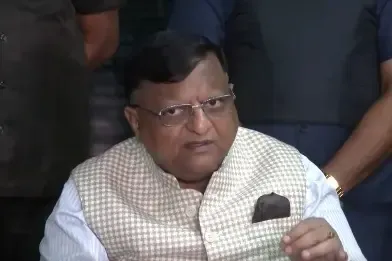
State CEO Manoj Kumar Agarwal confirmed the Assembly's term expires on 6 May and the constitutional process of forming a new Assembly is underway.
Repolling in Falta ( South 24 Parganas ) is scheduled for 21 May , with counting on 24 May .
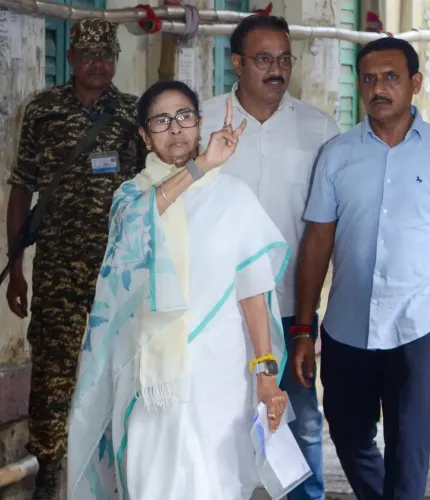
The constitutional process of government formation in West Bengal is firmly underway following the 2026 Assembly election results, even as outgoing Chief Minister Mamata Banerjee refused to resign and alleged the results did not reflect the true will of the people. State Chief Electoral Officer (CEO) Manoj Kumar Agarwal on Wednesday, 6 May made clear that the Election Commission's role ends with conducting polls and notifying results — the rest is governed by the Constitution.
What the CEO Said
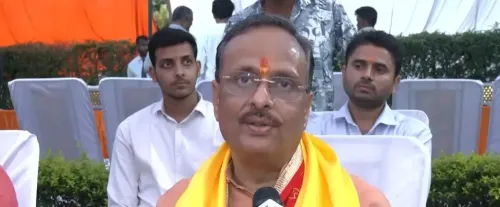
Agarwal declined to comment on Banerjee's refusal to step down, stating: "Look, this is what the Constitution says; we don't need to say anything. No comments from my side. The Election Commission has no role in this."
He elaborated on the procedural sequence: "We have to provide that statutory notification to the Governor, showing who won in which seat. After that, the new Assembly is constituted. The term of the old Assembly is ending today, so the new Assembly will be formed. Once constituted, there will be oath-taking of MLAs, and thereafter, the Governor's office will issue the necessary notification, and then the new Assembly will be formed."
BJP's Decisive Mandate
The Bharatiya Janata Party (BJP) is set to form the next government in West Bengal with a commanding majority. Of the 293 seats declared so far in the 294-member Assembly — where the majority mark stands at 148 — the BJP has secured 206 seats, comfortably surpassing the threshold. The All India Trinamool Congress (TMC) managed to win only 81 seats, ending its 15-year rule in the state.
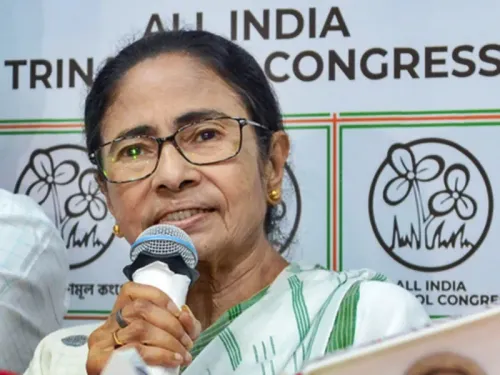
Notably, Mamata Banerjee herself lost from the Bhabanipur constituency to BJP leader Suvendu Adhikari by a margin exceeding 15,000 votes — a significant personal defeat for the outgoing Chief Minister.
Mamata's Refusal and the Political Atmosphere
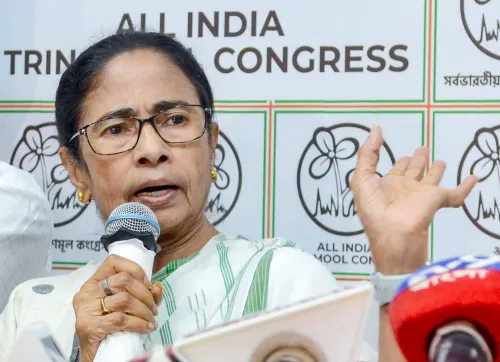
Despite the electoral setback, Banerjee maintained she would not voluntarily tender her resignation, alleging that the results did not reflect the true mandate of the people. The defiant stance has added a charged dimension to what is otherwise a constitutionally straightforward transition of power. This comes amid a broader pattern of outgoing incumbents contesting electoral outcomes, though the constitutional process proceeds regardless of such positions.
TMC's Collapse Across Districts
The results underscored a sweeping shift in West Bengal's political landscape. The TMC failed to win a single seat in ten districts, including Cooch Behar, East Midnapore, Jalpaiguri, and Darjeeling. The party also lost ground in key tribal and Matua-dominated constituencies — demographic strongholds it had relied upon in previous cycles.
What Happens Next
Repolling is scheduled in the Falta seat of South 24 Parganas district on 21 May, with counting slated for 24 May, according to the Election Commission of India (ECI). Attention now shifts to the Governor's office for the formal invitation to form the government and the subsequent swearing-in of the new Council of Ministers. The transition marks the end of the longest uninterrupted run by a single party in West Bengal since the Left Front's 34-year tenure.
Point of View
Including tribal and Matua belts that were once considered safe, suggests the erosion is structural, not cyclical. The BJP now faces the harder test of governing a state with a complex administrative legacy, entrenched patronage networks, and a history of post-election violence. A decisive mandate is the easy part.
NationPress
23 Sept 2026
Frequently Asked Questions
What is the current status of West Bengal government formation?
The constitutional process is underway following the 2026 Assembly election results. The old Assembly's term expired on 6 May, and once the Election Commission's statutory notification is forwarded to the Governor, a new Assembly will be constituted, followed by MLA oath-taking and the swearing-in of a new Council of Ministers.
How many seats did the BJP win in the West Bengal Assembly election?
The BJP secured 206 seats of the 293 declared so far in the 294-member Assembly, comfortably surpassing the majority mark. The TMC won 81 seats.
Why is Mamata Banerjee refusing to resign as Chief Minister?
Mamata Banerjee has alleged that the election results do not reflect the true will of the people and has said she will not voluntarily tender her resignation. However, the constitutional process of government formation proceeds regardless of her position.
Did Mamata Banerjee lose her own seat in the election?
Yes, Mamata Banerjee lost the Bhabanipur constituency to BJP leader Suvendu Adhikari by a margin exceeding 15,000 votes.
What is the role of the Election Commission in government formation?
According to State CEO Manoj Kumar Agarwal, the Election Commission's role is limited to conducting polls and issuing statutory notifications of elected candidates to the Governor. The constitutional framework — not the Election Commission — governs the subsequent process of government formation.