BJP chief Nitin Nabin backs Modi govt's Nasha Mukt Bharat drive
Synopsis
On International Anti-Drug Day, BJP president Nitin Nabin credited the Modi government's multi-pronged campaign against narcotics — but the more consequential moment was Home Minister Amit Shah releasing a fresh Narcotics Control Vision Document and calling for a 'ruthless,' tech-driven crackdown. With 7.1 crore Indians identified as substance users in the last national survey, the policy ambition is large and the accountability bar should match it.
Key Takeaways
BJP National President Nitin Nabin praised the Modi government's anti-drug drive on 26 June , the International Day Against Drug Abuse and Illicit Trafficking .
Home Minister Amit Shah released the Narcotics Control Vision Document 2026-2029 and chaired the 10th NCORD apex meeting in New Delhi .
Shah called for an 'intelligence-led,' 'technology-driven,' and 'ruthless' approach against drug traffickers.
A 2019 national survey by AIIMS New Delhi found approximately 7.1 crore individuals engaged in substance use in India.
The Nasha Mukt Bharat Abhiyaan , launched on 15 August 2020 in 272 districts , was expanded to all districts on 15 August 2023 .
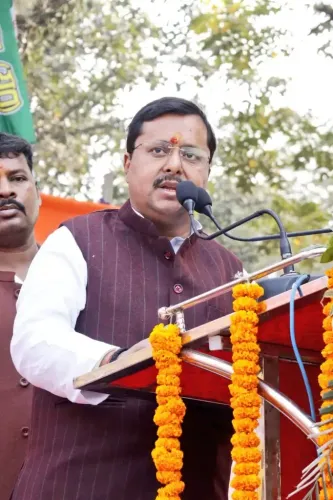
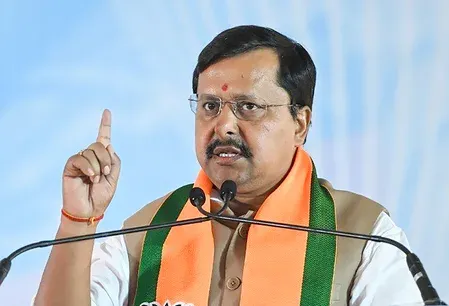
Bharatiya Janata Party (BJP) National President Nitin Nabin on Friday, 26 June praised the Prime Minister Narendra Modi-led government's anti-narcotics campaign, urging citizens to unite in building a drug-free India. His remarks came on the occasion of the International Day Against Drug Abuse and Illicit Trafficking, as multiple senior leaders and ministries marked the day with fresh pledges and policy action.
What Nabin Said
In a post on X, Nabin called on citizens to 'reaffirm our collective resolve to build a drug-free, healthy and empowered India.' He credited the Modi government with intensifying the fight through the Nasha Mukt Bharat Abhiyaan (NMBA), stronger enforcement against trafficking, enhanced border surveillance, nationwide awareness drives, and expanded de-addiction and rehabilitation services. 'Let us join hands to keep our youth away from drugs and strengthen the foundation of a healthy society and a Viksit Bharat,' he added.
Shah Releases Narcotics Vision Document 2026-2029
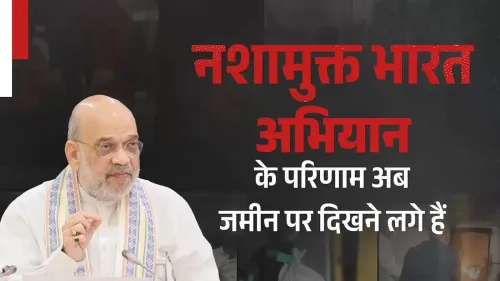
Earlier in the day, Union Home Minister Amit Shah released the 'Narcotics Control Vision Document 2026-2029' and chaired the 10th apex-level meeting of the Narco-Coordination Centre (NCORD) in New Delhi. Shah called for a technology-driven, intelligence-led strategy against drug traffickers, describing the required approach as 'ruthless.' 'Our response must be intelligence-led. We need to adopt a technology-driven approach. We will have to fight using a network-centric strategy. We must move forward with a ruthless approach; only then can we achieve victory against this challenge,' he said at the meeting.
Scale of the Problem
The government's focus on narcotics is backed by sobering data. A comprehensive national survey on substance abuse — conducted by the Ministry of Social Justice and Empowerment (MoSJE) through the National Drug Dependence Treatment Centre, AIIMS, New Delhi and published in 2019 — identified approximately 7.1 crore individuals engaged in substance use across the country. The findings underscored the scale of the challenge that policy frameworks like NMBA are designed to address.
Nasha Mukt Bharat Abhiyaan: Rollout and Reach
The Nasha Mukt Bharat Abhiyaan was launched on 15 August 2020 by MoSJE, initially covering 272 districts identified as most vulnerable to substance use. On 15 August 2023, the programme was expanded to all districts of the country. Its primary beneficiaries include youth, women, children, educational institutions, civil society organisations, and the broader community. Notably, Prime Minister Modi had flagged the drug menace as early as December 2014 in his 'Mann ki Baat' address, warning that it brings 'Darkness, Destruction, and Devastation.' The government says coordinated inter-agency efforts since then have progressively strengthened enforcement and rehabilitation infrastructure.
What Comes Next
The release of the Narcotics Control Vision Document 2026-2029 signals a shift toward a more tech-centric and network-driven enforcement model. With the NMBA now covering all districts and a fresh policy roadmap in place, the Centre's next test will be translating surveillance and awareness gains into measurable reductions in substance use prevalence.
Point of View
Making it difficult to measure whether the Nasha Mukt Bharat Abhiyaan has moved the needle since 2020. The new Vision Document's emphasis on 'ruthless' and 'network-centric' enforcement is directionally sound, but without published outcome metrics — seizure-to-conviction ratios, rehabilitation completion rates, district-level prevalence trends — it risks remaining aspirational. A credible anti-narcotics strategy demands data transparency, not just policy announcements on symbolic dates.
NationPress
25 Sept 2026
Frequently Asked Questions
What is the Nasha Mukt Bharat Abhiyaan?
The Nasha Mukt Bharat Abhiyaan (NMBA) is a government programme launched on 15 August 2020 by the Ministry of Social Justice and Empowerment to combat substance abuse. Initially covering 272 high-vulnerability districts, it was expanded to all districts of India on 15 August 2023, targeting youth, women, children, and communities at large.
What is the Narcotics Control Vision Document 2026-2029?
It is a policy roadmap released by Home Minister Amit Shah on 26 June 2025, outlining a technology-driven, intelligence-led strategy for narcotics enforcement through 2029. Shah described the required approach as 'ruthless' and called for a network-centric model among India's narcotics control agencies.
What does the national survey say about drug abuse in India?
A comprehensive survey conducted by the National Drug Dependence Treatment Centre at AIIMS New Delhi, published in 2019, found approximately 7.1 crore individuals engaged in substance use across the country. The survey was commissioned by the Ministry of Social Justice and Empowerment to assess the scale of the problem.
What did BJP president Nitin Nabin say on International Anti-Drug Day?
Nabin posted on X calling for a collective resolve to build a 'drug-free, healthy and empowered India.' He credited the Modi government with strengthening anti-trafficking action, border surveillance, awareness campaigns, and rehabilitation services under the Nasha Mukt Bharat Abhiyaan.
What is NCORD and why does it matter?
The Narco-Coordination Centre (NCORD) is an apex inter-agency body that coordinates narcotics enforcement across central and state agencies. Home Minister Amit Shah chaired its 10th apex-level meeting on 26 June, where the new Vision Document was released and a tech-driven enforcement strategy was outlined.