Samvidhan Hatya Diwas on June 25 does justice to history, says BJP chief Nitin Nabin
Synopsis
Fifty years after the Emergency, the BJP is making the narrative battle official. With 25 June now designated 'Samvidhan Hatya Diwas' by the Centre, party president Nitin Nabin used the anniversary to simultaneously honour resistance figures, spotlight Modi's own Emergency-era role, and demand a public apology from Congress — turning a historical date into a live political weapon.
Key Takeaways
BJP National President Nitin Nabin on 25 June endorsed the Centre's decision to observe the date as 'Samvidhan Hatya Diwas' .
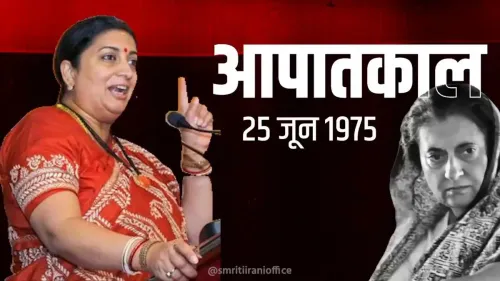
Nabin traced the Emergency's origin to 12 June 1975 , when the Allahabad High Court nullified Indira Gandhi's election.
He alleged that Press censorship , forced sterilisations , and the MISA law were used to suppress civil liberties during the Emergency.
Nabin claimed PM Modi , then a young Pracharak, evaded arrest and carried the resistance movement's message in disguise.
He demanded that the Congress offer an unconditional public apology for the Emergency, asking why it had not done so despite invoking the Constitution frequently.
The RSS and ABVP were credited with underground organising and student mobilisation during the 1975–77 period.
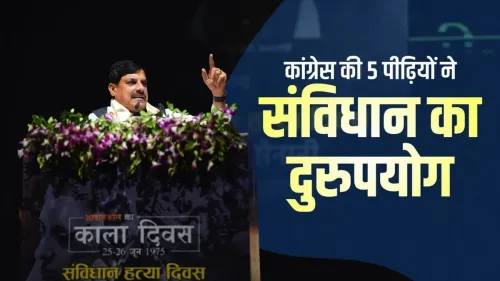
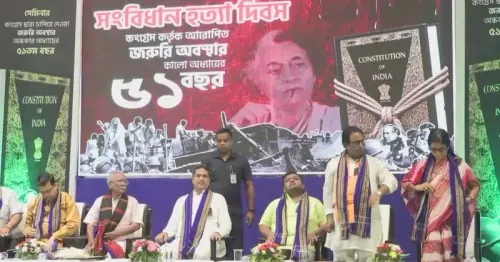
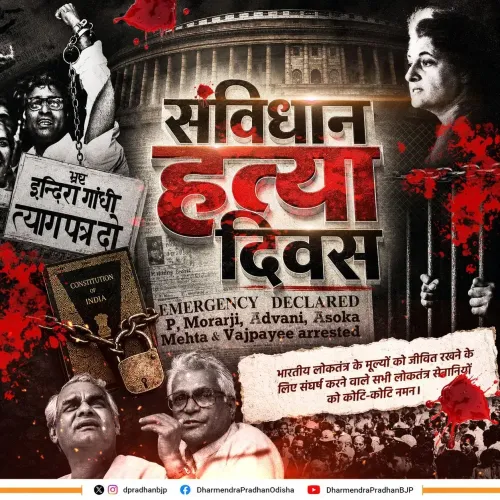
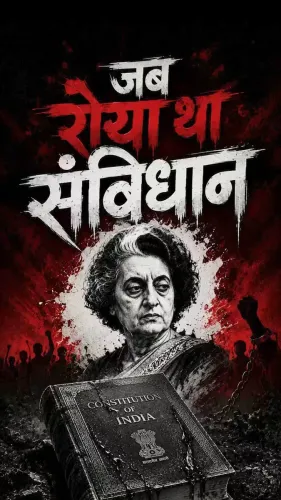
Bharatiya Janata Party (BJP) National President Nitin Nabin on Thursday, 25 June asserted that observing the date as 'Samvidhan Hatya Diwas' — Constitution Murder Day — corrects a long-standing historical injustice. He credited Prime Minister Narendra Modi with ensuring that the dark legacy of the Emergency is no longer consigned to the margins of public memory.
Nabin's Post on X and the Core Argument
Taking to social media platform X with the hashtag #SamvidhanHatyaDiwas, Nabin argued that the observance serves a dual purpose: it keeps alive the memory of what he described as a constitutional assault, and it reinforces the nation's commitment to democratic values. He traced the Emergency's origins to 12 June 1975, when the Allahabad High Court declared the election of then-Prime Minister Indira Gandhi null and void.
'To save the position of one individual, the freedom of the entire nation was held hostage, and an attempt was made to crush the constitutional values and democratic principles established by Babasaheb Dr. B.R. Ambedkar,' Nabin said.
What Happened During the Emergency
Nabin catalogued the measures imposed during the 1975–77 Emergency period, alleging that Press censorship, forced sterilisation drives, and the suspension of fundamental rights marked the era. He specifically cited the Maintenance of Internal Security Act (MISA) as a tool used to suppress civil liberties.
According to Nabin, prominent democratic voices were imprisoned during this period. 'Thousands of Democracy Warriors including Loknayak Jayaprakash Narayan, Atal Bihari Vajpayee, and L.K. Advani were thrown into prison,' he said. He also alleged that constitutional amendments were introduced to concentrate power and curtail judicial authority.
Modi's Role and RSS–ABVP Contributions
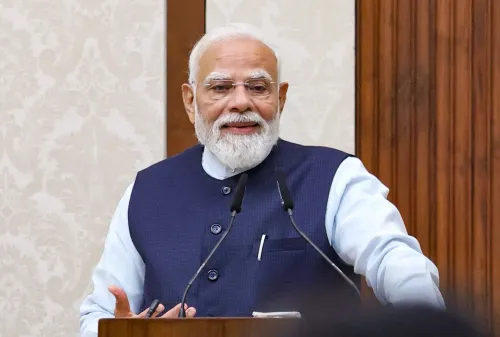
Nabin highlighted the role of Prime Minister Narendra Modi — then a young Pracharak — during the Emergency resistance, claiming he evaded arrest and 'while in disguise carried the message of the movement to many households.' He also credited the Rashtriya Swayamsevak Sangh (RSS) with running an underground network to defend democracy, and the Akhil Bharatiya Vidyarthi Parishad (ABVP) with mobilising student-led awareness campaigns.
Nabin noted that the Bharatiya Jana Sangh merged itself into the Janata Party during this period, which he described as an act of prioritising national interest over organisational identity.
BJP's Broadside Against Congress
Nabin directed sharp criticism at the Indian National Congress (Congress), accusing the party of attempting to recast itself as a defender of democratic institutions despite its role during the Emergency. 'Those who perpetrated the greatest assault on democracy are now attempting to position themselves as its self-proclaimed greatest defenders,' he alleged.
He also questioned the Congress's credibility on constitutional matters, asking why the party had never offered 'an unconditional apology to the nation for the Emergency.' He further alleged that the Opposition questions the Election Commission of India (ECI), Electronic Voting Machines (EVMs), and the judiciary whenever electoral or legal outcomes are unfavourable — a charge the Congress has consistently rejected.
Significance of Samvidhan Hatya Diwas
The Centre's decision to formally observe 25 June as Samvidhan Hatya Diwas was welcomed by Nabin as a corrective step. He argued that for decades, the contributions of those who resisted the Emergency were 'relegated to the margins of history.' The formal observance, he said, not only recalls the past but also strengthens the resolve to remain 'ever-vigilant' in safeguarding the Constitution, democracy, and civil liberties.
As political parties mark the 50th anniversary of the Emergency's imposition, the debate over its legacy — and who owns the narrative — is set to intensify through the political calendar ahead.
Point of View
The party is constructing a legitimacy arc — resistance fighter to Prime Minister — that is difficult for opponents to dislodge. The demand for a Congress apology, repeated annually, serves a strategic purpose: it keeps the Opposition perpetually on the defensive about its own history rather than the government's present record. What mainstream coverage often misses is that this framing also quietly delegitimises any future Opposition invocation of constitutional values, pre-emptively branding such appeals as hypocritical. The historical facts of the Emergency are not in dispute; the contest is entirely over who controls their political resonance in 2025 and beyond.
NationPress
24 Sept 2026
Frequently Asked Questions
What is Samvidhan Hatya Diwas and why is it observed on June 25?
Samvidhan Hatya Diwas, meaning 'Constitution Murder Day,' is observed on 25 June to mark the anniversary of the Emergency imposed in 1975 by then-Prime Minister Indira Gandhi. The Centre, under PM Narendra Modi, designated this date to commemorate those who resisted the Emergency and to reinforce the country's commitment to constitutional democracy.
What did BJP president Nitin Nabin say about the Emergency on June 25, 2025?
Nitin Nabin said the Emergency represented a direct assault on democracy, alleging that Press censorship, forced sterilisations, and the MISA law were used to crush civil liberties. He credited PM Modi's decision to observe the date as 'Samvidhan Hatya Diwas' as an act of historical justice for those whose resistance was long overlooked.
Why is the BJP demanding an apology from Congress over the Emergency?
The BJP argues that Congress, which imposed the Emergency in 1975, has never offered an unconditional public apology for suspending fundamental rights and imprisoning political opponents. Nabin questioned the Congress's credibility in invoking constitutional values without first acknowledging what he called 'the murder of democracy.'
What role did PM Modi reportedly play during the 1975 Emergency?
According to BJP president Nitin Nabin, a young Narendra Modi — then a Pracharak — evaded arrest during the Emergency and, while in disguise, carried the message of the democratic resistance movement to households across the country. These claims are part of the BJP's broader narrative about the party's role in opposing the Emergency.
Which leaders were imprisoned during the 1975 Emergency, according to Nitin Nabin?
Nabin cited Loknayak Jayaprakash Narayan, Atal Bihari Vajpayee, and L.K. Advani among thousands of 'Democracy Warriors' he said were imprisoned during the Emergency. He also credited the RSS with underground organising and the ABVP with student mobilisation during the 1975–77 period.