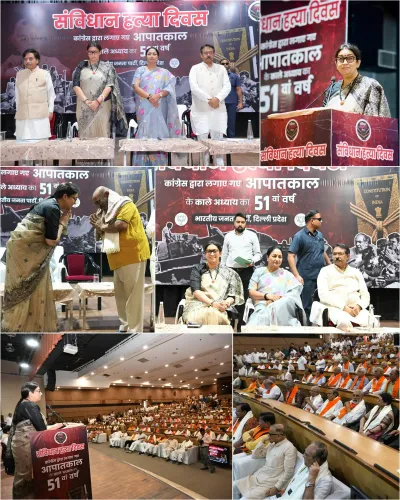
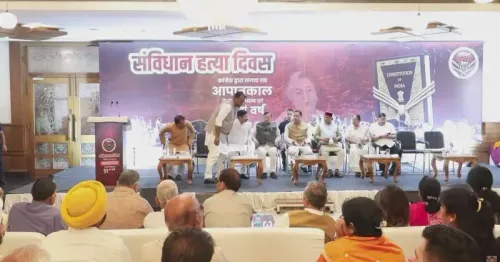
Smriti Irani marks Samvidhan Hatya Diwas, calls India immortal
Synopsis
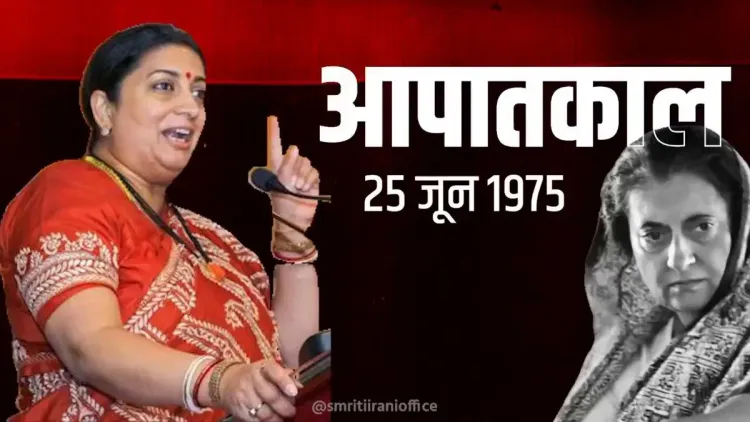
BJP leader Smriti Irani marked Samvidhan Hatya Diwas on 25 June 2026 with a post declaring 'India is Immortal,' invoking the 51-year anniversary of the 1975 Emergency and the BJP's annual campaign to highlight the suspension of constitutional rights under Indira Gandhi.
Key Takeaways
Smriti Irani posted 'India is Immortal' on 25 June 2026 using the hashtag #SamvidhanHatyaDiwas .
The date marks the 51st anniversary of the 1975 Emergency proclaimed under Article 352 of the Constitution.
The 21-month Emergency suspended fundamental rights, imposed press censorship, and led to detention of opposition leaders without trial.
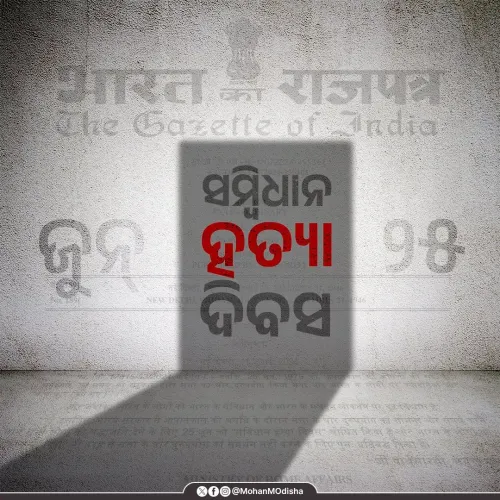
The BJP has institutionalised 25 June as Samvidhan Hatya Diwas to frame the Emergency as a cautionary episode in India's democratic history.
The observance is part of a wider pattern of historical memory politics in which parties use constitutional anniversaries to differentiate their governance records.
BJP leader Smriti Irani, former Union Minister of Women & Child Development and Minority Affairs, invoked India's constitutional resilience on 25 June 2026, posting 'India is Immortal' alongside the hashtag #SamvidhanHatyaDiwas — the BJP's designation for the anniversary of the 1975 Emergency.
Context
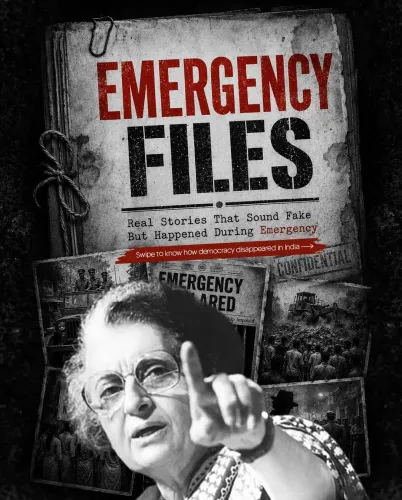
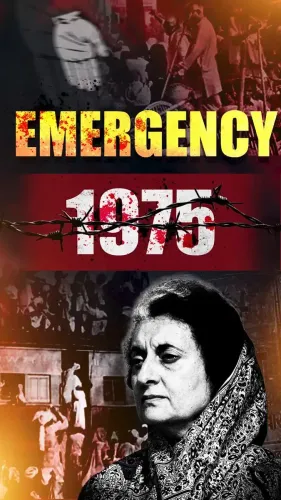
The date 25 June marks the night in 1975 when, on the advice of then Prime Minister Indira Gandhi, the President of India proclaimed a national Emergency under Article 352 of the Constitution. The 21-month Emergency suspended fundamental rights, imposed press censorship, and saw opposition leaders detained without trial — a period widely described across party lines as a dark chapter in Indian democracy.
Irani's post, brief but pointed, frames India's democratic character as having survived that suspension of constitutional norms. The phrase 'India is Immortal' positions the nation's constitutional identity as enduring beyond any single political episode.
Policy Backdrop
The Bharatiya Janata Party has institutionalised 25 June as Samvidhan Hatya Diwas — loosely translated as 'Constitution Murder Day' — to highlight the Emergency as a cautionary episode in India's democratic history. Senior BJP leaders have marked the date annually, using it to draw a contrast between their party's stated commitment to constitutional governance and what they describe as the Congress party's record of undermining democratic norms.
The Constitution of India, adopted in 1950, enshrines fundamental rights that were effectively suspended during the Emergency under Articles 352 to 360. The BJP's annual observance forms part of a broader pattern of historical memory politics, in which constitutional anniversaries are deployed to differentiate governance records and ideological commitments.
Stakeholders and Impact
For Indian citizens, the Emergency anniversary serves as a recurring public conversation about the limits of executive power and the safeguards built into the Constitution. Civil society groups, legal scholars, and opposition parties each engage with the date from distinct vantage points — some emphasising the BJP's own record on democratic norms, others joining in the condemnation of the 1975 episode.
For the Congress party, the annual BJP commemoration represents a sustained political challenge, requiring it to reckon publicly with a period that most of its own leaders have acknowledged as an error. Irani, as a senior BJP voice with a national profile, amplifies the message beyond intra-party circles to a wider social media audience.
What's Next
Future 25 June commemorations are likely to see continued and possibly expanded participation from BJP leaders, with potential references in Parliament to emergency provisions and calls for legislative safeguards against their misuse. As India's democratic institutions face scrutiny from multiple directions, the annual Samvidhan Hatya Diwas observance is expected to remain a fixture of the BJP's political calendar — and a flashpoint in the broader contest over India's constitutional memory.
Point of View
Three-word declaration — 'India is Immortal' — is a studied act of political brevity: it lets the hashtag carry the polemical weight while the post itself remains above direct attack. The annual BJP commemoration of Samvidhan Hatya Diwas has evolved from a party-internal ritual into a mainstream political signal, designed to keep the Emergency's memory alive as a liability for the Congress. By framing constitutional resilience rather than Congress culpability as the headline, Irani adopts a tone that is harder to dismiss as partisan. The broader arc is one of competing constitutional narratives — a contest that is likely to intensify as India approaches elections and parties seek to define whose democratic credentials are more credible.
NationPress
24 Sept 2026
Frequently Asked Questions
What is Samvidhan Hatya Diwas?
Samvidhan Hatya Diwas, meaning 'Constitution Murder Day,' is the BJP's designation for 25 June , the anniversary of the 1975 Emergency proclaimed by then Prime Minister Indira Gandhi , during which fundamental rights were suspended for 21 months .
Why did Smriti Irani post 'India is Immortal' on 25 June 2026?
Smriti Irani posted 'India is Immortal' to mark Samvidhan Hatya Diwas , affirming India's constitutional resilience on the anniversary of the 1975 Emergency , which the BJP frames as an attack on democratic and constitutional norms.
What happened during the 1975 Emergency in India?
On 25 June 1975 , the President of India proclaimed a national Emergency under Article 352 on the advice of Prime Minister Indira Gandhi . Over the following 21 months , fundamental rights were suspended, the press was censored, and opposition leaders were detained without trial.
Does the BJP observe 25 June every year?
Yes. The Bharatiya Janata Party has marked 25 June as Samvidhan Hatya Diwas annually, with senior leaders using the occasion to highlight the Emergency as a cautionary episode and to contrast the party's stated commitment to constitutional governance.
What is Article 352 of the Indian Constitution?
Article 352 empowers the President of India to proclaim a national Emergency if the security of India or any part of it is threatened by war, external aggression, or armed rebellion. Its use in 1975 remains the most contested invocation of emergency powers in India's constitutional history.