Bommai: Congress Betrayed Karnataka on Women's Reservation for DMK
Synopsis
BJP's Basavaraj Bommai accused Congress of surrendering Karnataka's interests on women's reservation and delimitation to appease DMK. He warned that population-based delimitation could cost southern states seats, and proposed Karnataka's Lok Sabha count rise from 28 to 42 via a proportional formula — exposing a deep fault line in the INDIA bloc.
Key Takeaways
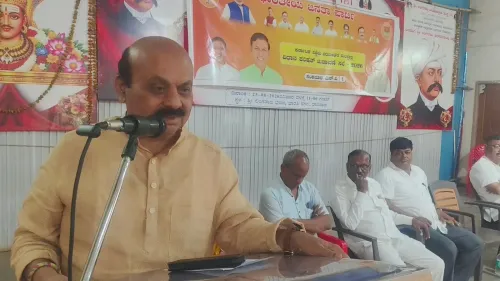
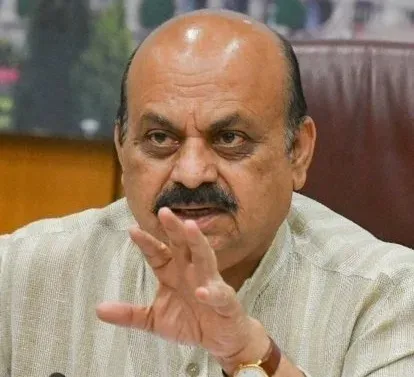
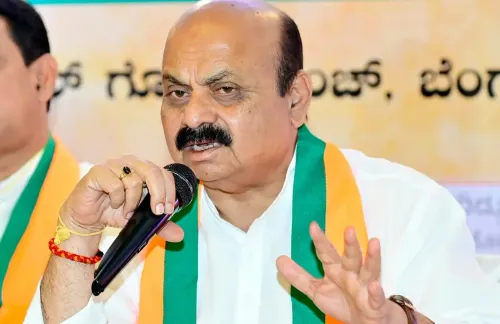
Basavaraj Bommai , former Karnataka CM and BJP MP , accused Congress of sacrificing Karnataka's interests on women's reservation to appease the DMK , speaking in Haveri on April 23 .
The 2023 constitutional amendment promises 33% reservation for women in Parliament and assemblies, but implementation is tied to the next Census and fresh delimitation.
Bommai argued that Karnataka's Lok Sabha seats could increase from 28 to 42 through a proportional delimitation formula, without relying purely on population data.
He credited late CM Ramakrishna Hegde and H.D.
Deve Gowda — not Congress — with pioneering women's reservation in Karnataka, and cited Dr.
Ambedkar's advocacy for women in legislatures.
Bommai warned that a population-based delimitation would repeat the injustice of the 1971 Census freeze imposed during the Emergency , which already disadvantaged southern states for decades.
He urged CM Siddaramaiah to consult experts, build cross-party consensus, and support the women's reservation amendment in Karnataka's and women's long-term interest.
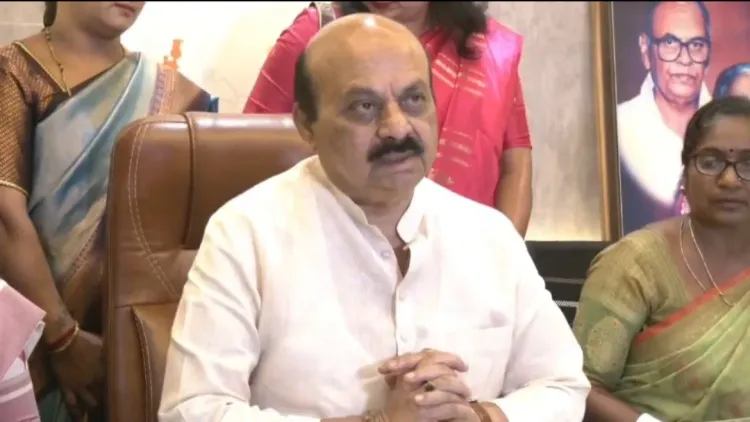
Haveri, April 23: Senior BJP leader and former Karnataka Chief Minister Basavaraj Bommai launched a sharp attack on Chief Minister Siddaramaiah and the Congress on Thursday, alleging that Karnataka's interests on women's reservation and constituency delimitation have been deliberately sacrificed to appease the Dravida Munnetra Kazhagam (DMK). Speaking at a press conference in Haveri, Bommai urged Siddaramaiah to consult policy experts, reconsider his position, and persuade the Congress high command to back what he called a once-in-a-generation democratic reform.
Karnataka's Historic Role in Women's Reservation
Bommai was categorical in rejecting Siddaramaiah's claim that Congress pioneered women's reservation in India. He pointed out that Karnataka was among the earliest states to introduce such a policy — a milestone achieved under the tenure of the late Chief Minister Ramakrishna Hegde, who simultaneously championed decentralisation of power.
The reservation framework was further strengthened in 1993 under H.D. Deve Gowda, and nationally codified through the 73rd Constitutional Amendment in 1994 under the P.V. Narasimha Rao-led Union government, which mandated reservations for women in local bodies across the country.
Bommai also invoked the legacy of Dr. B.R. Ambedkar, noting that the architect of the Indian Constitution had himself advocated for women's representation in legislatures while introducing the Hindu Code Bill — a historical fact that undercuts any singular claim of credit by the Congress.
The 2023 Amendment and the Delimitation Fault Line
At the heart of the current controversy is the 2023 constitutional amendment passed by the Union government, which provides 33 per cent reservation for women in Parliament and state assemblies, alongside a proposal to increase Lok Sabha and Assembly seats by 50 per cent. The implementation is linked to the completion of the next Census and a fresh delimitation exercise.
Bommai warned that this linkage is precisely where southern states like Karnataka face a structural disadvantage. A delimitation based on post-Census population data would likely benefit states with higher population growth — predominantly in the north — at the expense of southern states that have performed better on family planning and demographic management.
He argued that the original delimitation freeze based on the 1971 Census — put in place during the Emergency era — had already penalised southern states for decades. Repeating that model with fresh population-based delimitation, he cautioned, would compound historical injustice.
Karnataka's Seat Count: The Numbers at Stake
Bommai presented a specific counter-proposal: if delimitation follows a proportional approach rather than a strict population-based formula, Karnataka's Lok Sabha seats could increase from the current 28 to 42. This figure, he argued, is both fair and achievable without disproportionately rewarding states that failed to control population growth.
He also flagged the constitutional mechanics involved — any such amendment requires a two-thirds majority in Parliament. Bommai noted that such a majority existed during Rajiv Gandhi's tenure but the opportunity was not utilised, calling it a missed chance that history should not repeat.
Congress-DMK Alliance Under the Microscope
The sharpest political charge from Bommai was directed at what he described as Congress's capitulation to DMK pressure. The DMK, a key ally of Congress in the INDIA bloc, has been vocal in opposing delimitation reforms it perceives as threatening Tamil Nadu's political influence in Parliament.
Critics, including Bommai, argue that by aligning with DMK's resistance, Congress has effectively chosen alliance arithmetic over the democratic rights of women and the legitimate interests of Karnataka. This contradiction — a party that claims to champion women's empowerment blocking a reform that would enhance female representation — is one that Bommai was keen to highlight before the electorate.
He urged Siddaramaiah to rise above coalition compulsions, build cross-party consensus, and support the amendment in the interest of both women's political representation and Karnataka's long-term future in national politics.
What Comes Next
The political battle over women's reservation and delimitation is expected to intensify as India approaches its next Census — delayed significantly from its scheduled 2021 timeline due to the pandemic. The outcome of the Census will directly determine the timeline for implementing the 2023 Women's Reservation Act. For Karnataka, the stakes are high: both in terms of women's representation and the state's seat count in a future, expanded Parliament. All eyes will now be on whether Siddaramaiah responds to Bommai's challenge or continues to align with the DMK's position.
Point of View
Simply to keep a regional ally comfortable? The DMK's opposition to delimitation is understandable from Tamil Nadu's narrow political calculus, but Congress's silence on Karnataka's seat-count concerns reveals the price smaller alliance partners pay when big-state allies call the shots. Historically, southern states have been penalised for responsible governance — better demographic management, stronger development indices — yet receive fewer parliamentary seats. If this reform is delayed or diluted, it won't just be women who lose representation; it will be a structural setback for every state that played by the rules.
NationPress
21 Oct 2026
Frequently Asked Questions
What is Basavaraj Bommai's allegation against Congress on women's reservation?
Bommai alleged that Chief Minister Siddaramaiah and the Congress have compromised Karnataka's interests on women's reservation and delimitation to appease their ally, the DMK. He accused Congress of missing a historic opportunity to support a constitutional amendment providing 33 percent reservation for women in legislatures.
What is the 2023 Women's Reservation Act and when will it be implemented?
The 2023 constitutional amendment provides 33 percent reservation for women in the Lok Sabha and state assemblies, along with a 50 percent increase in total seats. Implementation is linked to the completion of the next Census and a fresh delimitation exercise, making the timeline uncertain.
How does delimitation affect Karnataka's Lok Sabha seats?
Bommai warned that population-based delimitation would disadvantage southern states like Karnataka, which have better managed population growth. He proposed a proportional approach that could increase Karnataka's Lok Sabha seats from 28 to 42 without relying solely on population figures.
Who first introduced women's reservation in Karnataka?
Bommai stated that Karnataka was among the first states to introduce women's reservation, a policy initiated under late Chief Minister Ramakrishna Hegde and later strengthened in 1993 under H.D. Deve Gowda. He rejected Congress's claim of being the pioneer of women's reservation.
Why is the DMK opposed to delimitation reforms?
The DMK opposes delimitation based on new Census data because it fears Tamil Nadu — a state with lower population growth — would lose parliamentary influence to more populous northern states. This position has put Congress in a difficult spot, as it must balance DMK's concerns against the interests of other allies like Karnataka.