Buddha Nullah pollution: Punjab must act on NGT orders, says RS MP Sahney

Synopsis
All four effluent treatment plants in Ludhiana have been found non-compliant by the CPCB, and the NGT has already slammed the dyeing industry for 'years of unchecked pollution and institutional failure.' With ₹21.18 crore in penalties imposed and a high-level committee constituted, the real question is whether Punjab can finally move from orders on paper to clean water on the ground.
Key Takeaways
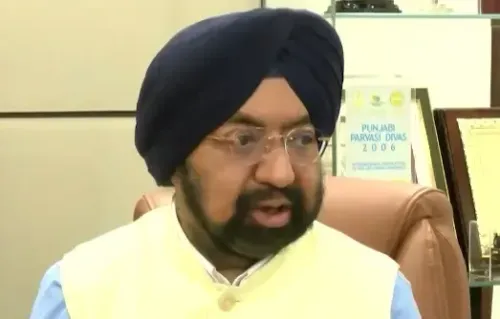
Rajya Sabha MP Vikramjit Singh Sahney on 24 July urged the Punjab government to enforce strict compliance to curb pollution in Buddha Nullah , Ludhiana .
The Ministry of Environment, Forest and Climate Change confirmed in a parliament reply that all four CETPs in Ludhiana are non-compliant with discharge standards.
The CPCB has directed the PPCB to stop discharge of untreated effluents into Buddha Nullah .
The PPCB has imposed environmental compensation of approximately ₹21.18 crore on violating units under the Polluter Pays Principle .
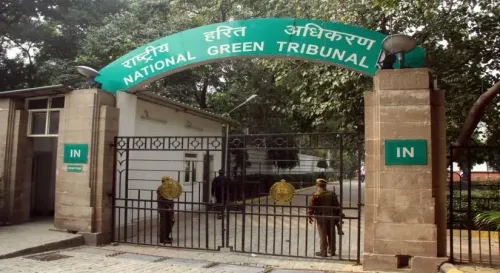
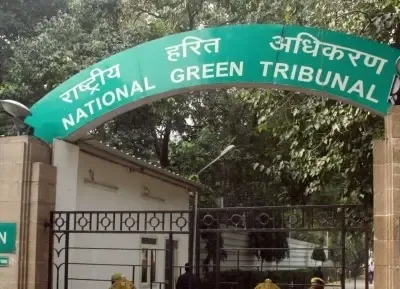
The NGT in 2025 condemned the dyeing industry for 'years of unchecked pollution and institutional failure' and ordered a comprehensive CETP violation report.
Sahney has called for a time-bound action plan with measurable milestones from the state government's newly constituted high-level committee.
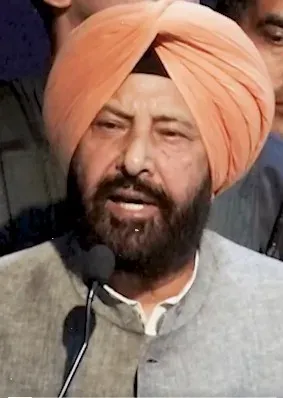
Rajya Sabha member Vikramjit Singh Sahney on Friday, 24 July called on the Punjab government to enforce strict compliance measures to curb the worsening pollution in Buddha Nullah, one of the most contaminated tributaries of the Sutlej river flowing through the industrial city of Ludhiana. Sahney's remarks followed a reply he received from the Ministry of Environment, Forest and Climate Change to his parliament question, which underscored the gravity of the situation and the urgent need for stronger state-level action.
What the Ministry Reply Revealed
The ministry's response confirmed that the National Green Tribunal (NGT), in an order dated 13 January, directed the Punjab Pollution Control Board (PPCB) to impose and recover environmental compensation from industries found to be in default. According to the reply, repeated inspections by the Central Pollution Control Board (CPCB) found all four common effluent treatment plants (CETPs) in Ludhiana to be non-compliant with prescribed discharge standards. Following these findings, the CPCB issued directions to the PPCB to halt the discharge of untreated effluents into Buddha Nullah.
Compensation Imposed, but Compliance Elusive
Sahney welcomed the Punjab government's decision to constitute a high-level committee to address the issue. He also noted that the PPCB has imposed environmental compensation of approximately ₹21.18 crore on violating industrial units under the 'Polluter Pays Principle'. However, he stressed that financial penalties alone are insufficient without a clear, time-bound roadmap for remediation.
He urged the state government to ensure the high-level committee submits an action plan with measurable milestones, clearly defined responsibilities, and firm implementation timelines, alongside periodic progress reviews. 'The rejuvenation of Buddha Nullah can no longer be delayed,' Sahney said, calling for tangible results on the ground.
NGT's Sharp Rebuke of the Dyeing Industry
The NGT, in a 2025 order, had sharply criticised the dyeing industry in Ludhiana for what it described as 'years of unchecked pollution and institutional failure.' The tribunal had directed the PPCB to submit a comprehensive report on CETP violations, along with detailed environmental compensation calculations and recovery status — a directive whose full implementation remains pending, according to reports.
Why Buddha Nullah Matters
Buddha Nullah, a seasonal stream that passes through the heart of Ludhiana, has long been a flashpoint for environmental and public health concerns. Industrial effluents — particularly from the city's dyeing and textile clusters — have severely degraded water quality, with downstream impact on the Sutlej river and communities dependent on it. This is not the first time the issue has reached parliament or the courts; the NGT has been seized of the matter for several years, making the continued non-compliance of CETPs a particularly stark indictment of enforcement gaps.
What Comes Next
The focus now shifts to whether the Punjab government's high-level committee will deliver a credible action plan within a defined timeframe. Industry bodies, environmental groups, and residents of Ludhiana will be watching closely. With the NGT already on record demanding accountability, further delays risk fresh judicial intervention and steeper penalties for the state and its industrial units.
Point of View
The CPCB inspects, the PPCB imposes fines, and the effluents keep flowing. The fact that all four CETPs in Ludhiana remain non-compliant — despite years of tribunal oversight — points to a structural enforcement failure, not a knowledge gap. The ₹21.18 crore in penalties sounds significant, but if industries calculate that paying compensation is cheaper than investing in compliant treatment infrastructure, the Polluter Pays Principle becomes a licence to pollute at a price. The high-level committee is a welcome step, but Punjab has constituted committees before. What is missing is an independent, publicly verifiable monitoring mechanism with consequences for state officials — not just industries — when deadlines slip.
NationPress
23 Oct 2026
Frequently Asked Questions
What is Buddha Nullah and why is it polluted?
Buddha Nullah is a seasonal stream running through Ludhiana, Punjab, and one of the most polluted tributaries of the Sutlej river. Decades of untreated industrial effluent discharge — primarily from the city's dyeing and textile sector — have severely degraded its water quality, with cascading impact on downstream communities and the Sutlej itself.
What did the NGT order regarding Buddha Nullah?
The National Green Tribunal, in an order dated 13 January, directed the Punjab Pollution Control Board to impose and recover environmental compensation from defaulting industries. In a separate 2025 order, the NGT criticised the dyeing industry for 'years of unchecked pollution and institutional failure' and ordered a comprehensive report on CETP violations and compensation recovery.
Why are Ludhiana's effluent treatment plants under scrutiny?
Repeated inspections by the Central Pollution Control Board found all four common effluent treatment plants in Ludhiana to be non-compliant with prescribed discharge standards. As a result, the CPCB directed the PPCB to stop the discharge of untreated effluents into Buddha Nullah.
How much environmental compensation has been imposed on violating industries?
The Punjab Pollution Control Board has imposed environmental compensation of approximately ₹21.18 crore on industrial units found to be in violation, under the Polluter Pays Principle. Rajya Sabha MP Vikramjit Singh Sahney welcomed this step but called for a broader time-bound action plan.
What has MP Vikramjit Singh Sahney demanded from the Punjab government?
Sahney has urged the Punjab government to ensure its newly constituted high-level committee submits a time-bound action plan with measurable milestones, clearly defined responsibilities, and periodic progress reviews, so that the rejuvenation of Buddha Nullah produces tangible results without further delay.