Nadda: Cabinet approves ₹11,000 crore CIE manufacturing scheme
Synopsis
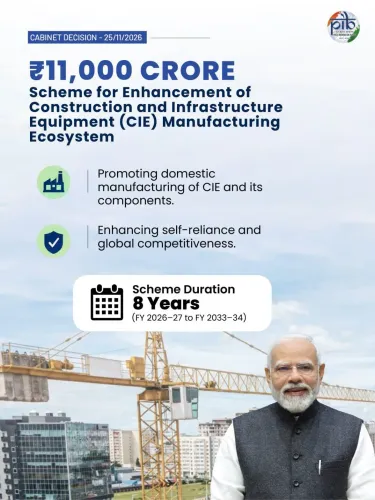
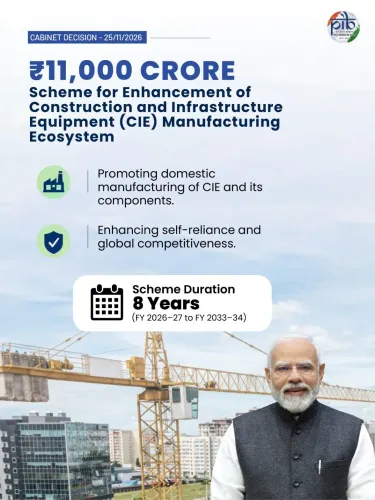
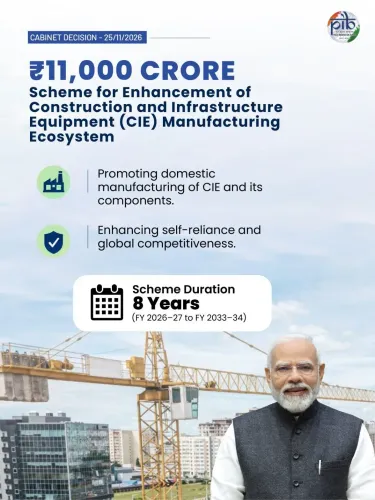
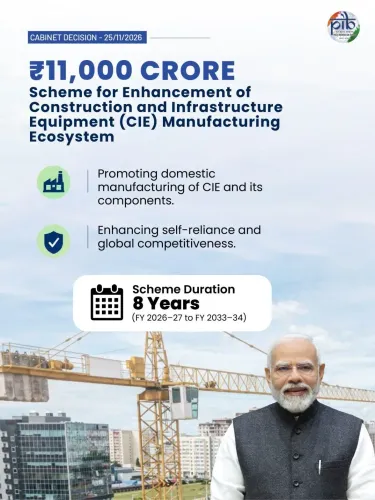
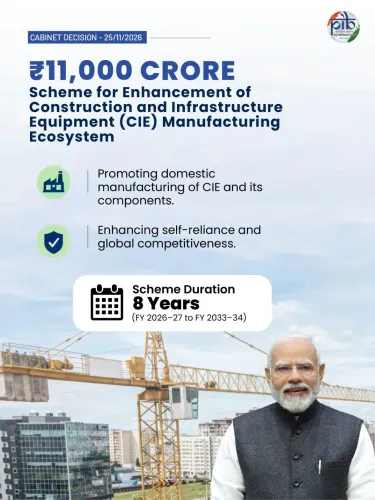
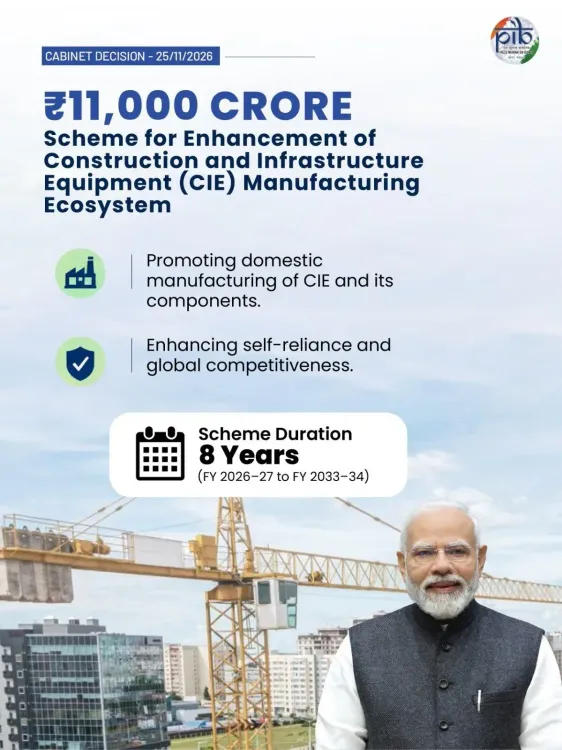
Union Health Minister J. P. Nadda said the Union Cabinet, chaired by Prime Minister Narendra Modi, has approved an ₹11,000 crore scheme to expand domestic construction and infrastructure equipment manufacturing, strengthen component production, and set up a dedicated testing facility, tying the move to Atmanirbhar Bharat and Viksit Bharat@2047.
Key Takeaways
Union Health Minister J.
Nadda said the Union Cabinet chaired by Prime Minister Narendra Modi has approved an ₹11,000 crore CIE manufacturing scheme.
The Scheme for Enhancement of Construction and Infrastructure Equipment Manufacturing Ecosystem targets advanced equipment, stronger component manufacturing, and a dedicated testing facility in India.
Nadda linked the Cabinet decision to Atmanirbhar Bharat and the Viksit Bharat@2047 goal of positioning India as a global hub for such equipment.
The announcement sits in the lineage of Make in India (2014) and Production Linked Incentive schemes from 2020 onward.
Scheme guidelines, the testing-facility timeline, and later budget or industry participation details were not spelled out in the post.
₹11,000 crore is now the number attached to India's next big bet on the machines that build everything else. Union Health Minister J. P. Nadda said on 25 November 2026 that the Union Cabinet, chaired by Prime Minister Narendra Modi, has approved the Scheme for Enhancement of Construction and Infrastructure Equipment (CIE) Manufacturing Ecosystem — targeting advanced equipment made at home, a thicker component base, and a dedicated testing facility on Indian soil.
In a post on X, Nadda called the decision a landmark for Atmanirbhar Bharat and for Viksit Bharat@2047. The scheme, he wrote, aims to 'boost domestic manufacturing of advanced construction and infrastructure equipment, strengthen component manufacturing, and establish a state-of-the-art dedicated testing facility in India,' positioning the country as a global hub for the sector.
What the ₹11,000 crore CIE scheme sets out to do
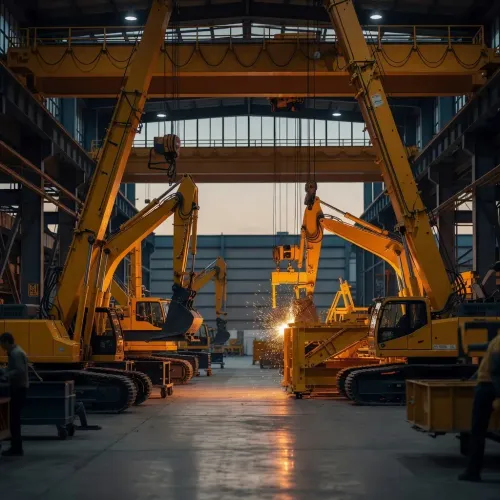
Construction and infrastructure equipment sits at the hinge of every highway, metro, port and housing project. Import those machines and their parts, and costs, delays and technology dependence travel with them. The Cabinet-backed scheme, as Nadda outlined it, aims at three linked gaps at once: finished advanced equipment, the component ecosystem behind it, and a test bed that can certify machines without sending them abroad.
He framed the outlay as industrial strategy, not a ceremonial grant. Domestic manufacturing. Stronger components. A dedicated facility. That is a supply-chain argument dressed as a Cabinet decision — and it lands in a country still pouring concrete at a ferocious pace.
Make in India, PLI and the self-reliance spine
The CIE push sits on a familiar policy spine. Make in India, launched in 2014, set the manufacturing-first tone. From 2020, Production Linked Incentive schemes poured targeted support into sectors where India wanted factories, not just demand. Atmanirbhar Bharat, also from 2020, recast that effort as self-reliance after supply-chain shocks made import dependence a live risk.
Viksit Bharat@2047 is the destination those instruments now point toward: a developed economy by the centenary of Independence. Nadda tied the CIE approval to both Atmanirbhar Bharat and that 2047 vision. CIE manufacturers would be the ones to expand capacity; infrastructure developers are the ones who need the machines on site.
Guidelines, timelines and the dedicated test bed
A Cabinet nod is the starting gun, not the finished rulebook. Still to land are scheme guidelines — who qualifies, how incentives are designed, how component makers sit beside original equipment manufacturers — and a timeline for the dedicated testing facility, along with later budget allocations or industry participation.
Until those details arrive, the figure that travels is the one Nadda put on the table: ₹11,000 crore, aimed at the machines that literally build the rest of the economy.
If India wants roads, rails and cities at Viksit Bharat speed, it will need the cranes and earthmovers to match — and a factory floor, not just a purchase order, to produce them.
Point of View
And import dependence here leaks both foreign exchange and project time. Nadda's framing — Atmanirbhar Bharat plus Viksit Bharat@2047 — is the government's standard coupling of self-reliance to a 2047 developed-economy story. The test of the ₹11,000 crore outlay will be whether guidelines and a working test facility convert the Cabinet nod into factories and certified machines, not just a headline.
NationPress
25 Nov 2026
Frequently Asked Questions
What is the CIE manufacturing scheme announced by J. P. Nadda?
The Scheme for Enhancement of Construction and Infrastructure Equipment (CIE) Manufacturing Ecosystem is an ₹11,000 crore programme Nadda said the Union Cabinet has approved to boost domestic manufacturing of advanced construction and infrastructure equipment, strengthen component manufacturing, and set up a dedicated testing facility in India. He tied it to Atmanirbhar Bharat and Viksit Bharat@2047.
How much has the Cabinet approved for the CIE scheme?
The Union Cabinet has approved ₹11,000 crore for the CIE manufacturing ecosystem scheme, according to Union Health Minister J. P. Nadda. He said the outlay is meant to deepen domestic manufacturing and help position India as a global hub for construction and infrastructure equipment.
What did Nadda say the dedicated testing facility would do?
Nadda said the scheme includes establishing a state-of-the-art dedicated testing facility in India for advanced construction and infrastructure equipment. A timeline and operating details for that facility were not set out in the announcement.
How does the CIE scheme relate to Atmanirbhar Bharat?
Nadda said the initiative will boost Atmanirbhar Bharat by strengthening domestic manufacturing of construction and infrastructure equipment and components. Atmanirbhar Bharat is the self-reliant India programme launched in 2020 to cut import dependence and expand local production.
Who chairs the Union Cabinet that approved the CIE scheme?
Prime Minister Narendra Modi chairs the Union Cabinet. Nadda said the Cabinet under Modi approved the ₹11,000 crore CIE manufacturing ecosystem scheme on 25 November 2026.