Cabinet Clears ₹23,731 Cr Bioenergy Scheme, Assam Highway
Synopsis
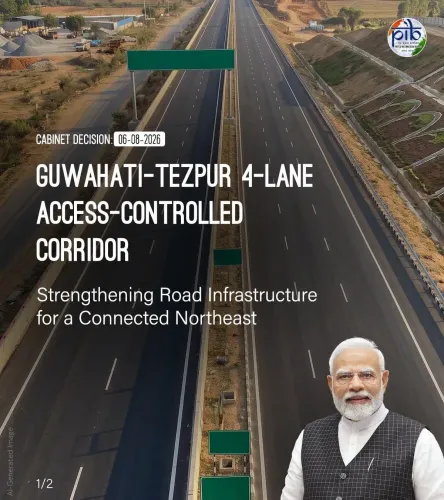
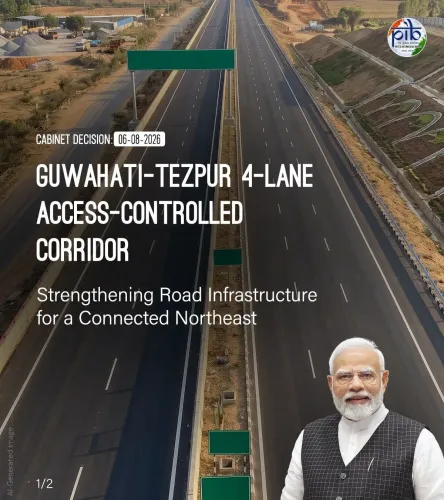
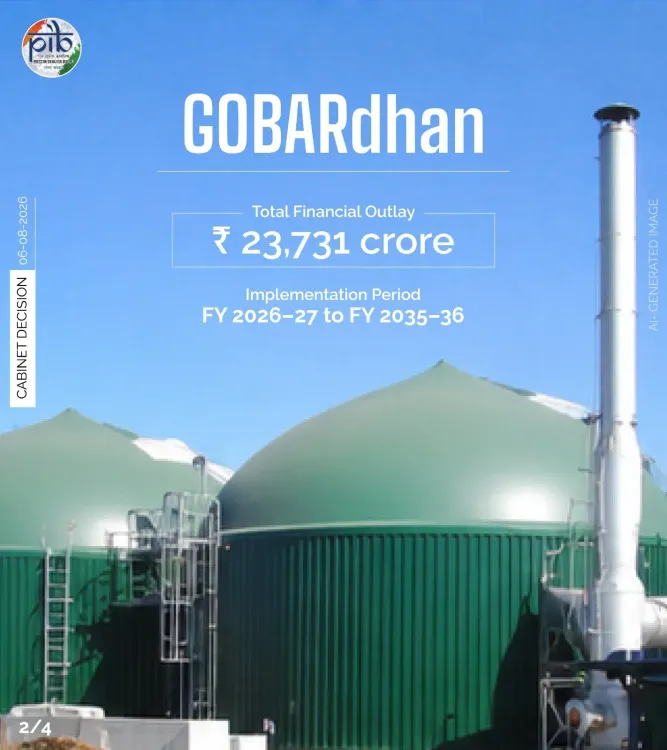
The Union Cabinet, chaired by PM Narendra Modi, has approved the ₹23,731 crore GOBARdhan National Circular Bioenergy Scheme (FY 2026-27 to 2035-36) and a ₹8,970 crore, 135.871 km four-lane Guwahati-Tezpur Corridor in Assam featuring a 4.9 km IAF emergency landing strip.
Key Takeaways
The GOBARdhan National Circular Bioenergy Scheme carries a total outlay of ₹23,731 crore and runs from FY 2026-27 to FY 2035-36 .
The scheme converts agricultural residue, cattle dung, and municipal organic waste into compressed biogas and organic manure , generating additional rural income.
The Guwahati-Tezpur Corridor spans 135.871 km on NH-15 in Assam at a cost of ₹8,970.20 crore under the BOT Toll model.
A 4.9 km Emergency Landing Facility on the Tezpur Bypass is being built in coordination with the Indian Air Force , adding strategic dual-use capability.
The corridor will ease congestion on NH-27 along the south bank of the Brahmaputra .
The combined outlay across both decisions exceeds ₹32,700 crore .
Two decisions out of Thursday's Union Cabinet meeting — one worth ₹23,731 crore, the other reshaping connectivity across the Brahmaputra valley — signal the government's simultaneous push on clean energy and strategic infrastructure. Union Power Minister Manohar Lal Khattar shared the approvals on 6 August 2026, detailing a sweeping bioenergy scheme and a landmark Northeast highway corridor cleared under Prime Minister Narendra Modi's chairmanship.
GOBARdhan reborn: a ₹23,731 crore circular economy bet
The Cabinet has approved the GOBARdhan National Circular Bioenergy Scheme with a total outlay of ₹23,731 crore, to run from FY 2026-27 to FY 2035-36. The scheme targets a supply chain that begins in a cattle shed or a paddy field and ends in a gas cylinder or a bag of organic manure — converting agricultural residue, cattle dung, municipal organic waste and other biomass into compressed biogas and fertiliser inputs for rural households.
The original GOBAR-DHAN initiative was launched in 2018 under the Swachh Bharat Mission as a modest push to support on-farm biogas units. The new scheme is a generational upgrade: a decade-long, nationally budgeted programme designed to anchor compressed biogas firmly within India's clean energy transition and circular economy framework. For farmers, the pitch is a third revenue stream — crop residue and dung that once went to waste or up in smoke now become tradeable commodities.
Guwahati to Tezpur in four lanes — with an airstrip built in
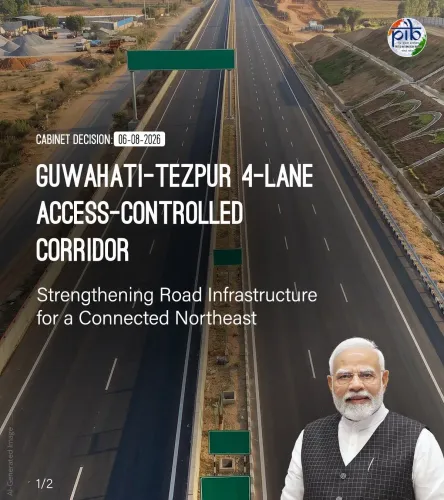
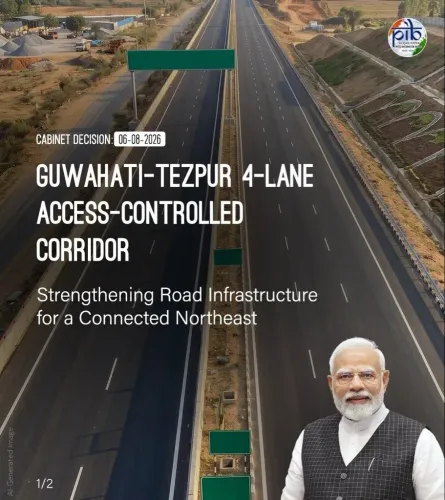
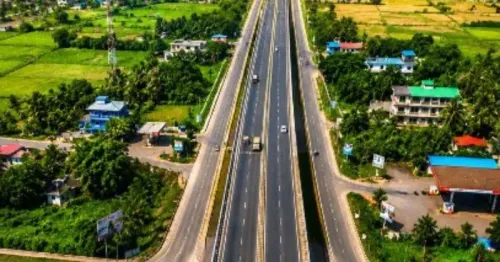
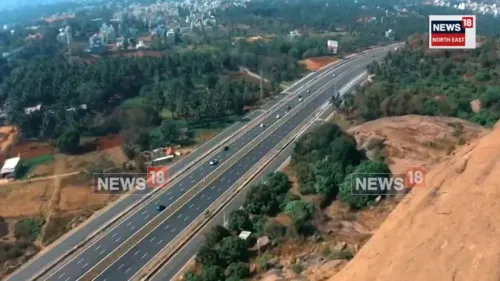
The second approval is the 135.871 km, four-lane access-controlled Guwahati-Tezpur Corridor on NH-15 in Assam, at a total cost of ₹8,970.20 crore, to be executed under the Build-Operate-Transfer (BOT) Toll model. The corridor runs along the south bank of the Brahmaputra, relieving chronic congestion on NH-27 — the artery that currently carries the bulk of traffic between Assam's commercial capital and the garrison town of Tezpur.
The project's most striking feature is a 4.9 km Emergency Landing Facility embedded in the Tezpur Bypass, developed in coordination with the Indian Air Force. Dual-use highway airstrips — stretches of road engineered to the tolerances of a military runway — have become a signature of India's Northeast infrastructure push, allowing fighter aircraft and transport planes to operate from road surfaces in emergencies. This corridor extends that doctrine deeper into Assam, improving both logistics for civilians and strategic reach for defence planners in a region that borders Bhutan, Arunachal Pradesh and, further north, China.
The Guwahati-Tezpur project fits within the Bharatmala Pariyojana framework, launched in 2015 to fast-track National Highway development through private capital via BOT toll models — meaning the concessionaire builds and operates the road, recovering costs through tolls over the concession period.
What the two decisions add up to
Taken together, the approvals reflect a pattern that has defined recent Cabinet sessions: pairing domestic rural economy interventions with hard infrastructure in strategically sensitive geographies. The bioenergy scheme addresses India's farm-waste and clean-cooking gaps; the Assam corridor addresses both civilian mobility and the military's need for redundant logistics routes in the Northeast. The combined outlay across both decisions crosses ₹32,700 crore.
The first test will come quickly — scheme rollout timelines, land acquisition notices for the corridor, and tender issuance will reveal whether the Cabinet's approvals translate into ground-level momentum before the financial year closes.
Point of View
731 crore standalone programme reflects the government's confidence in compressed biogas as a commercially viable clean-fuel pathway, not merely a welfare gesture. The Tezpur corridor's embedded airstrip, meanwhile, continues a doctrine of dual-use highway infrastructure that carries unmistakable signalling value given India's active border management concerns in the Northeast. Whether both decisions clear the execution bottlenecks — land acquisition, private concessionaire appetite, and phased disbursement — will determine if the announcements translate into lasting policy legacy.
NationPress
6 Aug 2026
Frequently Asked Questions
What is the GOBARdhan National Circular Bioenergy Scheme?
The GOBARdhan National Circular Bioenergy Scheme is a Cabinet-approved programme with a total outlay of ₹23,731 crore, running from FY 2026-27 to FY 2035-36, that converts agricultural residue, cattle dung, and municipal organic waste into compressed biogas and organic manure to support India's clean energy goals and generate additional rural income.
What is the Guwahati-Tezpur Corridor and why is it significant?
The Guwahati-Tezpur Corridor is a 135.871 km, four-lane access-controlled highway on NH-15 in Assam approved at a cost of ₹8,970.20 crore. It is significant because it eases congestion on NH-27 along the Brahmaputra's south bank and includes a 4.9 km Emergency Landing Facility developed with the Indian Air Force, giving it strategic dual-use capability.
What is the Emergency Landing Facility on the Tezpur Bypass?
The Emergency Landing Facility is a 4.9 km stretch of the Tezpur Bypass engineered to runway tolerances so that Indian Air Force aircraft can land and take off from the highway surface during emergencies, enhancing strategic connectivity in the Northeast.
How is the Guwahati-Tezpur highway being funded?
The corridor will be built under the Build-Operate-Transfer (BOT) Toll model, meaning a private concessionaire finances construction and recovers costs by collecting tolls from users over the concession period.
When will the GOBARdhan bioenergy scheme start?
The scheme is set to be implemented from FY 2026-27, with the full programme running through FY 2035-36.