Amit Shah backs ₹3,030 cr BHAVYA Rasayan Scheme for chemical parks
Synopsis
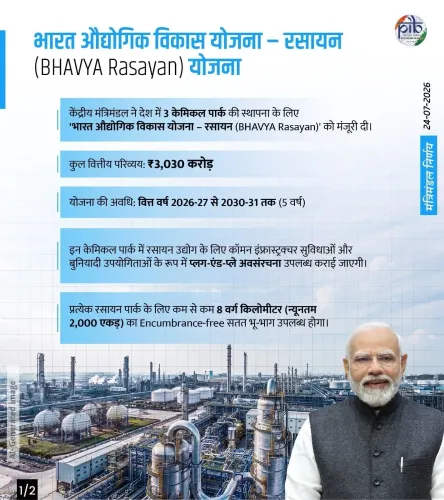
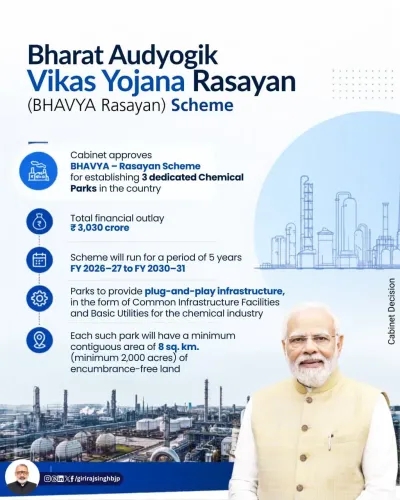
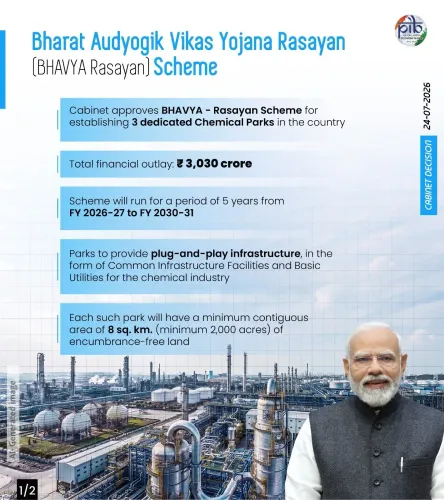
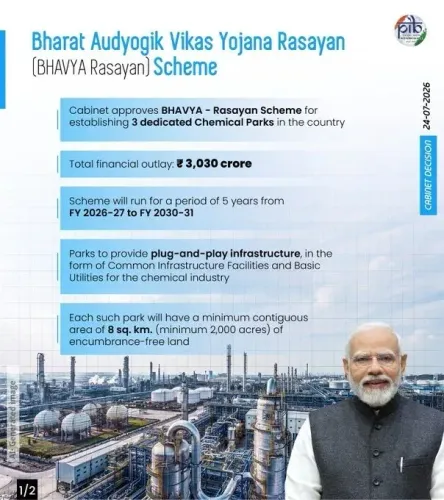
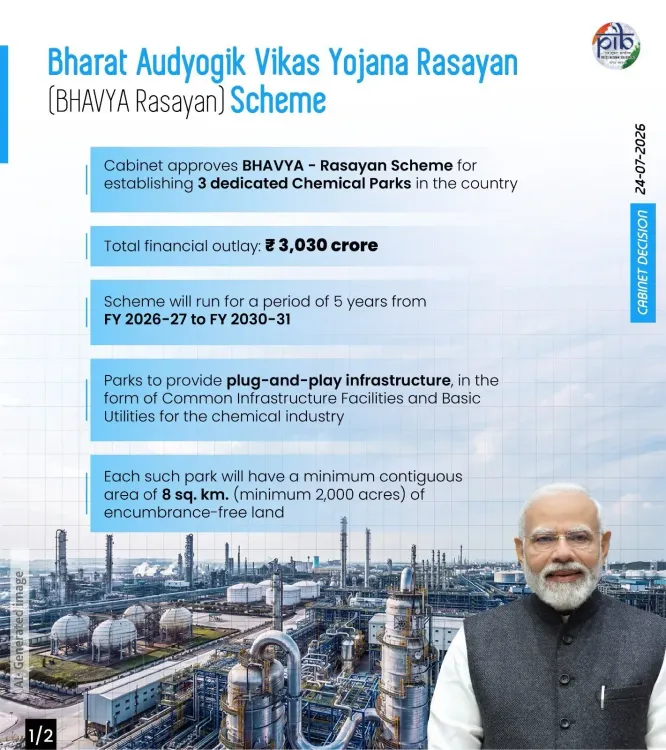
The Union Cabinet has approved the ₹3,030 crore BHAVYA Rasayan Scheme to set up three new chemical parks in India. Home Minister Amit Shah says the initiative will advance Atmanirbhar Bharat goals, strengthen global competitiveness, and generate large-scale employment for Indian youth.
Key Takeaways
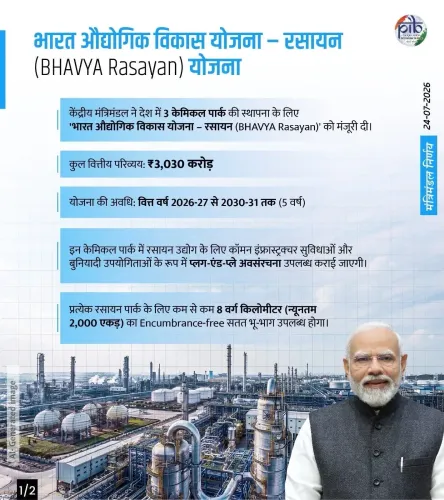
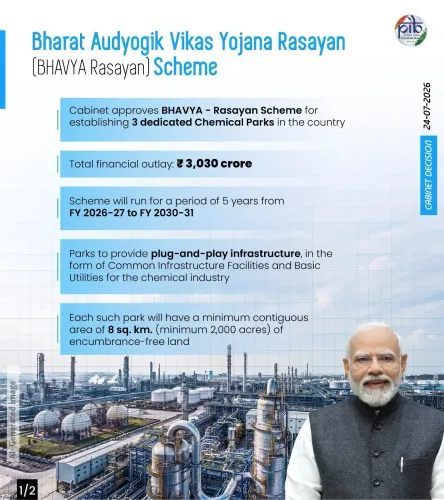
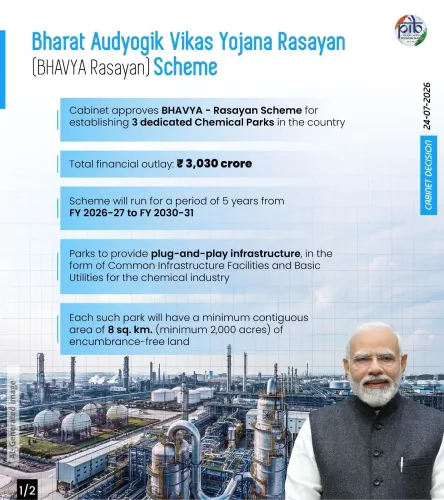
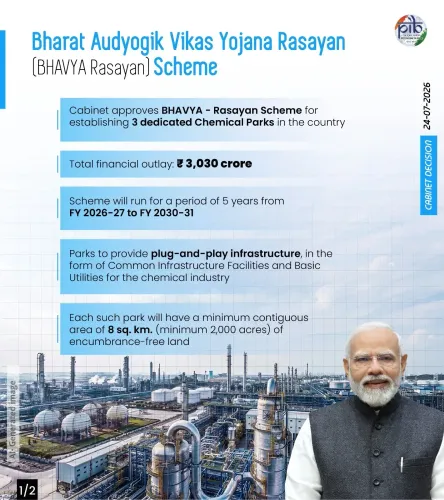
The Union Cabinet has approved the BHAVYA Rasayan Scheme with an outlay of ₹3,030 crore .
Three new chemical parks will be established under the scheme to strengthen India's manufacturing ecosystem.
Union Home Minister Amit Shah linked the scheme to the Atmanirbhar Bharat vision of Prime Minister Narendra Modi .
The scheme targets global competitiveness in chemical manufacturing and aims to reduce import dependence.
Large-scale employment generation for Indian youth is a stated primary objective of the scheme.
The initiative builds on earlier frameworks such as the PCPIR policy (2007) for integrated chemical clusters.
Union Home Minister Amit Shah on Friday, 24 July 2026 welcomed the Union Cabinet's approval of the ₹3,030 crore BHAVYA Rasayan Scheme, calling it a decisive step toward self-reliance in India's chemical manufacturing sector and a major source of employment for the country's youth.
Context
Posting on X, Shah said the scheme, cleared by the Union Cabinet, 'will accelerate India's journey towards self-reliance under Modi Ji's leadership.' He added that 'the proposed three new parks will strengthen our chemical manufacturing ecosystem and global competitiveness, spawning massive employment opportunities for the youth.' The statement positions the scheme squarely within the Atmanirbhar Bharat framework that Prime Minister Narendra Modi announced in May 2020 to reduce import dependence across key manufacturing sectors.
Policy Backdrop
India's push for dedicated chemical infrastructure has a longer lineage. The Petroleum, Chemicals and Petrochemicals Investment Regions (PCPIR) policy, notified in 2007, laid the groundwork for integrated chemical industry clusters designed to attract large-scale investment and anchor global supply chains. The BHAVYA Rasayan Scheme builds on this tradition by earmarking ₹3,030 crore for the creation of three new chemical parks, targeting both upstream and downstream segments of the sector. Successive governments have used park-based investment incentives to address the country's dependence on imported chemical intermediates and specialty chemicals, a vulnerability that became especially visible during global supply disruptions in recent years.
The scheme aligns with broader industrial policy goals of raising manufacturing's share of GDP and deepening India's participation in global value chains. The chemicals sector is considered a strategic lever because it feeds into pharmaceuticals, agrochemicals, textiles, and electronics — industries central to India's export ambitions.
Stakeholders and Impact
Chemical manufacturers — ranging from large integrated players to small and medium enterprises producing specialty inputs — stand to benefit from the infrastructure, logistics support, and potential fiscal incentives that dedicated parks typically offer. Shah specifically highlighted employment generation for India's youth, signalling that job creation metrics will be a key performance indicator for the scheme. Formal employment in organised chemical manufacturing has historically been concentrated in clusters in Gujarat, Maharashtra, and Andhra Pradesh, and the location of the three proposed parks will be closely watched by state governments and industry bodies alike.
Global competitiveness is the other stated objective. Indian chemical producers have long competed with China and other Asian manufacturers on cost, and dedicated park infrastructure — with shared utilities, regulatory fast-tracking, and common effluent treatment — is seen as a way to narrow that gap.
What's Next
Attention will now turn to the Cabinet-notified implementation guidelines, the selection and announcement of park locations, and land acquisition timelines — each of which will determine whether the scheme's employment and output targets are met. Parliamentary questions on disbursement schedules and job creation benchmarks are expected in the upcoming session. Industry stakeholders will also watch for any production-linked incentive or fiscal support layer that may accompany the park infrastructure to attract anchor investors.
Point of View
The BJP is reinforcing a consistent economic-nationalist message ahead of any electoral cycle. The explicit focus on youth employment signals that the government is sensitive to criticism that manufacturing policy has not yet translated into sufficient formal jobs. The true test will be in implementation — specifically, park locations, anchor investor commitments, and disbursement timelines, all of which remain to be disclosed.
NationPress
23 Oct 2026
Frequently Asked Questions
What is the BHAVYA Rasayan Scheme?
The BHAVYA Rasayan Scheme is a ₹3,030 crore initiative approved by the Union Cabinet to establish three new chemical parks in India, aimed at boosting domestic chemical manufacturing, reducing import dependence, and generating employment.
How much money has been allocated to the BHAVYA Rasayan Scheme?
The Union Cabinet has approved an outlay of ₹3,030 crore for the BHAVYA Rasayan Scheme.
How many chemical parks will be built under the BHAVYA Rasayan Scheme?
Three new chemical parks are proposed under the BHAVYA Rasayan Scheme to strengthen India's chemical manufacturing ecosystem.
What did Amit Shah say about the BHAVYA Rasayan Scheme?
Home Minister Amit Shah said the scheme will accelerate India's journey towards self-reliance under PM Modi's leadership, strengthen global competitiveness, and spawn massive employment opportunities for the youth.
How does the BHAVYA Rasayan Scheme relate to Atmanirbhar Bharat?
The scheme is positioned as part of the Atmanirbhar Bharat initiative launched in 2020, which seeks to reduce India's dependence on imported chemicals and intermediates by building domestic manufacturing capacity.