Cabinet Clears ₹5,070 Cr PM Surya Sarovar Yojana for 5,000 MW Floating Solar
Synopsis
India's Union Cabinet approved the PM Surya Sarovar Yojana on 1 August 2026, committing ₹5,070 crore to develop 5,000 MW of floating solar power on reservoirs — bypassing land acquisition hurdles and advancing India's 500 GW clean-energy target for 2030.
Key Takeaways
The Union Cabinet approved the PM Surya Sarovar Yojana on 1 August 2026 with a total outlay of ₹5,070 crore .
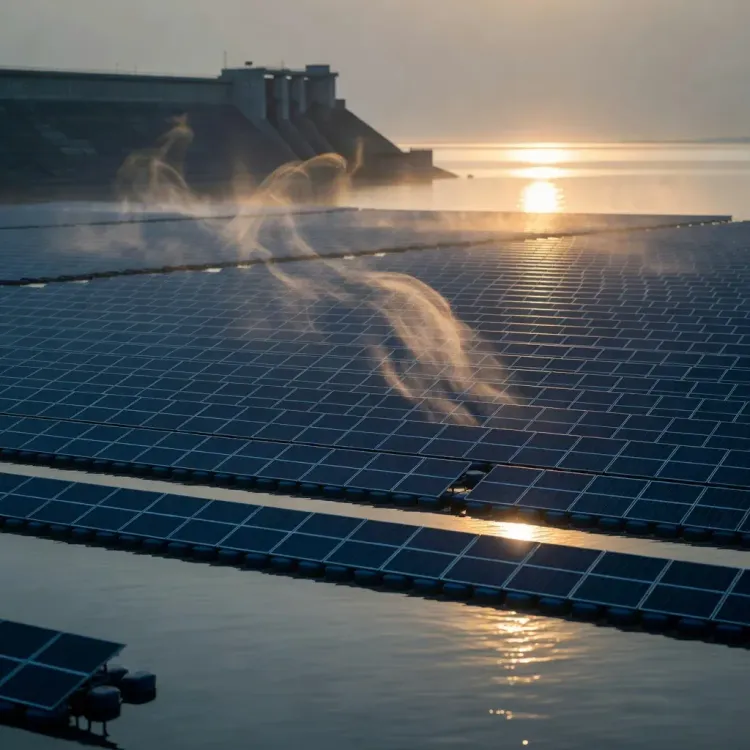
The scheme targets 5,000 MW of floating solar capacity installed on India's reservoirs and water bodies.
Floating solar avoids land acquisition challenges by using existing state-owned water infrastructure.
The scheme advances India's commitment to 500 GW of non-fossil fuel capacity by 2030 , pledged at COP26 in 2021.
Renewable energy developers and state power utilities are the primary stakeholders in project execution and offtake.
State-wise capacity allocation and the pace of tendering will be the critical next steps after Cabinet approval.
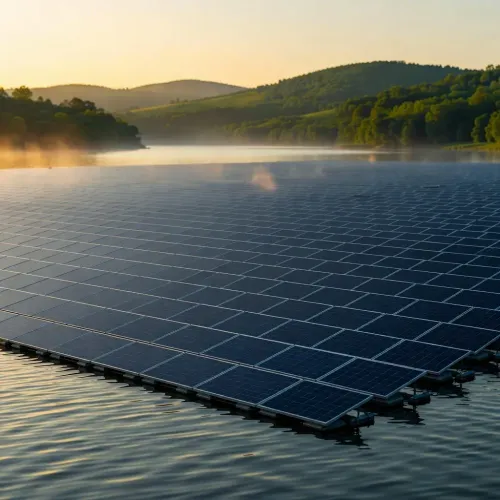
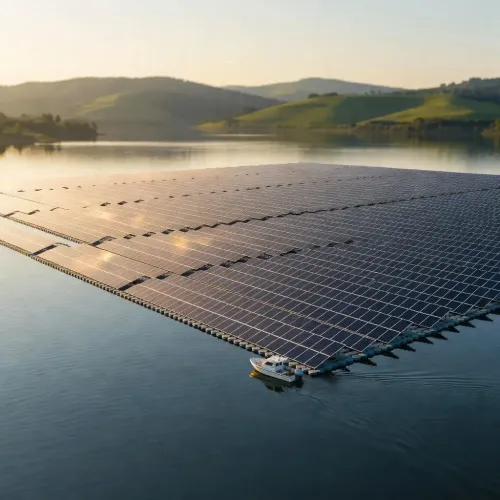
India's Union Cabinet has approved the PM Surya Sarovar Yojana, a ₹5,070 crore scheme to deploy 5,000 MW of floating solar capacity across the country's reservoirs and water bodies — a move that pushes India's clean-energy ambitions into terrain that sidesteps one of the sector's oldest bottlenecks: land.
Union Textiles Minister Giriraj Singh shared the Cabinet decision on Saturday, 1 August 2026, amplifying the announcement via the NaMo App. The scheme's name — PM Surya Sarovar Yojana — translates loosely as the 'PM Sun-Reservoir Scheme', a deliberate nod to the dual use of water bodies: generating power while reducing evaporation from reservoirs.
Why floating solar, and why now
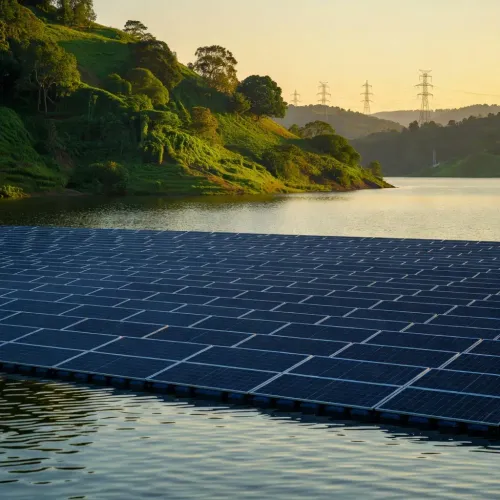
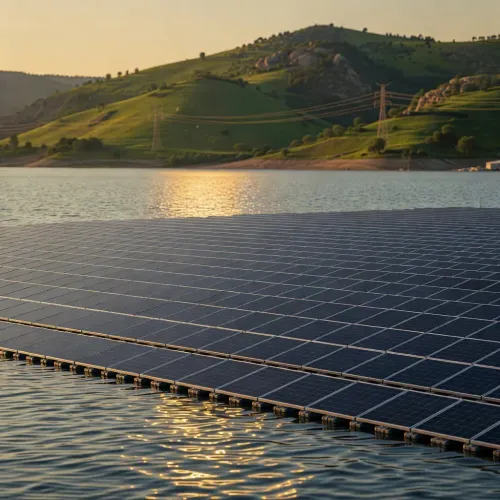
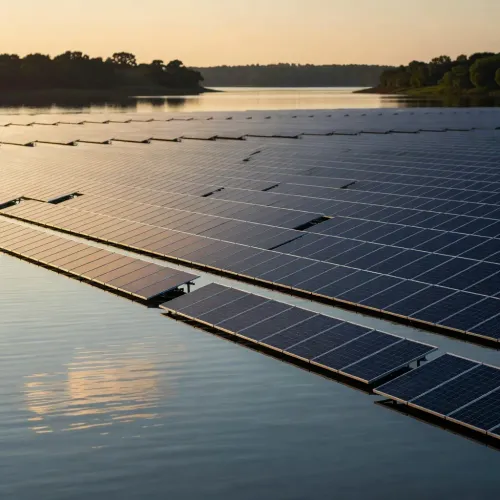
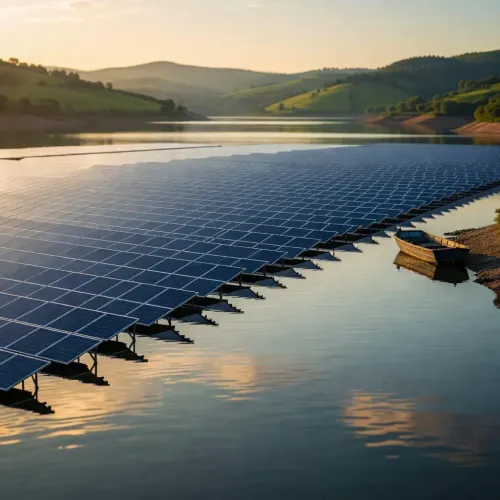
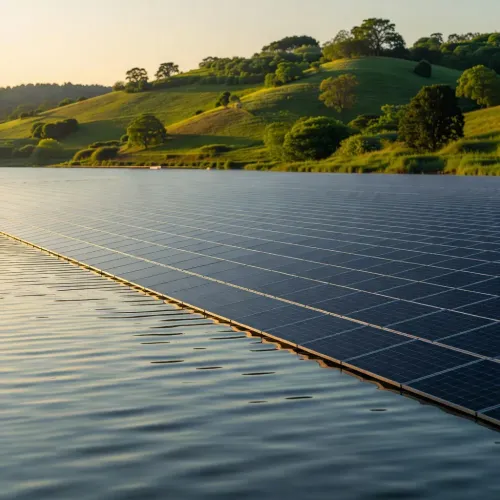
Land acquisition has long been the silent killer of large-scale solar rollouts in India. Floating installations on existing reservoirs cut that problem out entirely — the water body is already state-owned, the grid is often nearby, and the panels themselves slow evaporation, a bonus in water-stressed regions. India has promoted this model as part of its broader push toward 500 GW of non-fossil fuel capacity by 2030, a target Prime Minister Modi committed to at COP26 in 2021.
The 5,000 MW target under this single scheme is substantial. For context, India's National Solar Mission, launched in 2010, took years to build comparable cumulative capacity across all solar segments. Concentrating that scale in floating projects signals both confidence in the technology and urgency about the timeline to 2030.
What the ₹5,070 crore unlocks
The approved outlay of ₹5,070 crore will fund project development across reservoirs managed by state power utilities and central agencies. Renewable energy developers — the private firms that bid for, build, and operate these plants — stand to be the immediate beneficiaries of tendering rounds expected to follow the Cabinet nod. State power utilities, which offtake the electricity, will be the other critical link in the chain.
The scheme's structure mirrors earlier central programmes where the government provides viability-gap or capital support while private developers execute — a model that has driven down solar tariffs sharply over the past decade.
The allocation question that follows
The next chapter belongs to the states. Which reservoirs get projects, how capacity is allocated across states with different grid strengths, and how quickly tenders are floated will determine whether the 5,000 MW materialises on paper or in the water. States with large reservoir networks — across peninsular and central India — are likely to be early focal points.
India has already piloted floating solar at sites including the Omkareshwar reservoir in Madhya Pradesh. The PM Surya Sarovar Yojana now attempts to replicate and dramatically scale that model with central fiscal backing.
Five thousand megawatts on water. The Cabinet has said yes — now the reservoirs wait.
Point of View
The government sidesteps the single biggest execution risk in utility-scale solar. The ₹5,070 crore outlay fits a pattern of central schemes that de-risk private investment through fiscal support, a model that has already driven India's solar tariffs to among the lowest globally. Politically, the announcement reinforces the BJP government's framing of green energy as a national-security and economic-sovereignty issue, not merely a climate commitment. The real test — state-level tendering speed and grid integration — will determine whether this becomes a landmark scheme or another ambitious target that outpaces delivery.
NationPress
1 Aug 2026
Frequently Asked Questions
What is PM Surya Sarovar Yojana?
PM Surya Sarovar Yojana is a central government scheme approved by the Union Cabinet on 1 August 2026 with an outlay of ₹5,070 crore to develop 5,000 MW of floating solar power projects on India's reservoirs and water bodies.
What is floating solar and how does it work in India?
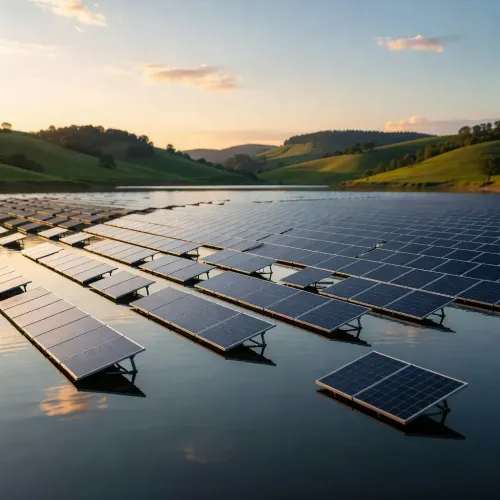
Floating solar involves mounting photovoltaic panels on pontoons or platforms over water bodies such as reservoirs. India promotes this model because it avoids land acquisition, uses existing state-owned water infrastructure, and reduces water evaporation from reservoirs.
How much has the Cabinet approved for the PM Surya Sarovar Yojana?
The Union Cabinet approved ₹5,070 crore for the PM Surya Sarovar Yojana to support the installation of 5,000 MW of floating solar capacity.
How does this scheme connect to India's 2030 renewable energy target?
India committed at COP26 in 2021 to achieving 500 GW of non-fossil fuel energy capacity by 2030. The 5,000 MW targeted under PM Surya Sarovar Yojana forms part of the solar component of that broader national target.
Who benefits from the PM Surya Sarovar Yojana?
Renewable energy developers who will build and operate the floating solar plants, and state power utilities that will purchase the electricity generated, are the primary beneficiaries. Reservoir-rich states are expected to receive priority project allocations.